
Welcome to visit AIMA International Group
 Spain
Spain
您的浏览器版本过低,为保证更佳的浏览体验,请点击更新高版本浏览器
以后再说XWelcome to visit AIMA International Group
Spain

.jpg)
Home > News > Industry Trends > Private Label Dermal Fillers: Launch a Compliant, High-Margin Aesthetic Brand With Supplierfiller.com
Industry TrendsLast year, the founder of a 6-location medspa chain out of Miami reached out to our team at Supplierfiller.com after a costly misstep with a cut-rate private label dermal fillers supplier. The provider had sourced unbranded HA fillers at 40% below market rate, drawn in by flashy social media marketing and zero minimum order requirements, only to discover after administering the product to 3 clients that the formula contained BDDE residue levels 8x the EU safety threshold. All three clients developed delayed-onset inflammation two weeks post-injection, leading to $120,000 in settlement costs, a temporary state medical board audit, and lasting damage to the chain’s local reputation. The supplier? Vanished as soon as the first complaint rolled in, with no valid contact information, no traceable compliance documents, and no product liability coverage to fall back on.
Stories like this are far too common in the private label aesthetic space. Many clinic owners, distributors, and emerging brand builders see white label fillers as a fast path to higher margins, only to run into regulatory penalties, inconsistent product quality, or zero post-purchase support that sinks their investment before they gain traction. Over 7 years supplying dermal fillers to 320+ brands across 47 countries, the team at Supplierfiller has seen every possible misstep — and built a private label program designed to eliminate those risks for partners of all sizes.
What Are Private Label Dermal Fillers, and Who Benefits Most From Launching a Line?
At its core, a private label dermal filler program lets you sell high-quality, clinically tested dermal fillers under your own brand name, without investing millions in building a GMP-certified factory, running years of clinical trials, or navigating the complex web of global medical device regulations on your own. You work directly with a manufacturer to select or customize formulas that match your client base’s needs, apply your own branding and packaging, and sell the product as your own — with full control over pricing, marketing, and client relationships.
This model is not reserved for large global beauty conglomerates. We work with three core groups of partners who see the strongest returns from private label filler lines:
Medspa and clinic chains with an existing loyal client base, who want to stop sending revenue to third-party filler brands and build long-term brand equity with their own product line.
Regional aesthetic distributors who currently resell name-brand fillers, and want to break free from shrinking margins, strict MAP policies, and supply chain delays controlled by big brand headquarters.
Emerging aesthetic brand founders who have built an audience online or through provider networks, and want to launch a filler line tailored to specific niche needs — like ultra-soft lip fillers for younger clients, or high-strength contour fillers for facial sculpting.
Take the small independent aesthetic distributor based in Krakow, Poland, who signed on with our private label program in early 2023. For four years prior, the founder had exclusively distributed well-known global filler brands, watching profit margins shrink to 11% as brand owners raised wholesale prices and enforced strict minimum advertised price rules that left no room for competitive positioning. He worked with our R&D team to tweak a mid-weight HA formula specifically for his core customer base: 25-35 year old clients seeking subtle, natural lip enhancement with minimal post-procedure swelling. We adjusted the formula to include 0.3% lidocaine (0.1% higher than our standard lip formula) and lowered crosslink density slightly for a softer, more tissue-like feel, with packaging printed in Polish to align with local regulatory requirements. Within 8 months of launching his branded line, his average margin per syringe hit 48%, and repeat order rates from his network of 72 local clinics stabilized at 63% — numbers he never could have hit reselling third-party brands.
Why Most Private Label Filler Suppliers Fail Global Medical Device Compliance Standards
Dermal fillers are classified as Class III Medical Devices in most major markets, including the EU, United States, Canada, and Australia. This classification means the products carry a high potential risk if manufactured or used incorrectly, and require rigorous testing, full supply chain traceability, and ongoing post-market surveillance to sell legally. A huge share of private label suppliers operating online cut corners on these requirements to offer rock-bottom prices, and partners are left holding the bag when regulators step in.
Understanding core filler technology helps cut through marketing noise when evaluating suppliers. Two terms you will see across every high-quality filler line are NASHA technology and PDRN-infused formulas, and very few low-cost suppliers can accurately explain how these work, let alone provide test data proving their formulas meet safety standards:
NASHA (Non-Animal Stabilized Hyaluronic Acid) is produced via streptococcus equi fermentation, rather than extracting HA from rooster combs or other animal connective tissue. This production method eliminates the risk of cross-species allergic reactions, and creates a more consistent HA molecular weight for predictable injection results. During the crosslinking process, manufacturers use BDDE (1,4-butanediol diglycidyl ether) to bind HA molecules together for longer-lasting results. Safe, clinically validated formulas keep residual BDDE levels below 0.001% — a threshold many unregulated suppliers miss by a wide margin, as the Miami medspa chain learned first-hand.
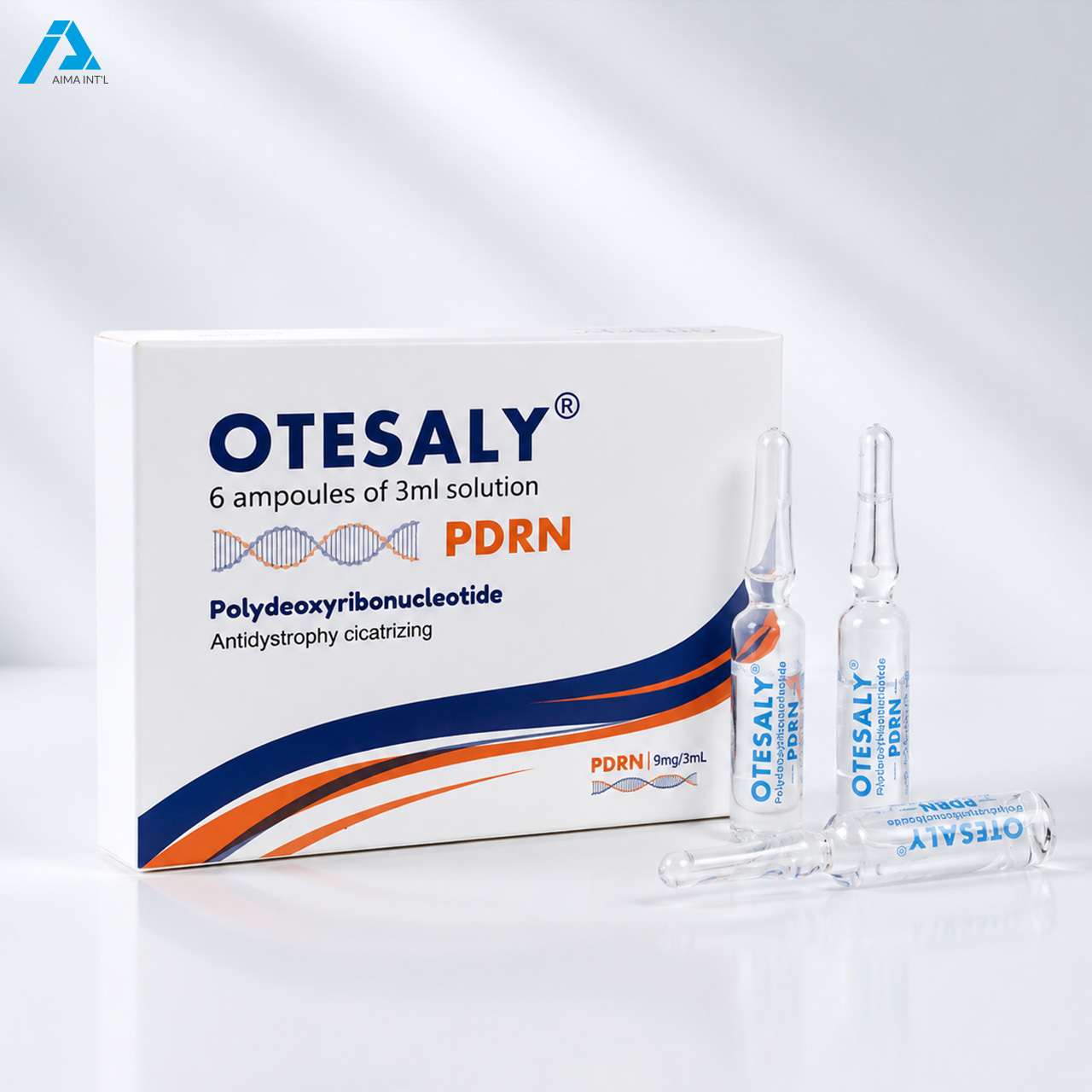
PDRN (Polydeoxyribonucleotide) infused fillers use short DNA fragments extracted from salmon milt, calibrated to a molecular weight of 50–1500 kDa. Unlike traditional HA fillers that only provide immediate physical volume under the skin, PDRN binds to adenosine A2A receptors on dermal fibroblasts, triggering production of endogenous type I collagen and reducing post-injection inflammation. Knockoff PDRN fillers often use uncalibrated molecular weights that cause inflammation or break down within days, with no measurable collagen-boosting effect.
Think about it: if a supplier can’t share a valid, verifiable test report for the formula they want to sell you, how can you promise your clients the product is safe to inject?
Less than 12% of private label filler suppliers advertising online hold valid Class III medical device manufacturing certifications for their production lines. Many will share edited or expired ISO certificates, or claim CE marking that only applies to packaging materials, not the filler formula itself. We have had dozens of partners come to us after losing entire shipments to customs seizures, because their previous supplier could not provide valid device registration documents for the destination market.
How Supplierfiller’s GMP-Certified Factory Delivers Audit-Ready, Consistent Private Label Fillers
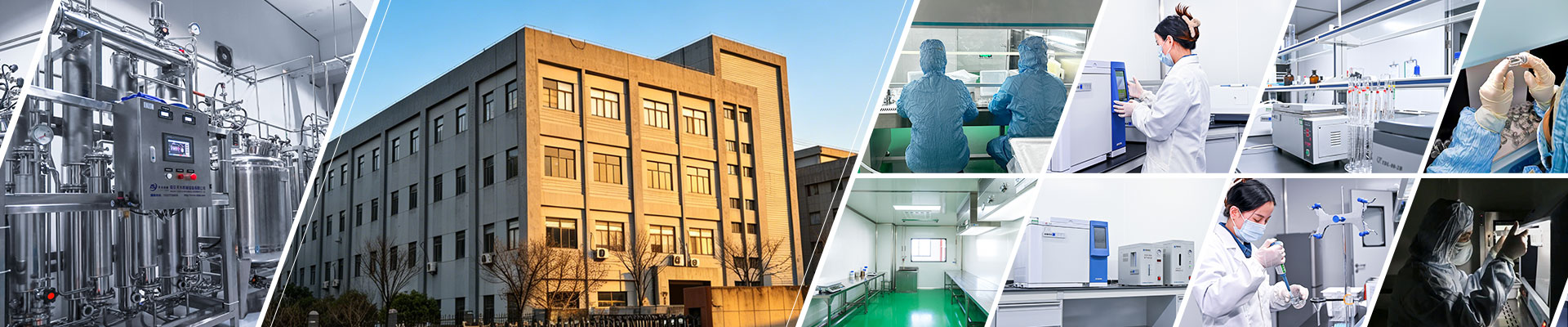
As a leading China aesthetic supplier serving global markets, our production facility operates under strict ISO 13485:2016 quality management standards, with 100,000-class clean rooms that match the air purity requirements of injectable pharmaceutical manufacturing sites. We earned our GMP certification in 2018, and upgraded our EU CE Class III device certification in 2023 after 18 months of third-party clinical trials across 6 European test sites. Over our 7 years of operation, 17 of our private label partners have grown to rank in the top 10 filler brands in their respective local markets.
We do not rely on single end-of-line testing to catch quality issues. Every batch of private label filler moves through a multi-stage quality control process, with full digital records stored for 2 years to support any client regulatory audit:
Raw material triple screening: Every shipment of HA raw material, lidocaine, PDRN, and other active ingredients is tested on arrival for endotoxin levels (held to <0.03EU/mL, 30% stricter than the global industry standard), molecular weight distribution, and full source traceability. We never use recycled HA or industrial-grade raw materials, even if it would lower production costs.
In-process crosslinking validation: Our production team pulls samples from the line every 2 hours during manufacturing, testing crosslink density, elastic modulus (G’), and viscous modulus (G’’) to ensure product consistency. We hold batch-to-batch variation for these key rheology metrics to under 5%, so injectors never have to adjust their technique mid-case because a new batch of filler is stiffer or runnier than the last.
Post-production biocompatibility testing: Every finished batch goes through independent third-party testing for cytotoxicity, skin sensitization, and intradermal irritation, per ISO 10993 biocompatibility standards for medical devices. We retain sealed sample units from every batch for the full shelf life of the product, to resolve any client or regulator questions quickly.
Pre-shipment compliance checks: Before any order leaves our warehouse, our regulatory team reviews the destination market’s labeling and documentation requirements, and provides a full packet of paperwork including batch-specific COAs, free sale certificates, CE marking documentation, and FDA 510(k) pre-clearance support for US-based partners. We even help clients complete local device registration forms for markets like the UK, UAE, and Southeast Asia, to cut down on customs delays.
Customization Options That Help Your Brand Stand Out in a Crowded Market
Walk into any aesthetic trade show, and you will see dozens of filler brands selling nearly identical HA formulas in near-identical syringes. The brands that build loyal customer bases do not compete on price alone — they build products tailored to specific unmet client needs. Our private label program gives partners full control over every element of their product, with low minimum order quantities starting at 50 units per SKU, so even small brands can test custom formulas without tying up tens of thousands of dollars in inventory.
Formula customization starts with selecting the right HA crosslink density for your target use case:
Low-crosslink, low-viscosity formulas for fine line treatment around the eyes, neck, and décolletage, often blended with amino acids or PDRN for skin rejuvenation.
Mid-weight, smooth-flow formulas for lip enhancement, nasolabial fold correction, and mild midface volume loss, with adjustable lidocaine levels to reduce injection discomfort.
High-crosslink, high G’ formulas for structural contouring of the jawline, chin, nose, and cheekbones, with 12-18 month duration for long-lasting results.
Partners can also customize every element of packaging and presentation: syringe plunger colors, label design and finish, outer box materials, included needle gauge and type (30G sharp, 33G blunt, etc.), and even custom scannable QR codes that link to batch-specific test reports for end client transparency. Our in-house design team provides unlimited label revisions at no extra cost, to make sure your branding matches your brand’s visual identity.
Private label fillers are not a fit for every business. If you currently move fewer than 10 syringes per month across your practice or distribution network, the time invested in testing formulas and designing packaging will likely not deliver a fast enough return. We turn down roughly 18% of incoming inquiries because the fit is misaligned — for example, clients who ask us to skip required testing to lower costs, or clients who plan to make unsubstantiated claims about filler results that violate local advertising rules. We walk away from those projects, because they put end clients at risk and erode trust across the entire aesthetic industry.
Pitfalls to Skip When Launching Your Private Label Filler Line
We have helped partners launch hundreds of successful filler lines, and we have seen just as many failed launches from partners who cut corners early in the process. These are the most common missteps that sink new brands:
The first mistake is choosing a supplier based solely on per-unit price. A supplier offering fillers at $8 per syringe is not cutting you a deal — they are skipping biocompatibility testing, using unvetted raw materials, and forging compliance documents. In 2023, a Texas-based clinic owner was fined $270,000 and had his medical license suspended after FDA agents seized unregistered, adulterated private label fillers he had purchased from an uncertified overseas supplier. The short-term savings from a cheap supplier never offset the risk of regulatory action or client harm.
The second mistake is ignoring batch consistency. An Australian brand owner came to us in 2022 after losing 40% of his clinic client base in 6 months. His previous supplier had delivered a first batch of high-quality, well-crosslinked filler that earned rave reviews, but the second batch had 30% lower crosslink density, breaking down within 2 weeks of injection. The supplier had no in-process testing protocols, so crosslinking times and temperatures varied widely between production runs, leading to wildly different product performance. It took the brand owner nearly a year to rebuild trust with his clinic network.
The third mistake is assuming all suppliers offer post-sales support. Many private label sellers operate as middlemen with no in-house technical or regulatory team, so once your order ships, you are on your own if a client has an adverse reaction, if customs holds your shipment, or if you need documentation for a board audit. Our medical aesthetics wholesale program includes 24/7 access to our team of aesthetic nurses and regulatory specialists, who can walk injectors through proper technique, help draft adverse event response protocols, and pull required documentation within hours of a request. Every unit we ship is covered by a $1 million global product liability policy, so partners do not carry the full financial risk of product-related claims.
What the Private Label Onboarding Process Looks Like at Supplierfiller
We keep the process straightforward, with no hidden fees or long, opaque sales cycles. When you reach out to our team via Supplierfiller.com, you will be connected to a dedicated account manager who specializes in your target market, to walk through every step:
Initial discovery call: We learn about your brand positioning, target client demographic, price point, and local regulatory requirements, to recommend formula options that align with your goals. We are upfront about costs, lead times, and required documentation from day one — no surprise fees added mid-process.
Sample testing: We ship 3-5 formula samples matching your needs for free, so you can test rheology, push force, and performance in a clinical setting, or send samples to a third-party lab for independent testing. We adjust formula parameters as many times as needed until you are fully satisfied with the product feel and performance.
Design and compliance review: Our design team creates custom label and packaging mockups aligned with your brand, while our regulatory team reviews every element of the packaging to make sure it meets local market requirements — from required warning labels to CE marking placement, to language requirements for local markets.
Production and quality checks: Standard production lead times run 7-15 days, depending on order size and customization level. Before your order ships, we share batch-specific COAs and photos of the finished product for your approval.
Long-term partnership support: After your order is delivered, your account manager stays in touch to share market trend data, new formula releases (like our upcoming CaHA biostimulatory filler line), and marketing assets you can use to promote your brand to clients. We do not consider a sale complete once the shipment leaves our warehouse.
Many clinic owners and distributors spend years building a loyal audience, only to let third-party brands capture most of the profit from every filler treatment. A well-executed private label filler line lets you build equity in your own brand, control your pricing, and deliver products tailored exactly to what your clients want — without the massive upfront cost of building your own manufacturing and regulatory team. The key is working with a supplier who treats your brand’s reputation as carefully as their own, rather than cutting corners to make a quick sale.
Copyright @ 2026 AIMA International Group Co., Ltd.