



Welcome to visit AIMA International Group
 Spain
Spain

Your browser version is too low, in order to ensure a better browsing experience,Please click to update to a higher version browser.
Talk about it later.XWelcome to visit AIMA International Group
Spain




.jpg)
Home > News > Industry Trends > ISO 13485 Dermal Filler Manufacturer: Your Guide to Sourcing Safe, Compliant Injectables for Your Brand
Industry TrendsLaunching or scaling a dermal filler line comes with no shortage of risks. A single bad production batch can sink a brand’s reputation, lead to hundreds of thousands in regulatory fines or patient compensation, and erase years of work building trust with clinicians and consumers. Many brand owners and clinic operators focus first on price per syringe or packaging design when sourcing suppliers, but skip the highest-impact vetting step: confirming a manufacturer holds valid, scope-appropriate ISO 13485 certification for Class III medical device dermal filler production.
What ISO 13485 Certification Actually Means for Dermal Filler Production
A common misconception among new brand owners is that ISO 13485 is just another generic quality certificate, no different from the ISO 9001 badges used across dozens of industries. That assumption can cost millions. ISO 13485 is a standard built exclusively for medical device manufacturers, requiring end-to-end traceability, documented process controls, sterile production protocols, adverse event response frameworks, and formal product recall procedures across every stage of a product’s lifecycle. For dermal fillers—Class III invasive medical devices that sit under patient skin for months at a time—this standard is not a marketing talking point. It is the baseline for patient safety.
In 2022, we hosted a founder of a Barcelona-based startup aesthetic brand who learned this lesson the hard way. She partnered with a small, low-cost filler supplier that provided a scanned copy of an ISO 13485 certificate, which she did not verify for scope or validity. The 2,000 units of mid-molecular-weight HA filler she received were produced in an uncertified workshop with no clean room controls, with BDDE cross-linker residue 3 times the EU legal limit. Thirty-seven patients treated with the product developed delayed redness, firm subcutaneous nodules, and in 8 cases, required surgical intervention to remove degraded product. The brand paid out more than 1.2 million EUR in medical compensation and PR costs, and spent 6 months under investigation by local health regulators before it could resume operations. When she arrived at our facility, her first comment was that she never thought to check if the ISO certificate actually covered Class III dermal filler production.
At our 4,800-square-meter modern production base, we operate Class 100 GMP clean rooms across 3 dedicated production lines, with every process mapped strictly to ISO 13485 requirements. 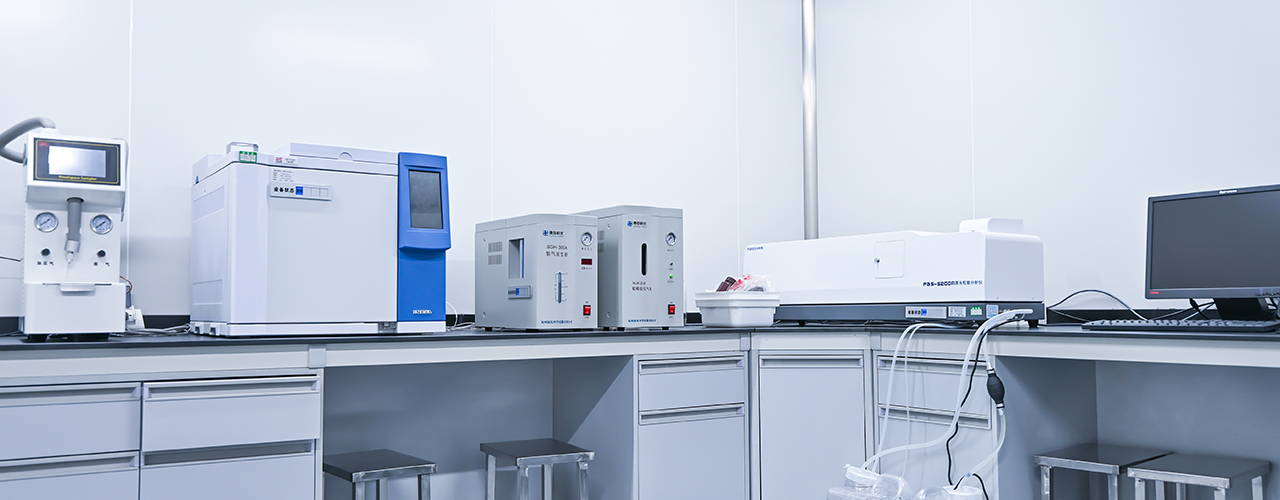 Every staff member entering clean rooms completes full sterile gowning procedures, and environmental monitoring for airborne particles and microbial contamination runs 24/7 during production runs. We source only high-purity, medical-grade non-animal derived hyaluronic acid—valued at 45,000 USD per kilogram—from raw material suppliers that hold active CE GMP certification. Every incoming raw material batch undergoes third-party testing by SGS to validate purity, endotoxin levels, and molecular weight consistency before it ever touches our production lines. Our ISO 13485 certificate is explicitly scoped to cover Class III dermal filler manufacturing, with annual surveillance audits completed by an EU-accredited registrar to maintain full compliance.
Core Manufacturing Capabilities That Separate Qualified ISO 13485 Dermal Filler Manufacturers From Low-Tier Suppliers
A valid certificate is only the starting point. Consistently producing safe, high-performing dermal fillers requires specialized R&D, controlled production processes, and enough capacity to meet partner demand without cutting corners. We have spent 20 years refining our production technology since our founding in 2003, building two core proprietary processing methods that set our products apart:
Our in-house R&D team maintains a library of more than 1000 mature, clinically tested formulations, covering every common aesthetic indication from fine line correction to deep volumization. Our annual production capacity hits 5 million units, with monthly output reaching 50,000 units to support both small test runs and large-scale orders.
In 2023, a 17-clinic medical aesthetic chain based in Florida reached out to our team after a string of costly supply chain failures with their previous manufacturer. That supplier held a basic ISO 13485 certificate for cosmetic products, but had no dedicated capacity allocation for large clients, and failed to maintain complete batch testing records. During the 2022 Black Friday sales period, the supplier was temporarily shut down by local regulators for clean room violations, leaving the chain without filler stock for 6 weeks and causing them to miss 30% of their planned quarterly revenue. Prior to that, two of their large shipments were seized by FDA at port for missing required CoA documentation, leading to 870,000 USD in lost product and customs penalties. We provided the chain with full, verifiable audit reports, FDA VCRP registration documentation, and a formal capacity reservation agreement to guarantee stock during peak sales periods. In the 14 months since we started working together, they have not experienced a single stockout, and patient adverse event reports for their filler line dropped by 78% compared to their previous supplier.
Our product line is built to cover every common clinical need in aesthetic practice, and one of our most in-demand SKUs for global partners is Facefill Lidocaine. 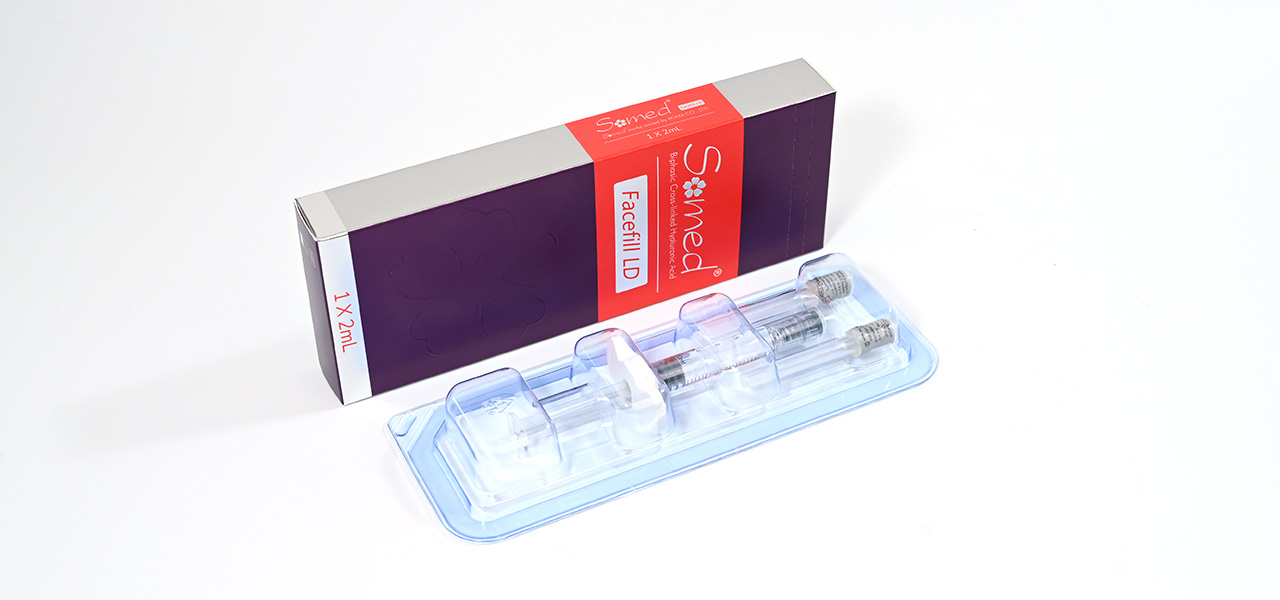 Formulated with 0.3% lidocaine to minimize patient discomfort during injection, this mid-to-deep dermal filler uses our NASHA-processed high-purity HA, available in multiple cross-link densities tailored for nasolabial fold filling, mid-face volumization, under-eye hollow correction, and perioral fine line smoothing. The gel has balanced cohesivity and viscosity, so it stays placed in the target injection area without spreading to surrounding tissue. Every batch of Facefill Lidocaine goes through 17 separate quality checks before leaving the factory, including sterility testing, endotoxin level screening, cross-linker residual testing, and syringe seal integrity checks. We provide a full Certificate of Analysis for every shipped batch, with all documentation formatted to support customs clearance and clinical record-keeping for partners in every major market.
Flexible Partnership Models for Brands at Every Growth Stage
Many new brand owners assume ISO 13485 certified dermal filler manufacturers only work with massive global brands with six-figure minimum orders. We built our partnership structure to support operators at every scale, with terms that adapt to specific business goals:
To date, we have delivered custom dermal filler solutions for more than 521 brands across 62 countries. We connect with hundreds of clinicians, distributors, and brand owners every year at global aesthetic trade shows, including the Dubai Beauty Exhibition, where we run live injection demonstrations, showcase new formulation updates, and collect direct feedback from practitioners to adjust our product offerings. 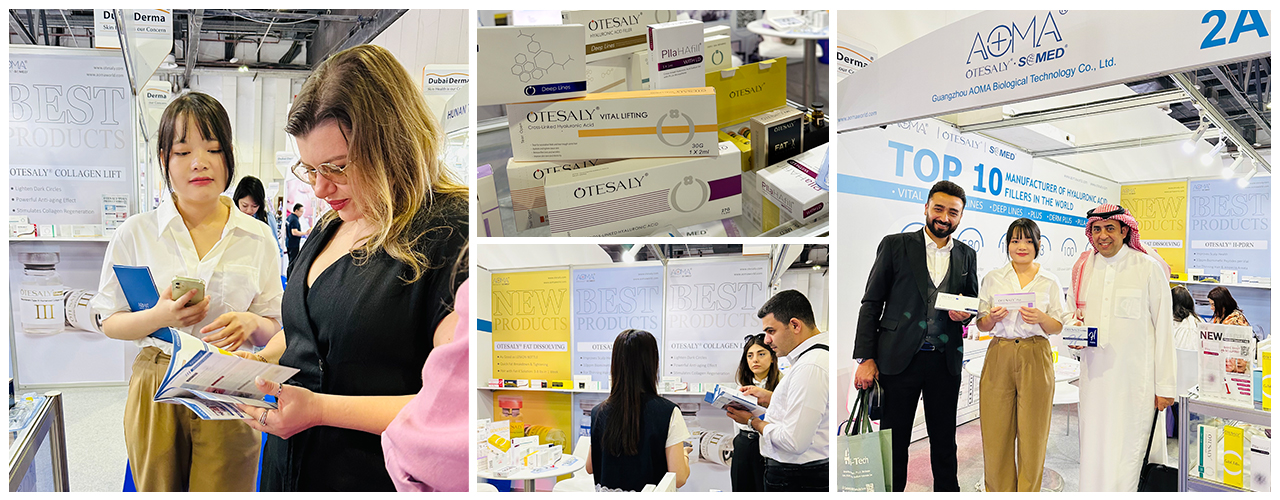
Verifiable Compliance and Post-Sale Support to Reduce Partner Risk
A quick search for dermal filler suppliers will turn up dozens of companies claiming ISO 13485 certification. Many hold expired certificates, certificates that only cover cosmetic skincare production (not Class III medical devices), or outright forged documents. Certificates can be forged. Production records cannot. We invite all potential partners to schedule a virtual or in-person factory audit at any time, to walk through our clean rooms, review years of quality control logs, and meet our R&D and production teams directly.
Our compliance credentials are publicly verifiable: we hold active CE certification for our dermal filler line, maintain FDA VCRP registration for products entering the US market, and follow all Class III medical device production regulations for every market we serve. We were also named one of the Top 10 Dermal Filler Manufacturers in the 2023 Global Aesthetic Supply Awards, a recognition based on 3 years of product safety data, partner satisfaction scores, and independent audit results.
For partners purchasing through our Medical Aesthetics Wholesale program, we provide ongoing post-sale support that goes far beyond shipping product. Every partner is assigned a dedicated account manager available 24/7 to answer questions about product application, customs documentation requirements, or batch traceability. We maintain a full unit-level traceability system, where every single syringe can be traced back to its raw material batch, production line operator, and final quality test result— a core requirement of ISO 13485, and a core protection for brands, clinics, and the patients they serve. If a partner encounters a shipment issue, we provide full support for root cause analysis, product replacement, and regulatory documentation to resolve problems as quickly as possible.
Sourcing dermal fillers does not require choosing between low-cost small-batch flexibility and the safety guarantees of a large, certified manufacturer. We have built our operations over 20 years to serve both solo clinic owners testing their first private label product, and global distributors moving hundreds of thousands of units per quarter. Any team searching for a reliable ISO 13485 dermal filler manufacturer can reach out to our team to request free product samples, review full compliance documentation, or discuss custom formulation needs at any time.

Copyright @ 2026 AIMA International Group Co., Ltd.


