



Welcome to visit AIMA International Group
 Spain
Spain

Your browser version is too low, in order to ensure a better browsing experience,Please click to update to a higher version browser.
Talk about it later.XWelcome to visit AIMA International Group
Spain




.jpg)
Home > News > Industry Trends > Injectable Body Contouring Supplier Audit: Key Checks, Red Flags, and Trusted Manufacturing Partners
Industry TrendsThe global market for injectable body contouring treatments hit $3.7 billion in 2024, with demand for HA-based fillers, collagen stimulators, and fat-dissolving injections growing 18% year over year as more patients seek non-surgical options for hip lifts, thigh contouring, shoulder definition, and cellulite reduction. As clinics and aesthetic brands rush to add these high-margin services to their menus, many cut corners on supplier due diligence—with costly, even dangerous, consequences.
In 2023, the founder of an independent aesthetic clinic in Barcelona reached out to our team for support after a supply chain misstep nearly put her out of business. She had sourced injectable body fillers from a trading company offering prices 40% below market average, skipping formal audit checks because the sales representative provided scanned copies of “CE certificates” over email. After treating 17 patients with the product for hip and thigh contouring, 8 developed localized inflammation and hard nodules within three weeks; two required surgical intervention to remove the injected material. Traceability checks later revealed the filler used industrial-grade hyaluronic acid with no biocompatibility testing, no valid CE marking for medical device use, and high levels of endotoxin that triggered the adverse reactions. The clinic paid out €1.2 million in medical compensation and regulatory fines, and came within days of having its medical license revoked.
How many brands or clinics actually verify every claim a supplier makes, rather than taking marketing copy at face value?
Unlike topical skincare products or even facial dermal fillers, injectable body contouring products are injected in much larger volumes—often 10-20ml per treatment area, compared to 1-2ml for lip or cheek filler. This means even small lapses in raw material purity, sterilization, or crosslinking consistency can lead to widespread adverse events, permanent patient harm, and irreversible reputational damage for your brand.
Compliance risks extend far beyond patient safety, too. A mid-sized U.S.-based DTC aesthetic brand learned this in 2022, when it signed on with a new filler supplier three months ahead of Black Friday. The supplier promised 12-day lead times and 25% lower pricing than the brand’s existing partner, so the team skipped a full factory audit and placed a $180,000 order for body contouring injectables. One week before Black Friday, the shipment was seized by U.S. Customs and Border Protection because the supplier could not provide valid FDA Voluntary Cosmetic Registration Program (VCRP) documentation for the products. The brand sold out of its existing body filler stock in the first 48 hours of the sale, leaving 1,200 customer orders unfulfilled. Total losses from lost sales, refund requests, and social media backlash topped $276,000, and the brand spent nine months rebuilding customer trust.
A thorough supplier audit is not a box-ticking exercise. It is the only way to confirm the products you sell are safe, compliant, and delivered on time, every time.
Over 21 years of manufacturing injectable aesthetic products for clients across 60+ countries, the team at AIMA International Group Co., Ltd. has developed a clear framework for auditing supply chain partners—and we share this same framework with our clients to help them vet other vendors in their network. The criteria fall into four core categories:
 AIMA has operated as a dedicated medical aesthetic product manufacturer since its founding in 2003, with a 4,800 square meter modern production base housing three dedicated production lines and 100-class GMP cleanrooms. All production follows ISO 13485 standards and Class III medical device manufacturing specifications. We source high-purity medical-grade non-animal derived hyaluronic acid (valued at $45,000 per kilogram) from vetted, CE GMP-certified raw material vendors, and every batch undergoes third-party testing by SGS to eliminate contamination or purity risks. We hold valid EU CE certification and U.S. FDA VCRP registration for our full product line, with full traceability for every single unit that leaves our facility.
During your audit, walk away from any supplier that exhibits any of the following warning signs—these are nearly universal indicators of unnecessary risk:
For brands and clinics searching for an injectable body contouring product that checks every box on a rigorous supplier audit, our Bodyfill range is purpose-built for safe, natural-looking large-volume body contouring.
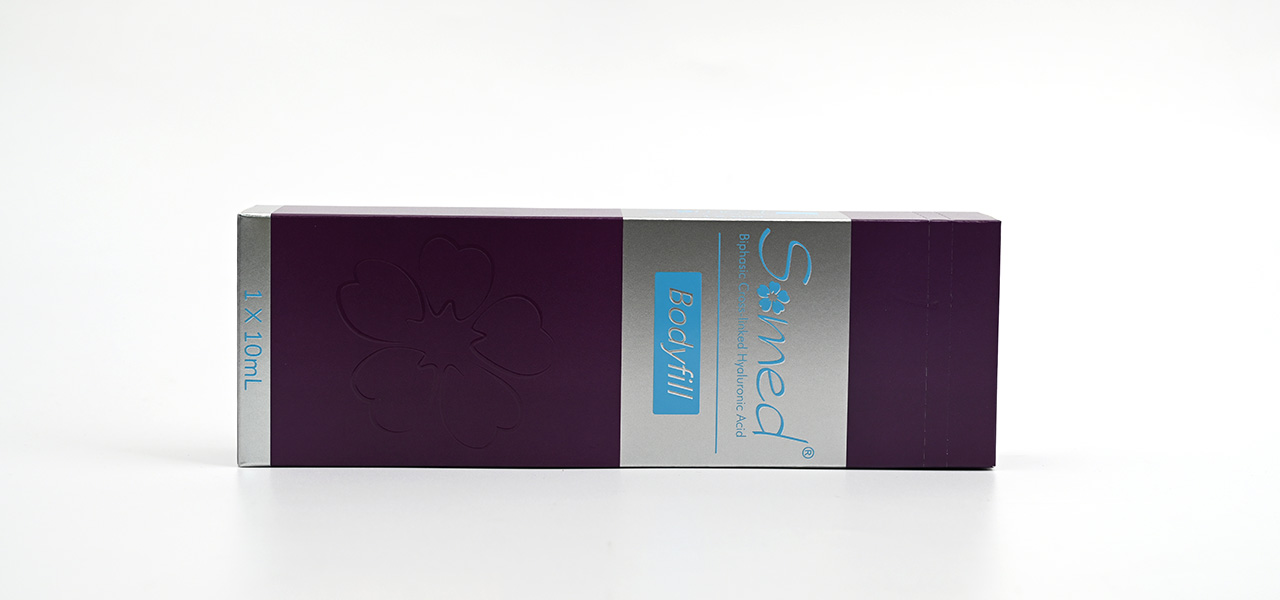
Bodyfill is formulated with NASHA crosslinking technology to deliver a cohesivity level of 25Pa·s, firm enough to provide long-lasting lift and structure for hip augmentation, thigh contouring, shoulder definition, and cellulite correction without migrating from the injection site. The HICE isosmotic formulation cuts post-treatment swelling and redness to deliver a more comfortable patient experience, with results lasting 12-18 months—40% longer than standard facial fillers used off-label for body treatments. Every batch of Bodyfill is produced in our GMP cleanrooms, with full SGS testing, CE marking, and FDA VCRP registration to support market entry in North America, Europe, the Middle East, and Southeast Asia. Clients can customize Bodyfill formulations, packaging, and branding through our OEM/ODM program, with low minimum order requirements to support new brand launches.
We connect with clients face-to-face at major aesthetic industry events around the world to walk through our audit documentation, share product samples, and learn about local market needs.
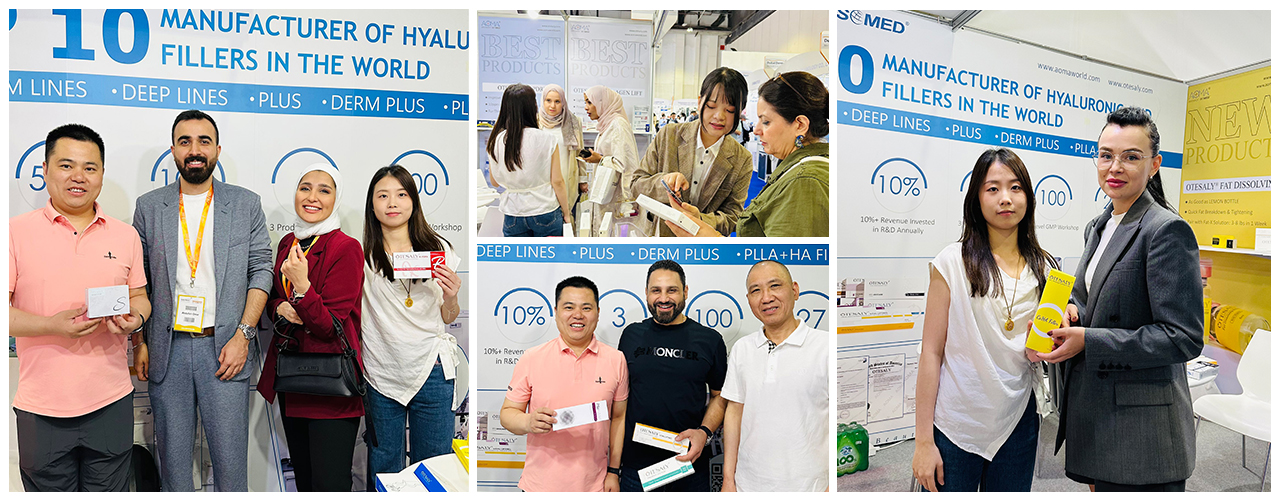
At the 2024 Dubai Beauty Exhibition, for example, we met with over 120 clinic owners and brand distributors from across the GCC region. Many of these partners had previously lost money working with unvetted suppliers that provided fake CE certificates or delivered inconsistent product quality. After reviewing our full audit documentation, batch test reports, and production traceability protocols on site, 37 of these attendees signed annual partnership agreements with AIMA to supply Bodyfill and other injectable products for their markets.
You do not need a large audit team or a huge budget to run an effective injectable body contouring supplier audit. Follow these four practical steps for every new supplier you consider:
At AIMA, we welcome every part of this audit process. We provide full, verifiable documentation for all our products, offer free samples for independent testing, support third-party factory audits, and work with clients to build clear, fair contracts that protect both parties. We even offer optional product liability coverage for our partners to further reduce operational risk.
The injectable body contouring market will continue to grow as more patients seek out non-surgical aesthetic options, but competition will get stiffer, too. Brands and clinics that cut corners on supplier audits to save a few dollars per unit will eventually face regulatory action, patient harm, or reputational damage that no marketing campaign can fix. Building a reliable, compliant supply chain takes a little extra work up front, but it pays off in consistent product quality, loyal customers, and long-term business growth.

Copyright @ 2026 AIMA International Group Co., Ltd.


