



Welcome to visit AIMA International Group
 Spain
Spain

Your browser version is too low, in order to ensure a better browsing experience,Please click to update to a higher version browser.
Talk about it later.XWelcome to visit AIMA International Group
Spain




.jpg)
Home > News > Industry Trends > EU MDR Dermal Filler Requirements: A Complete Compliance Guide for Brands, Distributors and Clinic Procurement Teams
Industry TrendsWhat happens when you source dermal fillers for the EU market without fully verifying MDR compliance? Ask the Berlin-based aesthetic startup that lost €120,000 in seized inventory at the Port of Hamburg in late 2023. The brand had placed its first bulk order for 8,000 syringes of crosslinked HA filler from a supplier offering prices 30% below market average, who shared a scanned CE certificate in initial communications. When the shipment arrived, customs inspectors found the certificate was issued under the old Medical Devices Directive (MDD), expired after the May 2024 MDR enforcement deadline, with no matching technical documentation, no UDI markings on product packaging, and no listed EU Authorized Representative. The brand was given two options: destroy the entire shipment at its own cost, or pay to ship the products back to the supplier. After adding three weeks of port storage fees and legal consultation costs, the total loss hit €120,000, and the brand’s planned EU launch was pushed back seven months.
This is far from an isolated case. As EU MDR enforcement for Class III medical devices ramps up across all member states, brands, distributors, and clinic procurement teams are facing tighter border checks, more frequent regulatory audits, and steep penalties for non-compliant dermal filler inventory. Many teams still operate with outdated guidance from the MDD era, missing key requirements that can derail product launches or lead to five- to six-figure fines.
A second case out of Barcelona in June 2024 underscores these risks. A local chain of three medical aesthetic clinics was audited by the Spanish Agency of Medicines and Medical Devices (AEMPS), which found 120 syringes of HA filler in clinic inventory that did not meet MDR standards. The supplier had provided an MDD-era CE certificate, but had not updated clinical evaluation data to meet MDR requirements, could not provide proof of ongoing post-market surveillance, and listed a non-functioning phone number for its purported EU Authorized Representative. The clinic was fined €82,000, all non-compliant inventory was seized, and the penalty was published on AEMPS’ public enforcement database. Over the following three months, the clinic reported a 32% drop in new patient bookings, as many local clients sought out providers with publicly verifiable compliant product stock.
What EU MDR Means for Dermal Filler Products
EU MDR refers to Regulation (EU) 2017/745, the framework that replaced the 30-year-old Medical Devices Directive to tighten safety and traceability rules for medical products sold across EU member states. After multiple transition period extensions, all high-risk Class III medical devices — including the vast majority of injectable dermal fillers — were required to meet full MDR standards by May 26, 2024.
A common misperception among new market entrants is that any CE-marked filler is automatically compliant. In reality, a significant share of dermal fillers currently sold online carry CE marks issued for cosmetic products, or low-risk Class I medical devices, with no formal assessment from an EU-recognized Notified Body. These products are illegal to market as injectable dermal fillers in the EU, and can be seized at the border or pulled from clinic shelves at any time.
Core EU MDR Dermal Filler Requirements You Cannot Overlook
MDR sets clear, enforceable rules for every stage of a dermal filler’s lifecycle, from raw material sourcing to post-market monitoring. The requirements most likely to trip up new suppliers and brands include:
How Manufacturing Standards Tie Into MDR Compliance
Many brands focus solely on checking a supplier’s CE certificate, but miss that MDR compliance runs through every step of the manufacturing process. A valid CE certificate is only as reliable as the quality system backing the product; if production facilities do not meet required clean room standards, or raw material sourcing lacks traceability, even a paper certificate will not hold up during an audit.

AIMA International Group Co., Ltd., established in 2003, is a recognized name in the global dermal filler space, honored as one of the Top 10 Dermal Filler Manufacturers worldwide. The company operates a 4,800 square meter modern production facility with Class 100 GMP clean rooms and 3 dedicated production lines, running fully aligned with ISO 13485 quality management system standards and Class III medical device manufacturing specifications. The facility uses non-animal sourced, medical-grade hyaluronic acid with a purity grade that costs $45,000 per kilogram, sourced exclusively from CE GMP-certified raw material suppliers, with regular third-party testing from SGS to confirm no residual contaminants or endotoxins. The in-house R&D team holds proprietary NASHA and HICE technology for HA crosslinking, with over 1000 mature formulations tailored for different aesthetic indications.
With an annual production capacity of 5 million units, and monthly output reaching 50,000 units, the facility supports both small emerging brands and large global distributors, with flexible cooperation terms including no MOQ pressure for new brands and volume discounts for enterprise partners. Sample orders ship in 3-5 working days, bulk orders deliver in 15-20 days, with expedited production options available for tight launch timelines.
Choosing MDR-Compliant Dermal Fillers for Your EU Market Portfolio
Not every dermal filler in a manufacturer’s product line will meet EU MDR standards, so teams sourcing inventory must select SKUs that have gone through the full conformity assessment process, rather than assuming all products from a certified factory carry valid MDR approval.
Take Facefill Lidocaine, one of the core HA dermal filler SKUs offered by AIMA, as an example of a product built from formulation to packaging to meet every EU MDR requirement.
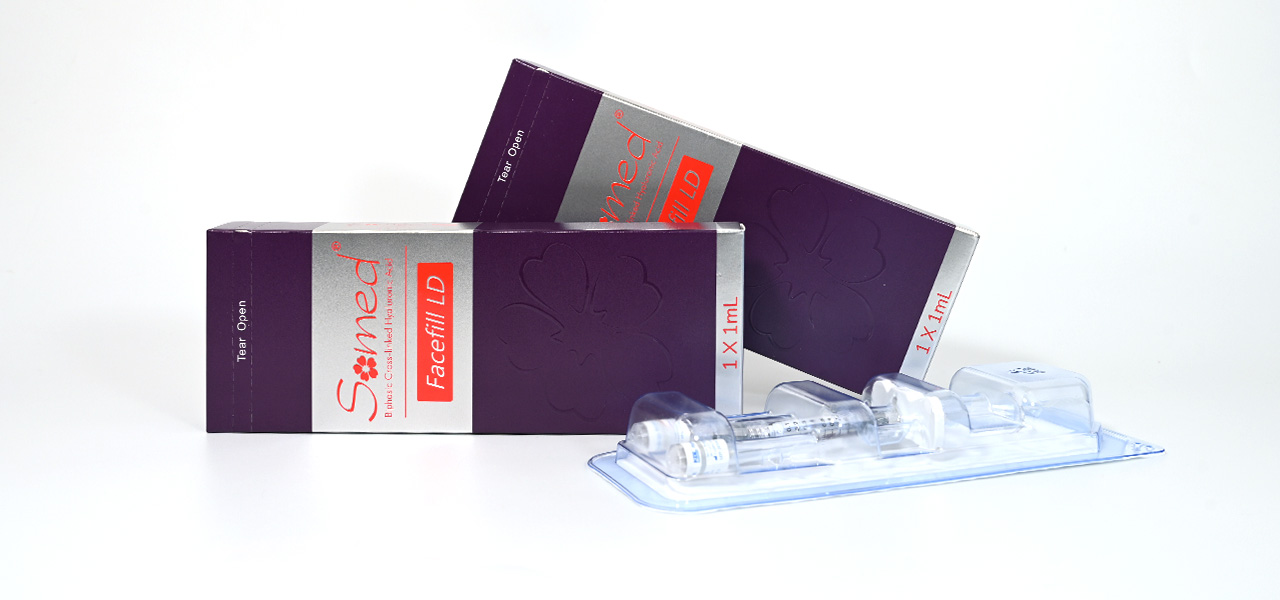
Formulated with 24mg/ml crosslinked HA and 0.3% lidocaine to reduce patient discomfort during injection, Facefill Lidocaine is indicated for mid-to-deep dermal injection to correct nasolabial folds, cheek volume loss, and moderate facial wrinkles. The product has completed all required MDR conformity assessments, with full technical documentation available for EU customs and regulatory checks, valid CE certification from an EU Notified Body, pre-assigned UDI codes for every unit, and fully compliant IFU and labeling translated for all 27 EU member states. The product’s Clinical Evaluation Report includes data from 18 months of post-market clinical follow-up across 1200 patients, with a 98.7% patient satisfaction rate and no reported serious adverse events linked to product quality.
For brands and distributors entering the EU market, AIMA does not stop at providing a compliant product. The team provides full compliance support, including access to all required MDR documentation, coordination with the company’s designated EU Authorized Representative for regulatory inquiries, UDI registration support for national EU databases, and training for sales and clinic teams on proper product use and adverse event reporting protocols. Unlike wholesale suppliers that cut off communication after a delivery is signed for, AIMA maintains a dedicated regulatory support team that responds to compliance queries within 24 hours, and provides regular updates as MDR guidance evolves.
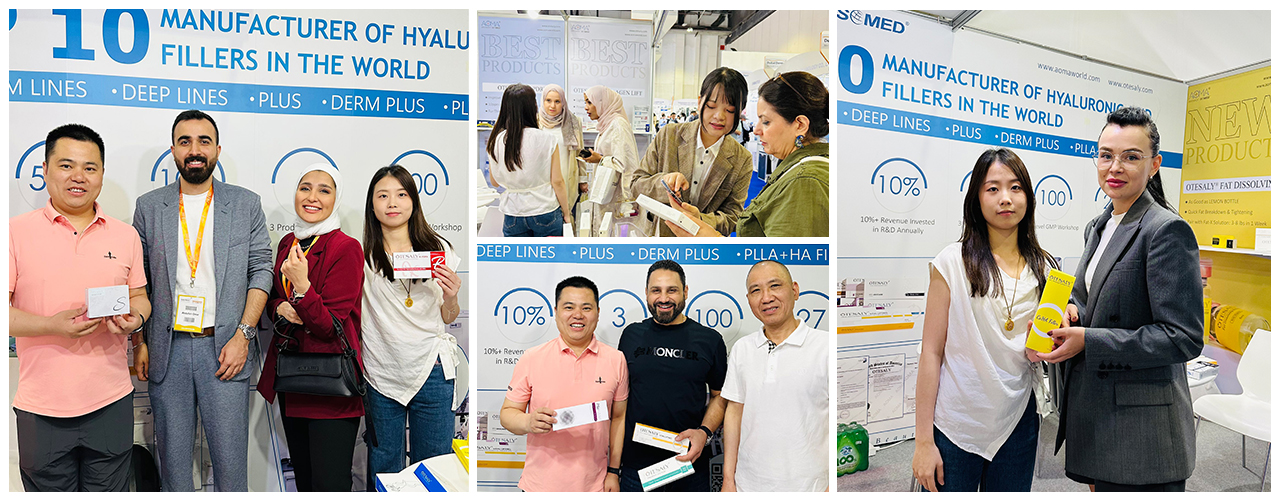
To date, AIMA has provided custom OEM/ODM solutions for over 521 brands across 60+ countries, with services covering brand positioning, logo design, custom packaging, and tailored formulation and HA concentration adjustments to match specific market needs. Many of these brands launched their EU dermal filler lines without the customs seizures, regulatory fines, or product recalls that have plagued less prepared market entrants. The company also holds U.S. FDA VCRP registration, supporting partners looking to expand beyond EU markets after establishing a compliant European presence.
Common MDR Compliance Mistakes That Cost Brands Money
Navigating EU MDR dermal filler requirements does not have to mean months of confusing paperwork, delayed launches, or unexpected fines. The most reliable path to compliant market entry is to work with a manufacturing partner that understands the regulation down to the last documentation requirement, builds compliance into every step of production, and stands behind their products with ongoing support after delivery. For teams sourcing dermal fillers for the EU market, requesting a sample of compliant SKUs like Facefill Lidocaine, reviewing full technical documentation upfront, and verifying production quality systems before placing a bulk order will eliminate most of the common risks associated with EU market entry.

Copyright @ 2026 AIMA International Group Co., Ltd.


