



Welcome to visit AIMA International Group
 Spain
Spain

Your browser version is too low, in order to ensure a better browsing experience,Please click to update to a higher version browser.
Talk about it later.XWelcome to visit AIMA International Group
Spain




.jpg)
Home > News > Industry Trends > A Complete Guide to Dermal Filler CE Marking Documentation: MDR Requirements, Common Pitfalls & Compliant Manufacturing Support
Industry TrendsHave you ever paid for a shipment of dermal fillers advertised as “CE-certified”, only to have your stock seized at EU customs because the documentation did not match the product SKU? In 2023, we connected with a Barcelona-based aesthetic brand founder who lived this exact scenario. She had sourced 1,800 syringes of cross-linked HA filler from a supplier offering prices 30% below market average, who sent over a blurry CE certificate scan and promised smooth clearance for all EU markets. When the shipment arrived at the Port of Valencia, customs officers requested SKU-specific technical documents to verify the certification applied to injectable Class III medical devices. The supplier could not produce them — the certificate on file was issued for a line of derma rollers, not injectable fillers. The entire shipment was destroyed, leaving her on the hook for €127,000 in product costs and port storage fees, and forcing her to cancel a highly anticipated summer launch that had already been promoted to 120 local clinics.
For brands, distributors, and clinic owners sourcing or private labeling dermal fillers for the EU market, CE marking documentation is not a perfunctory checkbox on a supplier onboarding list. It forms the entire legal and technical backbone that lets you move products across borders, protect patient safety, and avoid costly regulatory penalties. This guide breaks down exactly what valid dermal filler CE documentation includes, the common gaps that get shipments seized or product registrations rejected, and how established manufacturers structure compliance support to keep partner businesses running smoothly.
A common misperception floats around the aesthetic supply chain: many buyers assume CE marking is a single, one-page certificate a factory can pay a small fee to obtain. For injectable dermal fillers, which the EU classifies as Class III medical devices under the 2017/745 Medical Device Regulation (MDR), this could not be further from the truth. Class III devices carry the highest regulatory scrutiny short of life-sustaining implants, and valid CE marking requires a full, auditable set of documents reviewed and approved by a EU-recognized Notified Body. The full documentation package includes:
We saw how easy it is to overlook these requirements when a German chain of 12 aesthetic clinics reached out to us in 2022. The team had spent 14 months attempting to launch a private label filler line on their own, sourcing bulk HA from a raw material supplier and contracting a local filling lab to package syringes. They submitted a self-assembled technical file to their selected Notified Body, only to receive three consecutive rejections. First, they lacked test data proving BDDE cross-linker residue levels fell below the EU’s 2ppm safety limit. Second, their CER included data from just 32 patient treatments, far below the minimum sample size required for Class III device approval. Third, they had no formal PMS plan to track adverse events post-launch. By the time they addressed all gaps, two competing lidocaine facial fillers had already captured 38% of their target local market, costing the chain an estimated €280,000 in projected first-year sales.
After 20 years working with aesthetic brands across the EU, we see the same documentation gaps pop up again and again, often from suppliers offering steep discounts to win business.
Think about it — if a supplier offers you dermal fillers at 40% below the average market price, how can they afford the hundreds of thousands of euros in clinical testing, third-party audits, and regulatory work required to build a valid Class III CE documentation package? The math does not add up.
AIMA International Group Co., Ltd. has manufactured medical-grade aesthetic products since 2003, and holds an industry honor as one of the Top 10 Dermal Filler Manufacturers globally. We built our compliance framework from the ground up to eliminate the documentation headaches so many of our partners faced with previous suppliers, so every wholesale and OEM/ODM client receives a full, auditable CE documentation package for every dermal filler SKU they order.

Our 4,800 square meter modern production base houses Class 100 GMP clean rooms across 3 dedicated production lines, operating under strict ISO 13485 quality management standards and fully aligned with Class III medical device manufacturing requirements. We use high-purity medical-grade non-animal sourced hyaluronic acid, priced at $45,000 per kilogram, sourced exclusively from raw material suppliers that hold CE GMP certification. Every batch of raw material and finished product undergoes regular third-party testing by labs including SGS to confirm purity, sterility, and BDDE residue levels well below EU safety limits. Our in-house R&D team holds core patents for NASHA and HICE cross-linking technologies, with a library of over 1,000 mature, clinically tested formulations available for private label use.
Our production capacity supports partners of every size: we produce up to 5 million syringes annually, with a monthly output of 50,000 syringes. We offer flexible cooperation terms with no MOQ pressure to support emerging brands testing new markets, plus tiered volume discounts for large enterprise clients. Sample orders ship in 3-5 working days, bulk orders deliver in 15-20 days, and we offer expedited production options for time-sensitive launches. Unlike suppliers that hand over a single certificate scan and disappear after payment, our team provides end-to-end support from product formulation to post-market compliance, with dedicated support for medical aesthetics wholesale clients including adverse event response guidance, marketing material compliance reviews, and fast replacement for any product damaged during shipping.
One of our most in-demand dermal filler products for EU markets is our lidocaine-formulated facial filler, designed for comfortable, natural-looking results for patients.
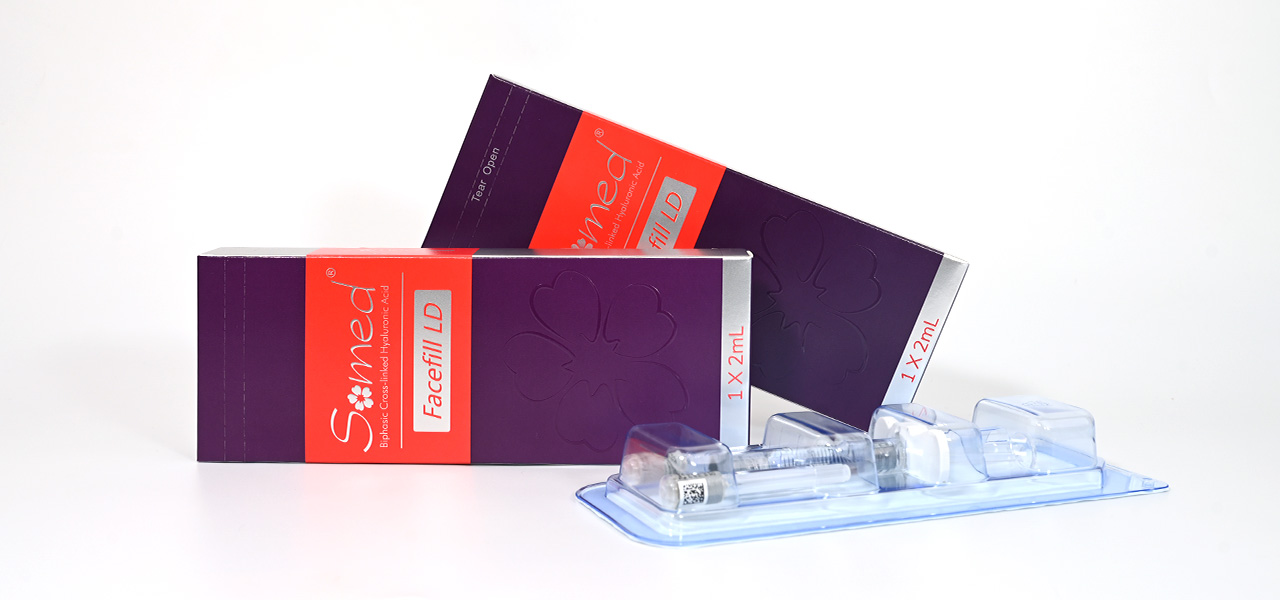
Facefill Lidocaine is a mid-viscosity cross-linked HA filler formulated for nasolabial fold correction, moderate cheek volume enhancement, and mid-face wrinkle treatment, with 0.3% lidocaine integrated into the gel to reduce injection pain without compromising filler longevity. Every production lot of Facefill Lidocaine is covered by a fully compliant CE marking documentation package, including batch-specific test reports, a valid Class III CE certificate from a EU Notified Body, a CER with clinical data from over 1,200 patient treatments across 6 EU clinical sites, full PMS and PSUR documentation supported by our in-house EU Responsible Person, and complete UDI registration for full traceability. We share unredacted versions of these documents with every client, and our compliance team is available to walk regulators through any section of the file if questions arise.
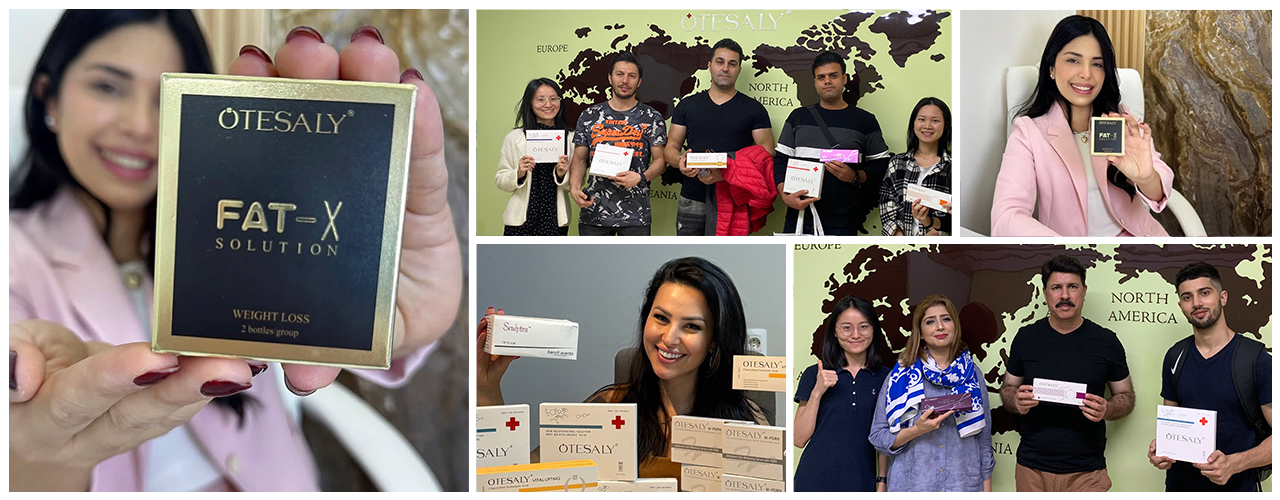
To date, we have provided custom dermal filler solutions and full CE documentation support for over 521 brands across 62 countries. One of those partners is a small startup from Porto, Portugal, that launched their private label lidocaine filler line with us in 2023 with an initial order of just 120 syringes. We provided the full CE documentation package they needed to register the product with INFARMED, the Portuguese national health authority, and they were able to begin selling to local clinics in 6 weeks — a process that typically takes new brands 6 to 12 months to complete when working with less prepared suppliers. In their first year of operation, they scaled to 12,000 syringes in annual sales, with zero customs holds or regulatory documentation requests they could not answer.
You can avoid most compliance missteps by asking targeted questions before you place your first order, instead of waiting for a customs notice or regulatory letter to arrive. Skip the generic “do you have CE certification?” and ask these specific questions:
For partners working with AIMA, we answer all these questions in writing before any contract is signed. We guarantee that every dermal filler shipment sent to EU markets is accompanied by fully valid, SKU-matched CE marking documentation, and we take full responsibility for any compliance issues caused by gaps in our paperwork. We also hold FDA VCRP registration for our cosmetic product lines, so partners selling to North American markets receive the same level of documentation support.
Many new brands and distributors spend weeks comparing filler viscosity, gel hardness, duration, and unit pricing when sourcing products, and treat CE marking documentation as an afterthought. But the cost of cutting corners on compliance — seized stock, regulatory fines, damaged brand reputation, and delayed launches — is far higher than the upfront investment of working with a manufacturer that builds compliance into every step of production. You do not have to navigate the tangled web of EU MDR requirements alone.

Copyright @ 2026 AIMA International Group Co., Ltd.


