
Welcome to visit AIMA International Group
 Spain
Spain

Your browser version is too low, in order to ensure a better browsing experience,Please click to update to a higher version browser.
Talk about it later.XWelcome to visit AIMA International Group
Spain
.jpg)
Home > News > Industry Trends > Dermal Filler Sample Development Process: Step-by-Step Guide for Private Label Aesthetic Brands
Industry TrendsA Miami-based aesthetic startup founder reached out to our team in late September 2022, 11 days out from their scheduled Black Friday pre-launch for a new mid-face dermal filler line. They had spent 3 months working with a smaller overseas supplier on sample development, only to end up with batches that had uneven extrusion force, 4x the allowed BDDE crosslinker residue limit, and lidocaine release so fast half their test patients reported 3+ hours of unwanted facial numbness after injection. They lost $120,000 in pre-booked influencer partnerships and ad spend waiting for usable samples, and were weeks away from watching a direct competitor launch an identical product to their target audience.
That founder is far from alone. A Germany-based chain of 27 aesthetic clinics ran into a different roadblock in early 2023, when they tried to develop a custom lip filler formulation. Every supplier they contacted required a 500-unit minimum order just to begin sample work, even though their clinical team only needed 15 units to run internal rheology testing and practitioner trials. They waited 6 months for a supplier willing to accommodate small test batches, and lost 18% of their regular dermal filler client base to a local clinic that launched a custom lip filler line in that window.
These stories highlight a simple truth most private label aesthetic brands learn the hard way: dermal filler sample development is not a trivial checkbox on the path to launch. It is the stage where formulation kinks get worked out, compliance risks get caught, and product performance gets aligned with what your patients actually want. Skip corners here, and you will spend far more money fixing bulk order issues, handling adverse reaction reports, and winning back customers who tried a poorly formulated first batch.
Pre-Development Consultation: Align Requirements Before Any Lab Work Begins
A surprising number of suppliers jump straight to mixing HA batches the second a client mentions a dermal filler order. They pull a generic formulation from the shelf, pour it into a pre-printed syringe, and ship it out as a “custom sample” — no questions asked about target treatment area, desired longevity, patient pain tolerance, or regional regulatory rules.
That approach wastes everyone’s time. The first step of any legitimate sample development process is a 30-60 minute consultation with the R&D team to lock in concrete, measurable requirements, not vague marketing language. Teams at AIMA International walk every partner through a standardized checklist during this call, covering:
The German clinic chain mentioned earlier? Their first call with our team lasted 45 minutes. They wanted a lip filler with 180Pa G’, 0.3% lidocaine, 10-month longevity, and full CE documentation to sell across EU markets. We locked those specs in on the call, no 500-unit MOQ required, and moved straight to raw material preparation.
Raw Material Screening: The Step Cut-Rate Suppliers Routinely Skip
Dermal filler performance lives or dies by raw material quality. You can have the most precise formulation recipe in the world, and it will produce inconsistent, high-reaction samples if you use low-grade HA or untested crosslinking agents.
AIMA has sourced the same grade of medical-grade, non-animal derived hyaluronic acid for 20 years, from suppliers that hold active CE GMP certification. The raw material costs $45,000 per kilogram — nearly 4x the cost of cosmetic-grade HA used by cut-rate suppliers — but it carries a 0% animal-derived protein contamination rate, which cuts adverse reaction risks dramatically. Every batch of incoming raw material goes through third-party testing via SGS to verify molecular weight, purity, and absence of heavy metals or endotoxins before it ever touches a formulation beaker.
All sample formulation work happens in the same production environment used for bulk orders, to eliminate gaps between sample performance and final bulk quality.
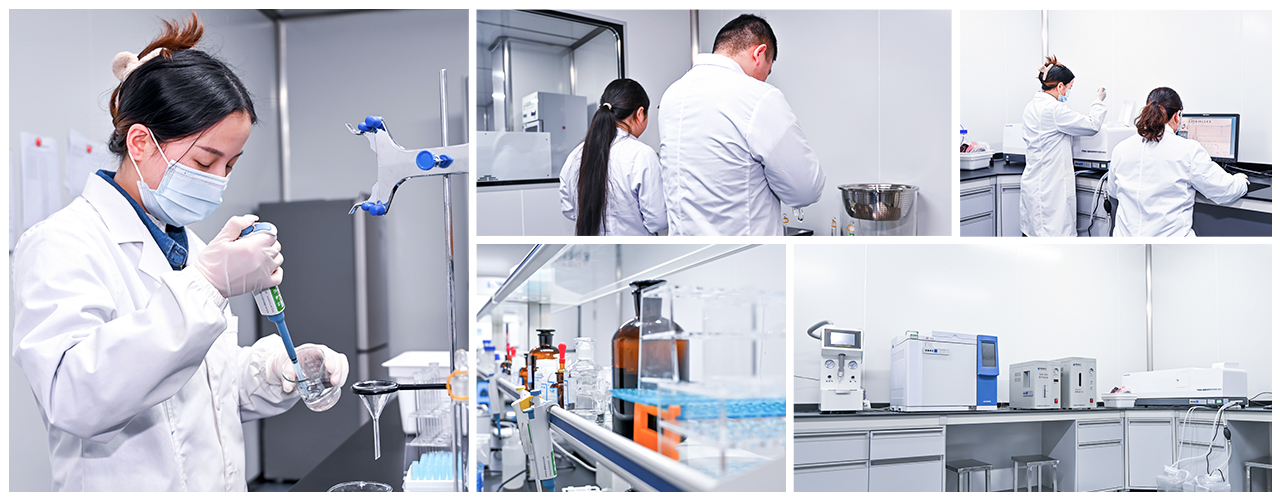
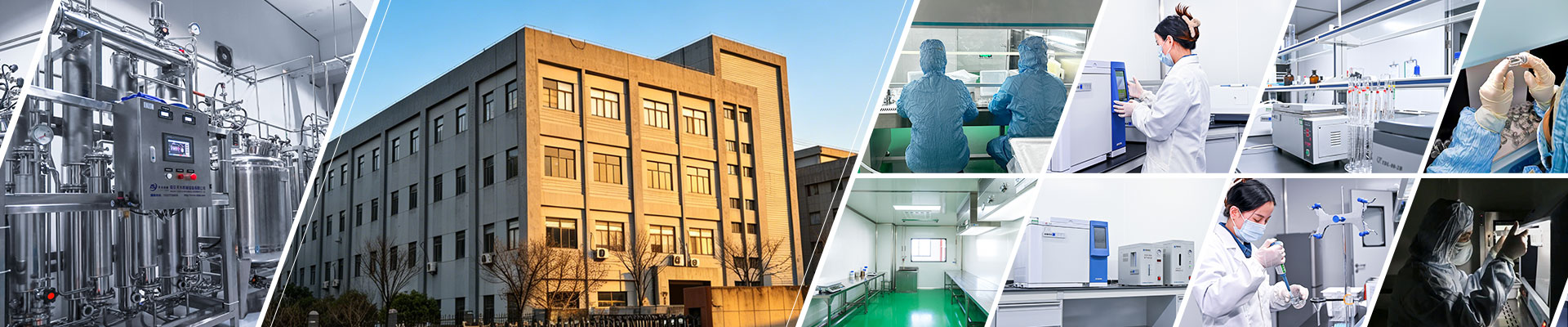
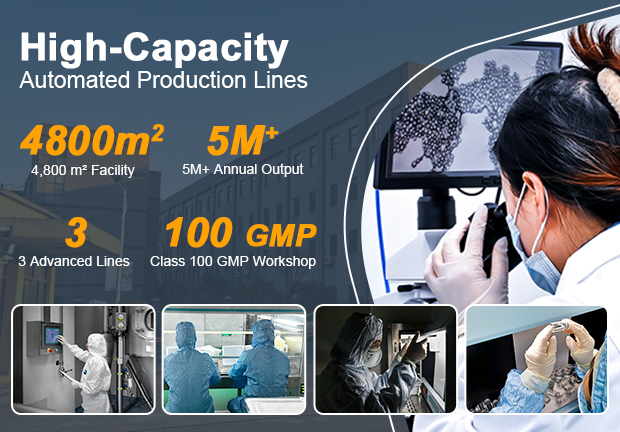
AIMA International Group’s 4,800sqm GMP Class 100 cleanroom facility, where all dermal filler sample development and bulk production runs take place across 3 dedicated production lines.
Remember the Miami startup that lost their Black Friday prep window with their old supplier? Lab tests later showed the samples they received were made with $12,000/kg cosmetic-grade HA, with BDDE crosslinker residue levels hitting 0.8ppm — 4x the 0.2ppm limit set by EU medical device regulations. That residue was the root cause of the prolonged numbness and swelling their test patients reported.
Lab Formulation & Iteration: Tuning Rheology for Real-World Use
Once raw materials pass incoming testing, R&D technicians move to formulation, using AIMA’s two core proprietary technologies: NASHA (Non-Animal Stabilized Hyaluronic Acid) crosslinking, and HICE (Highly Integrated Crosslinking Encapsulation) for controlled lidocaine release.
NASHA technology produces HA gel particles with highly uniform crosslink density, which reduces gel degradation rate variability and cuts the risk of lumps or nodules after injection. Unlike older crosslinking methods that leave unreacted BDDE trapped in the gel matrix, NASHA processing removes 99.8% of residual crosslinker during the dialysis stage. The HICE process, meanwhile, encapsulates lidocaine molecules within the crosslinked HA matrix, rather than mixing them loosely into the gel. This lets lidocaine release gradually starting 60 seconds after injection, providing 4-6 hours of numbing effect without the sudden initial burst that causes extended, unwanted facial numbness.
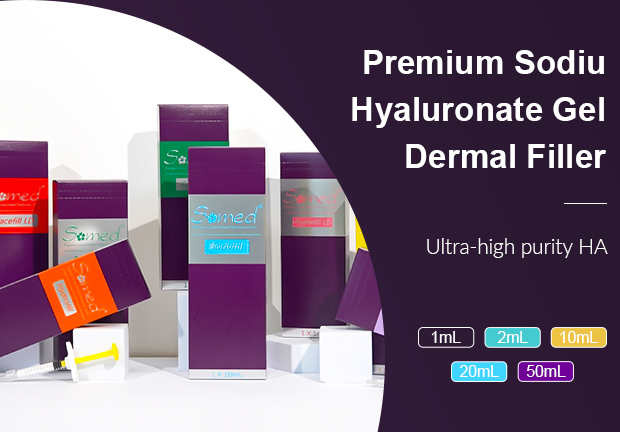
Technicians adjust HA molecular weight distribution, crosslink density, and gel particle size to match the exact specs locked in during the initial consultation. For partners targeting mid-face volume loss and deep nasolabial fold correction, the most frequently requested sample formulation is Facefill Lidocaine, a dermal filler tuned for deep dermal and supraperiosteal injection.
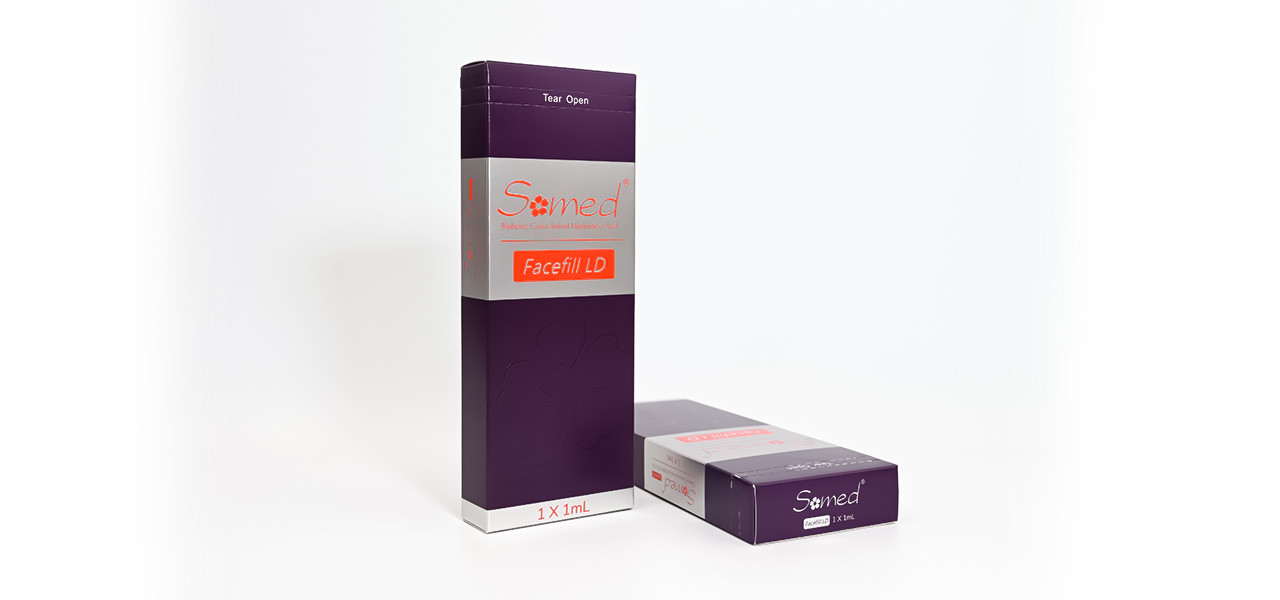
Facefill Lidocaine dermal filler, formulated for mid-face volume restoration and deep nasolabial fold correction, with 0.3% encapsulated lidocaine for reduced patient discomfort.
The standard Facefill Lidocaine formulation holds a G’ value of 220Pa, with a steady extrusion force of 18N through a 27G needle — a force level accessible even to newer injectors, without the sudden gel “burps” that cause uneven volume placement. The formulation lasts 9-12 months in tissue, with a smooth, non-granular texture that integrates naturally with surrounding soft tissue. Teams will tweak these specs on request: for partners targeting superficial fine lines, they will lower G’ to 120Pa and reduce particle size; for partners targeting jawline contouring, they will raise G’ to 280Pa for extra structural support.
The R&D team holds a library of more than 1,000 pre-tested, validated dermal filler formulations, so most custom sample requests do not require building a recipe from scratch. That cuts down development time dramatically, without sacrificing customization.
Multi-Stage Sample Testing: No Batch Ships Without Full Validation
Hand-mixed gel in a lab beaker can look and feel like a usable dermal filler, but it will not hold up to real clinical use unless it passes a full battery of tests before shipment. AIMA runs every sample batch through the same testing protocols used for bulk production orders, per ISO 13485 quality management system requirements for Class III medical devices:
As a recipient of the “Top 10 Global Dermal Filler Manufacturers” industry award, AIMA holds every sample batch to the same quality bar as bulk orders sent to major global markets. There are no “marketing samples” formulated to look good in a demo but fail in clinical practice.
Sample Shipment & Post-Delivery Iteration
Standard sample orders ship within 3-5 business days of requirement confirmation, with expedited shipping options available for partners working on tight launch timelines. Every sample shipment includes a full compliance dossier, with CE certification, FDA VCRP registration documentation, ISO 13485 quality certificates, and batch-specific test reports, so partners can begin regulatory submission work the second samples arrive. All orders placed through the Medical Aesthetics Wholesale channel on supplierfiller.com come with 12 months of dedicated after-sales support, covering formulation tweaks, re-issuance of compliance documents, and bulk order quality reconciliation, with no hidden service fees.
The work does not end when the tracking number is sent. A dedicated technical account manager stays in touch with every partner through their in-house testing period, collecting feedback from injectors and test patients to adjust formulations as needed. Common adjustments include tweaks to extrusion force, G’ value, lidocaine concentration, or gel longevity. Teams will ship revised sample batches in 2-3 business days, until the formulation matches the partner’s exact requirements.
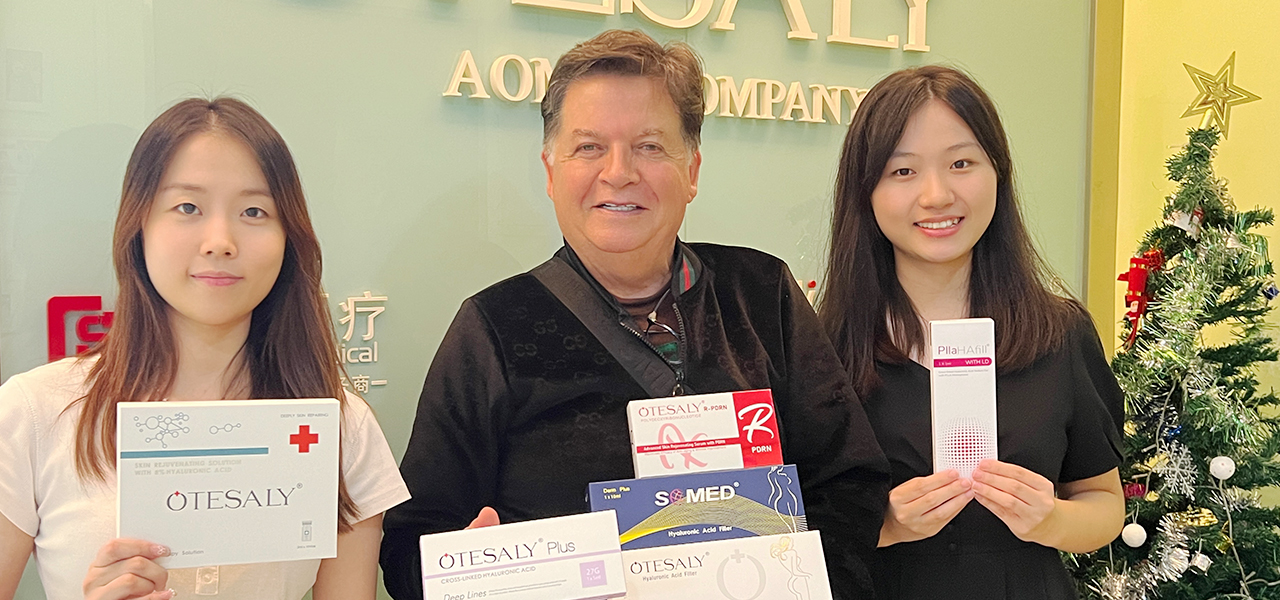
A South Korean brand partner running in-clinic trials of Facefill Lidocaine samples with their team of board-certified injectors, 2024.
For the Miami startup racing to hit their Black Friday launch, the team shipped the first round of Facefill Lidocaine samples 3 business days after the initial consultation. Their clinical team tested the samples and asked for two adjustments: a 30% faster lidocaine onset time, and a G’ reduction from 220Pa to 190Pa to match their target of superficial nasolabial fold injection, rather than deep cheek placement. The revised samples shipped 2 days later, and the brand approved the formulation 4 days after that. They launched on schedule, and that custom filler SKU generated $1.2 million in revenue in its first 12 months on the market. The German clinic chain, meanwhile, tested 5 different sample iterations of their custom lip filler over 2 months, with no MOQ requirements or extra sample fees. They placed their first bulk order of 10,000 units in late 2023, and have since scaled to 120,000 units annually across their clinic network.
Common Sample Development Mistakes That Derail Launches
After working with 521+ aesthetic brands across 60+ countries, the AIMA team has seen the same missteps derail launch timelines again and again. These are easy to avoid if you know what to watch for:
Once a sample is fully approved, the production team transfers the exact formulation to bulk manufacturing, with 15-20 day lead times for standard bulk orders and expedited options for time-sensitive launches. The facility’s 50,000 unit monthly production capacity and 5 million unit annual output can scale with brands as they grow, from first-launch small batches to multi-national distribution runs.
Any supplier can pour HA gel into a syringe and call it a custom sample. The difference lies in a structured, tested development process that prioritizes formulation consistency, regulatory compliance, and real clinical performance — from the first consultation call to the final bulk delivery.
Copyright @ 2026 AIMA International Group Co., Ltd.