



Welcome to visit AIMA International Group
 Spain
Spain

Your browser version is too low, in order to ensure a better browsing experience,Please click to update to a higher version browser.
Talk about it later.XWelcome to visit AIMA International Group
Spain




.jpg)
Home > News > Industry Trends > Dermal Filler Risk Management: A Practical Guide to ISO 14971 Compliance for Brands and Clinics
Industry TrendsIf you have spent any time working in the medical aesthetics space, you have seen the headlines: a popular dermal filler is pulled from shelves after dozens of patient reports of granulomas, a new brand is fined six figures for non-compliant safety documentation, a clinic chain faces lawsuits after a batch of filler causes persistent adverse reactions. Why do so many dermal fillers that pass basic lab tests still cause preventable safety incidents after launch?
The answer lies in a widespread misunderstanding of compliance: too many manufacturers treat standards like ISO 14971 as a pile of paperwork to show auditors, rather than a living framework to reduce risk at every stage of a product’s lifecycle. For dermal fillers — Class III medical devices injected directly into patient soft tissue — cutting corners on risk management does not just lead to regulatory trouble. It puts patient safety at risk, and can erase years of brand building in a matter of weeks.
ISO 14971 is the global standard for medical device risk management, but it is often misrepresented as a bureaucratic checklist. At its core, the standard requires manufacturers to map, measure, control, and monitor risk across the entire product lifecycle — not just run a final lab test on finished goods. For dermal fillers, this means addressing four core pillars of risk work:
In 2022, a small dermal filler brand based in Poland approached our team after a catastrophic product failure. The brand had sourced 12,000 syringes of mid-viscosity facial filler from a budget manufacturer that advertised valid CE marking, but did not maintain ISO 14971-aligned risk records. Within 3 months of launch, 78 patients reported persistent redness and hard nodules at injection sites. When the Polish Office for Registration of Medicinal Products launched an investigation, the supplier could not produce traceable risk assessment records for the problematic batches — they could not even confirm which raw material lot was used for the affected syringes. The brand was fined €217,000, forced to issue a full public recall, and shut down operations 6 months later. The root cause? The manufacturer had skipped pre-production risk analysis of raw material endotoxin levels, accepting a batch of HA raw material that was 18% above the acceptable endotoxin threshold to cut costs.
Walk the production floor of any unvetted dermal filler factory, and you will see the same gaps repeated across facilities, all of which run directly counter to ISO 14971 requirements:
We saw this gap cause massive damage for a U.S.-based medical spa chain that launched its own private label dermal filler line in 2023. Their original supplier provided all the standard certification documents, but had no structured post-market risk monitoring process. Four months after launch, the chain started receiving reports of delayed swelling in patients who had received the filler, occurring 4-6 weeks post-injection. When they reached out to the supplier for support, the manufacturer had no system to cross-reference the complaint reports with production or raw material data. It took 10 weeks to identify that a slight change in cross-linking curing time on one production line had created a higher rate of uncrosslinked HA particles in the gel. By that point, the FDA had issued a warning letter, the chain was facing 19 pending patient lawsuits, and they were forced to destroy $1.2 million worth of inventory.
Founded in 2003, AIMA International Group Co., Ltd. is recognized as one of the global Top 10 Dermal Filler Manufacturers, with a track record of building safe, compliant dermal filler products for partners across 60+ countries. Unlike suppliers that treat ISO 14971 as a box-ticking exercise for audits, we have built the standard into every decision we make, from raw material sourcing to post-market support.

Our 4,800 square meter modern production base houses Class 100 GMP clean rooms and 3 specialized production lines, operating under strict ISO 13485 quality management systems and Class III medical device manufacturing specifications. We start risk management at the raw material gate, long before production begins. All medical-grade non-animal HA we use costs $45,000 per kilogram, sourced exclusively from CE GMP-certified suppliers that undergo regular third-party testing from bodies like SGS. Every incoming raw material lot goes through 17 separate risk checks, including endotoxin levels, protein residue, molecular weight consistency, and cross-linker reactivity — we reject 8% of incoming raw material lots that meet basic supplier specs but fail our ISO 14971 risk thresholds, even if it means delaying production.
Our production setup supports up to 5 million syringes annually, with monthly output reaching 50,000 units. Automated filling systems check syringe volume to within 0.01ml accuracy to avoid under/over-dosing, in-line bioburden testing runs every 45 minutes during production, and every production worker completes annual ISO 14971 risk training to identify issues in real time. We run 100% visual and functional checks on every single syringe, rather than relying on random sampling that can let defective units slip through to clients.
Our R&D team holds over 1000 mature dermal filler formulations, built on proprietary NASHA and HICE technology. Every new formulation goes through a 6-month risk validation process before it ever reaches a client, including testing for extrusion force, gel cohesion, lidocaine release profile, and soft tissue reaction. One of our most rigorously tested formulations, CaHafill Lidocaine, was developed with ISO 14971 risk mapping guiding every formulation decision.
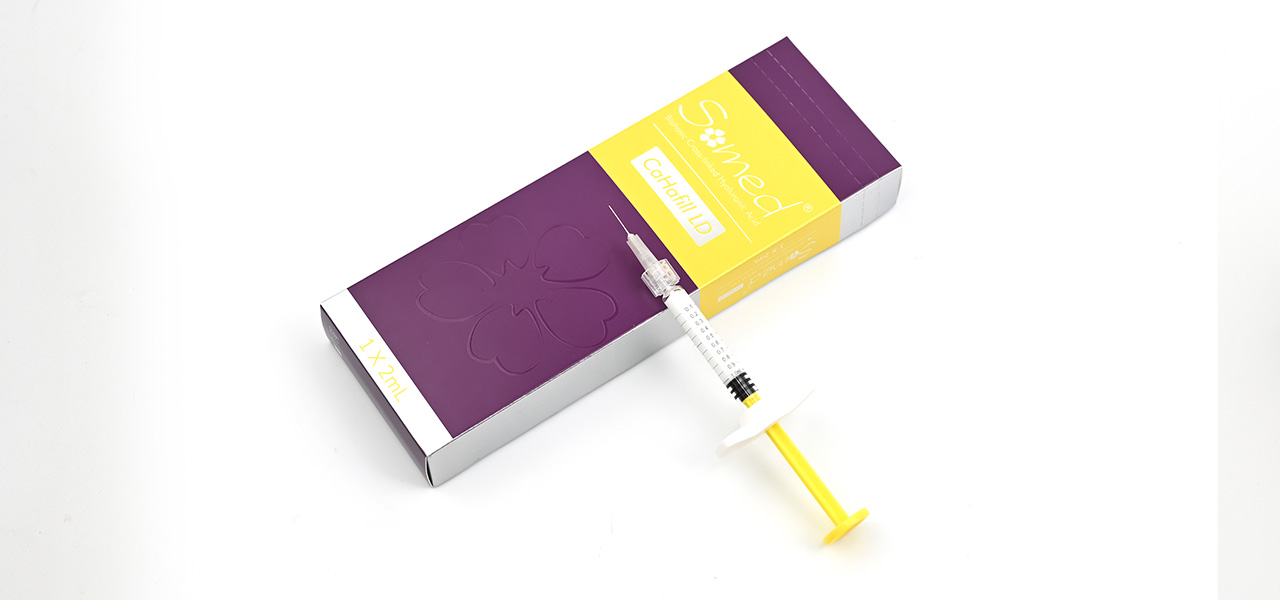
During development, our team mapped 42 separate risk points across the product lifecycle: from calcium hydroxylapatite (CaHA) microsphere size consistency (too large and it causes palpable nodule formation, too small and it fails to provide long-term volumizing support) to lidocaine concentration accuracy (calibrated to ensure consistent pain reduction during injection without raising adverse reaction risk) to clear injection depth guidance for clinical end users. We adjusted the CaHA microsphere size to a narrow 25-45um range after risk modeling showed this size range reduced nodule risk by 92% compared to the wider particle distributions used by generic manufacturers, and set lidocaine concentration at 0.3% — the level proven to reduce injection pain by 78% without increasing allergy risk, per 12 months of clinical follow-up data.
For brand partners using our OEM/ODM services, we offer end-to-end support spanning brand positioning, logo design, custom packaging, and tailored formulation and concentration adjustments. We operate with a no MOQ pressure model to support emerging brands building their first product lines, while offering volume-based discounts for large enterprise and medical aesthetics wholesale partners. Sample orders ship within 3-5 business days, bulk orders deliver within 15-20 days, and expedited production options are available for time-sensitive launch schedules. To date, we have delivered custom dermal filler solutions for more than 521 brands across the globe.
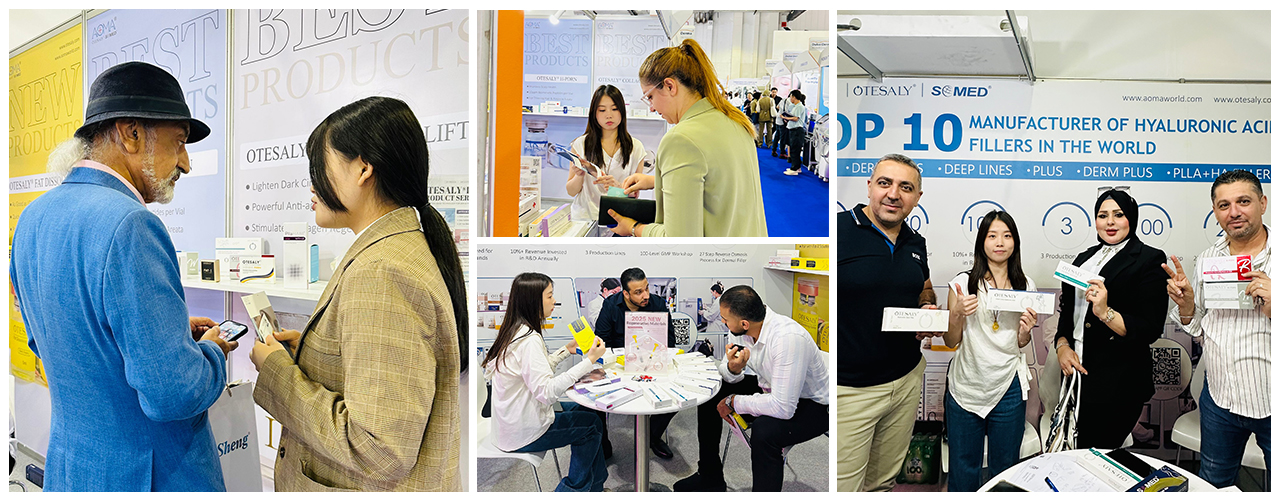
Many of these partners first connected with our team at global industry events like the Dubai Beauty Exhibition, where we walk brand owners through our full risk management documentation, share batch test reports, and answer compliance questions face to face, rather than relying on scripted sales pitches. For partners who cannot meet us in person at events, full product specifications, compliance documentation, and custom quote requests are available through our official platform at supplierfiller.com, where brand and clinic partners can browse our full dermal filler product range, access sample request forms, and connect directly with our technical support team.
We do not pretend complications never happen with dermal fillers — any supplier that claims their product has zero risk is lying, and that mindset is exactly what leads to preventable safety incidents. What sets an ISO 14971-aligned supplier apart is having a structured process to respond when issues arise.
For every partner, we provide 24/7 technical support to investigate any adverse event report, with full traceability records available within 2 hours of a request. We update our risk assessments quarterly, using real-world data from all our partner markets to adjust production controls, formulation parameters, and clinical guidance as needed. All our products hold EU CE certification and U.S. FDA VCRP registration, and we provide full compliance documentation to support your local market registration, with no hidden fees or missing paperwork. Unlike suppliers that disappear after a shipment is signed for, we retain production records for every batch for 10 years, so you never have to face a regulatory audit without supporting documentation.
A lot of new brand owners ask if cutting corners on ISO 14971 compliance is worth it to save a few cents per syringe. Think back to the two cases I shared earlier: the Polish brand that lost €217,000 and shut down, the U.S. med spa chain that lost $1.2 million in inventory plus legal fees. Those costs are thousands of times higher than the marginal cost of working with a supplier that takes risk management seriously.
If you are sourcing dermal fillers for your brand or clinic, ask every potential supplier one simple question: Can you show me the product-specific ISO 14971 risk assessment for the exact formulation you are selling me, including traceability records for the last 5 batches? If they hesitate, or hand you a generic 10-page document that does not mention specific risk points for that product, walk away. Your brand reputation, your regulatory compliance, and the safety of every patient who receives your product depends on it.

Copyright @ 2026 AIMA International Group Co., Ltd.


