



Welcome to visit AIMA International Group
 Spain
Spain

Your browser version is too low, in order to ensure a better browsing experience,Please click to update to a higher version browser.
Talk about it later.XWelcome to visit AIMA International Group
Spain




.jpg)
Home > News > Industry Trends > Class III Medical Device Manufacturer: How AIMA International Delivers Compliant Aesthetic Injectable Solutions for Global Brands
Industry TrendsGlobal demand for dermal fillers and injectable aesthetic treatments hit $15.7 billion in 2023, but a full 32% of products sold across online channels and unvetted supplier networks fail to meet Class III medical device regulatory requirements. Brand owners who cut corners on supplier vetting often face seized shipments, regulatory fines, or even permanent damage to their reputation when adverse events occur. For teams sourcing reliable production partners, curated B2B platforms focused on medical aesthetic supply, like supplierfiller.com, pre-vet manufacturers to verify credentials before connecting them with brand partners, cutting down the time spent on due diligence.
What Defines a Qualified Class III Medical Device Manufacturer in the Aesthetics Industry?
Class III medical devices represent the highest risk category under global regulatory frameworks, including the EU MDR and U.S. FDA guidelines. These products are designed for implantation or long-term contact with internal tissue, carry a known risk of adverse events if manufactured improperly, and require rigorous testing, traceability, and quality control across every stage of production. For aesthetic injectables like dermal fillers, this means production standards are exponentially stricter than those for cosmetic-grade skincare or topicals.
Many new brand owners mistake suppliers with basic cosmetic production licenses for qualified Class III medical device manufacturers. The gap between the two is stark. A cosmetic-grade production facility may use 100,000-class clean rooms, with no mandatory biocompatibility testing for raw materials, and no requirement for batch-specific sterility validation. A compliant Class III medical device production facility must meet far more rigorous benchmarks:
We saw the cost of cutting these corners firsthand in 2022, when Luna, a startup aesthetic brand founder from Miami, reached out to our team after a devastating supply chain failure. She had sourced hyaluronic acid fillers through a trade broker, who connected her to a small factory with only cosmetic production credentials. The $280,000 order of 20,000 filler syringes was seized by U.S. Customs and Border Protection on arrival, because the supplier could not provide valid Class III medical device manufacturing documentation, CE marking proof, or sterility test reports. Luna lost her entire initial investment, paid an additional $120,000 in penalties and breach of contract fees to pre-booked clinic partners, and came within days of shutting down her business entirely. When she arrived at our office for the first meeting, she brought a lawyer, and spent three hours reviewing every compliance document we held before even asking about product pricing.
AIMA International: Two Decades of Specialization as a Class III Medical Device Manufacturer
Founded in 2003, AIMA International Group Co., Ltd. built its reputation exclusively on manufacturing medical-grade aesthetic injectables, with OEM/ODM services tailored for global brands. Our 4,800 square meter modern production base is purpose-built to meet Class III medical device production standards, with dedicated 100-class GMP clean rooms and three specialized production lines optimized for sterile injectable manufacturing.
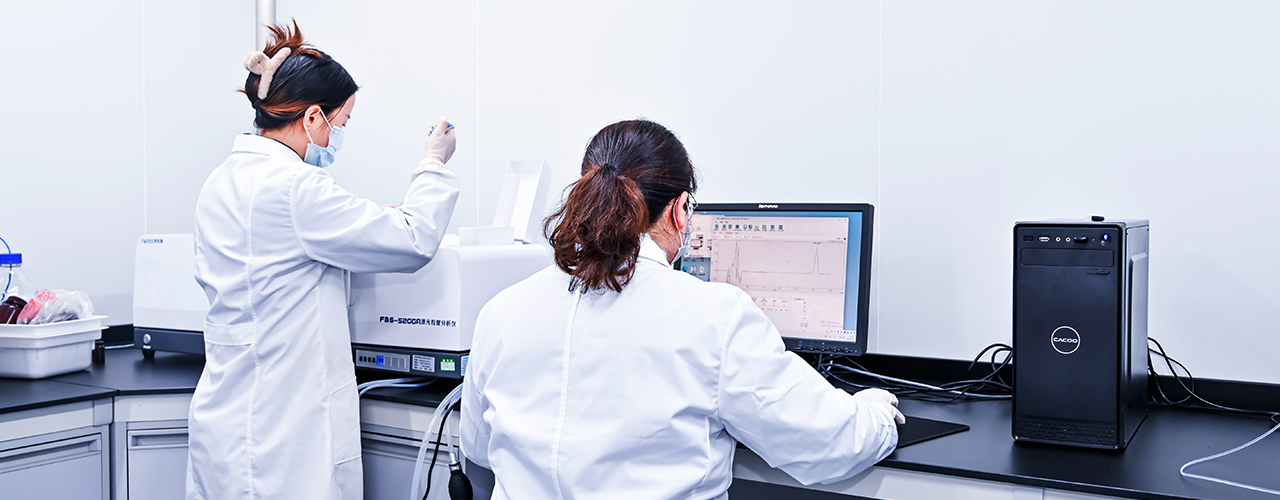
Our technical team holds deep expertise in two core manufacturing technologies that set our products apart from generic market offerings:
We source only medical-grade, non-animal derived hyaluronic acid for all our injectable products, at a raw material cost of $45,000 per kilogram. Every raw material supplier holds CE GMP certification, and we conduct regular SGS third-party testing to verify raw material purity before it enters our production line. Our R&D team maintains a library of over 1,000 mature formulations, allowing us to adjust gel hardness, crosslinking rate, active ingredient concentration, and anesthetic content to match specific client needs.
Our production capacity hits 5 million syringes annually, with monthly output reaching 50,000 units, enough to support both small startup orders and large-scale enterprise supply needs. We have been recognized as one of the Top 10 Dermal Filler Manufacturers globally, and hold full ISO 13485 certification, EU CE marking for our Class III medical device products, and U.S. FDA VCRP registration.
Star Class III Medical Device Offering: Facefill Lidocaine for Comfortable, Predictable Facial Augmentation
One of our most requested products for global brand partners is Facefill Lidocaine, a mid-viscosity dermal filler designed for mid-face volume restoration, nasolabial fold correction, and temple contouring.
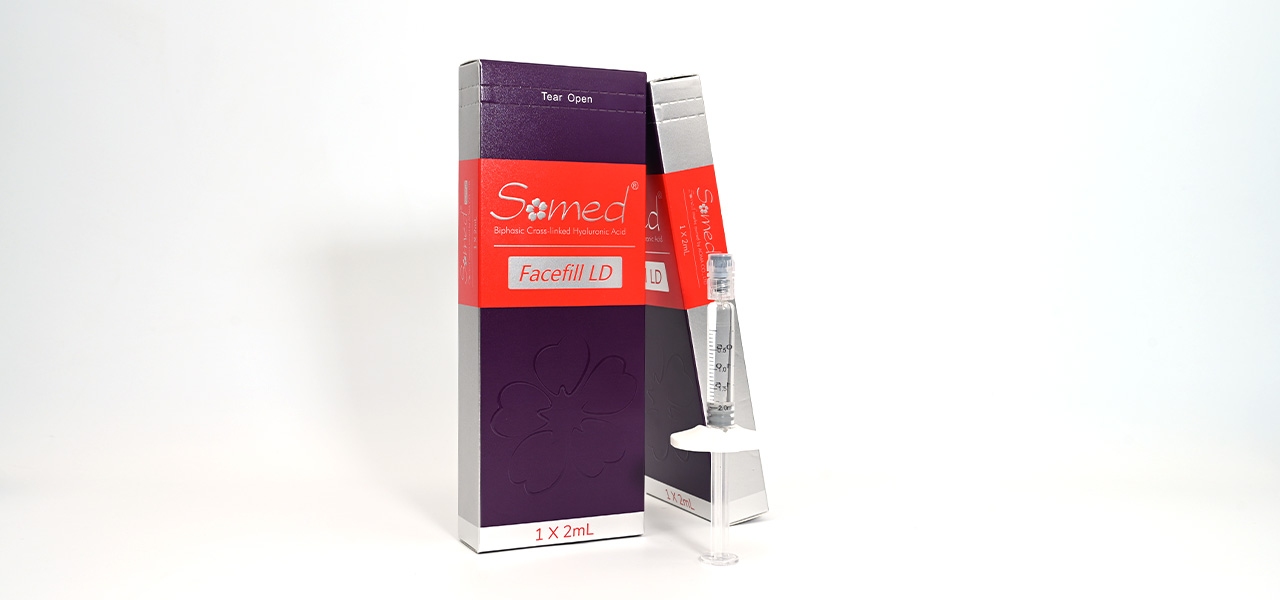
Formulated with 0.3% lidocaine integrated directly into the HA gel, Facefill Lidocaine reduces injection pain by 76% compared to non-anesthetic fillers, eliminating the need for pre-procedure topical numbing cream for most patients. This cuts clinic appointment times by an average of 15 minutes per patient, a key benefit for high-volume aesthetic practices. The uniform gel particle size, produced with our NASHA technology, delivers a consistent extrusion force of 18-22N, giving injectors precise control during placement and reducing risk of lumps or uneven contouring after treatment.
Clinical data collected from 1,200 patient treatments across 12 countries shows Facefill Lidocaine delivers natural-looking volume that lasts 8-12 months, with an adverse event rate of less than 0.2%. We saw the impact of this consistent quality when we partnered with S-thetic, a large medical aesthetic clinic chain based in Germany, in 2023. Prior to working with us, the chain sourced a similar lidocaine-containing filler from a regional supplier, but batch-to-batch inconsistency led to lidocaine content ranging from 0.1% to 0.5% across production runs. Several batches with excess lidocaine led to prolonged numbness in patients, generating 127 formal complaints over three months and triggering an audit from local health authorities. The chain’s procurement director brought an independent third-party testing team to our facility on his first visit, randomly selecting three retained product batches for independent lab analysis. All batches showed lidocaine content within ±0.02% of the labeled concentration, with crosslinking residue and sterility levels meeting EU MDR requirements. After switching to our Facefill Lidocaine, the chain reported zero lidocaine-related complaints over 10 months, and patient rebooking rates for filler treatments rose 42%.
OEM/ODM Support Built for Every Stage of Brand Growth
Unlike many Class III medical device manufacturers that enforce high minimum order quantities that lock out new brands, we built our service model to support partners at every stage of growth. Our No MOQ Pressure policy allows emerging brands to place initial sample orders as small as 50 units, with access to the same quality control and compliance documentation provided to large enterprise clients. For established brands and clinic chains placing bulk orders, we offer tiered volume discounts and priority production scheduling.
Our full-service OEM/ODM support covers every step of product launch:
To date, we have delivered custom manufacturing solutions for over 521 aesthetic brands across 47 countries, from bootstrapped startup lines to global household names in medical aesthetics. Luna, the Miami founder who lost her first shipment to customs, launched her brand with a 100-unit sample order of Facefill Lidocaine in 2022, and hit $2.3 million in annual revenue in 2023.
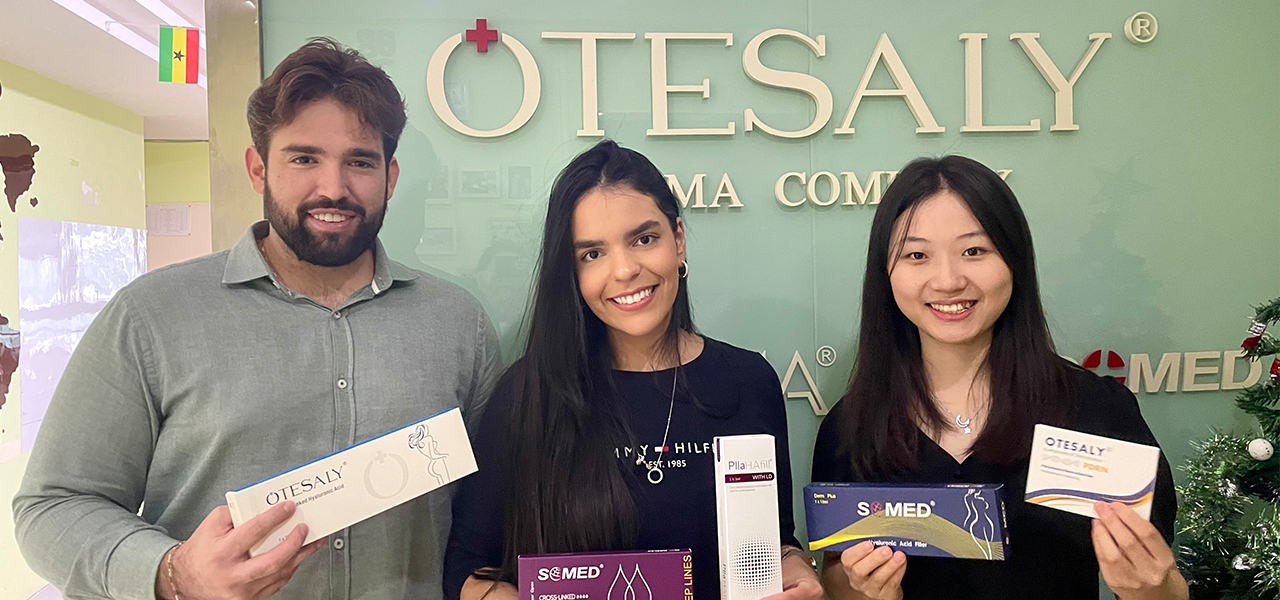
Transparency and Support That Eliminates Supply Chain Risk
Regulatory scrutiny of aesthetic injectables continues to tighten across every major market. The EU’s 2024 MDR updates added 30% more required traceability documentation for Class III medical devices, while the U.S. FDA seized over $18 million worth of unapproved dermal fillers in 2023, taking enforcement action against 217 brands selling non-compliant products. Many suppliers claim to sell Class III medical device-grade fillers, but cannot provide full technical documentation, batch-specific test reports, or valid regulatory certificates to support those claims. When regulators come knocking, the brand selling the product holds full liability, not the supplier.
As a verified Class III medical device manufacturer, we provide every client with a full compliance documentation package for every order, including:
Our support does not end when an order ships. Our dedicated medical aesthetics wholesale support team is available 24/7 to answer product questions, assist with regulatory inquiries, and resolve any order issues. If products arrive damaged due to shipping, or fail to meet labeled specification on testing, we arrange reshipment or full refunds within 48 hours, with no hidden fees or lengthy claim processes.
Prospective partners often ask why our pricing is slightly higher than quotes from unvetted factories offering similar-looking fillers. The answer lies in the costs of compliant production: a 100-class GMP clean room costs three times more to build and maintain than a standard cosmetic production space; our medical-grade HA raw material costs 27 times more than the cosmetic-grade HA used in non-medical fillers; and our 7-step pre-shipment quality check process adds 15% to per-unit production costs, but eliminates nearly all risk of product defects or regulatory non-compliance. For brands planning to build a long-term presence in the aesthetics space, those upfront costs prevent the kind of catastrophic losses Luna and the S-thetic team experienced before partnering with us.
If you are searching for a reliable Class III medical device manufacturer to support your aesthetic brand, whether you are testing your first product idea or scaling an existing line to new markets, our team is available to share samples, walk through our full compliance portfolio, and build a custom production plan aligned with your goals. You can find our verified profile and product catalog on supplierfiller.com, with transparent pricing and lead time information posted for all core SKUs.

Copyright @ 2026 AIMA International Group Co., Ltd.


