
Welcome to visit AIMA International Group
 Spain
Spain

Your browser version is too low, in order to ensure a better browsing experience,Please click to update to a higher version browser.
Talk about it later.XWelcome to visit AIMA International Group
Spain



.jpg)
Home > News > Industry Trends > Residual BDDE Testing for Dermal Fillers: The Safety Metric That Separates Premium HA Products From High-Risk Inventory
Industry TrendsHave you ever wondered why two visually identical hyaluronic acid (HA) dermal fillers, advertised with matching HA concentration, crosslinking density, and claimed longevity, can trigger drastically different patient responses? One may deliver smooth, predictable results with zero post-injection irritation, while the other causes unexplained swelling, hard lumps, or delayed inflammatory reactions weeks after treatment. More often than not, the gap traces back to a quality control step many brands and clinics gloss over during supplier vetting: residual BDDE testing.
In 2022, an up-and-coming Spanish aesthetic brand set out to launch its first line of HA facial fillers, selecting a contract manufacturer that offered pricing 42% below the industry average. The supplier provided seemingly complete certification documents, passed basic microbial testing, and delivered finished goods on schedule. The brand moved to market quickly, distributing stock to 17 independent clinics across Spain and Portugal. Within three months, the team received 127 adverse event reports: patients developed persistent swelling lasting two or more weeks, tender nodules at injection sites, and in 11 cases, granulomas larger than 1cm that required hyaluronidase dissolution or surgical removal. EU health regulators issued a mandatory recall, and the brand shouldered more than €2.1 million in compensation, channel penalties, and reputational damage before shutting down operations. Post-recall third-party testing found the filler carried residual BDDE levels of 11.8μg/g — 5.9 times the legal safety limit set by EU medical device regulations.
BDDE, short for 1,4-butanediol diglycidyl ether, is the most widely used crosslinking agent in medical-grade HA filler production. Unprocessed HA exists as loose linear molecules that break down within days of entering the body, offering no meaningful structural support for soft tissue augmentation. When mixed with HA under controlled reaction conditions, BDDE forms stable ether bonds between individual HA chains, building a flexible 3D gel network that gives fillers their targeted elasticity, lift capacity, and 6–18 month in-vivo longevity.
BDDE is classified as a cytotoxic epoxide compound in its unbound form. If crosslinked gel is not thoroughly purified to remove unreacted free BDDE after the crosslinking reaction, leftover residue will irritate surrounding soft tissue over time, triggering delayed immune responses that do not appear immediately after injection. Documented adverse events linked to excess residual BDDE include:
Global medical device regulators set strict, enforceable limits for residual BDDE in HA fillers. The EU CE marking framework requires residual BDDE levels below 2μg/g (2 parts per million), the U.S. FDA enforces a 1μg/g threshold for approved medical fillers, and China’s NMPA applies the same 2μg/g limit for Class III medical device-grade dermal fillers. Accurate residual BDDE testing relies on gas chromatography-mass spectrometry (GC-MS), a lab method that can detect trace amounts of the compound down to 0.01μg/g when executed correctly. Many low-cost contract manufacturers cut corners here: a fully calibrated GC-MS setup costs more than $80,000, and single-batch testing runs close to $300 in labor and reagent costs. For unregulated factories competing on rock-bottom pricing, this is an easy line item to eliminate, often by reusing old test reports or falsifying results.
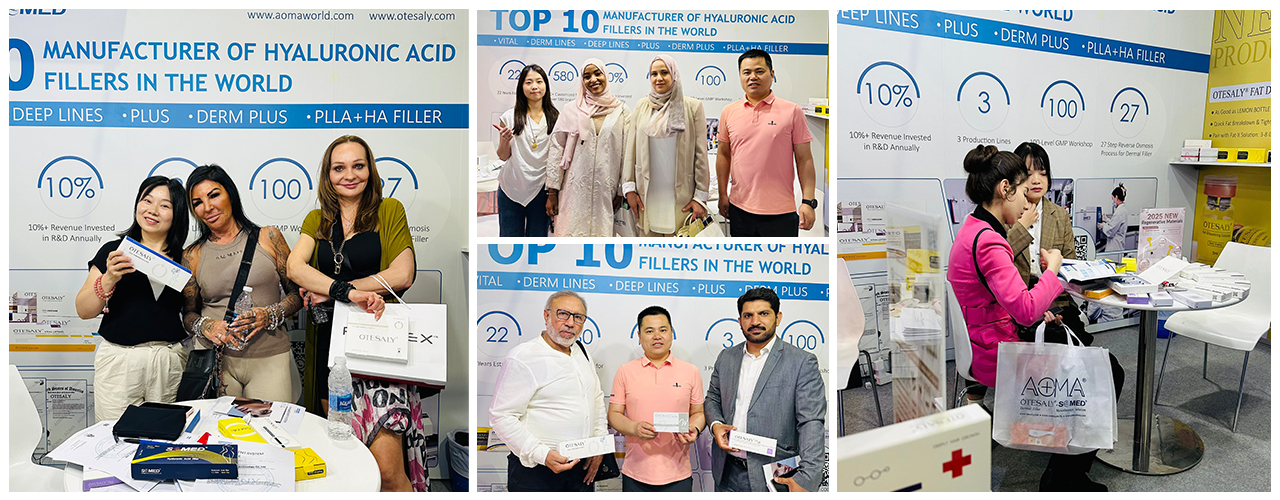
In 2023, a high-end aesthetic clinic chain in Dubai, serving more than 80,000 patients across 6 locations, switched filler suppliers after being offered a 25% bulk discount on a line of CE-marked HA fillers. The supplier provided digital copies of certification and lab reports, so the procurement team skipped independent third-party testing and rolled the product out to its injectors. Within a month, 9 patients reported unexplained late-onset swelling after cheek and nasolabial fold injections. The clinic sent retained stock samples to SGS for blind testing, which found residual BDDE levels of 7.4μg/g — 3.7 times the CE limit. The clinic moved fast to offer free dissolution and follow-up care for affected patients, but still incurred more than 180,000 AED in direct costs and lost a small group of long-term clients over the incident. The clinic’s procurement director connected with the AIMA International team at the 2023 Dubai Beauty Exhibition, where the team walked through the company’s end-to-end BDDE control protocols, and the chain has remained a core partner ever since.
Stories like this play out across the aesthetic supply chain every year, because most gaps in residual BDDE testing are intentionally hidden from buyers. The most frequent issues teams encounter during supplier audits include:
Founded in 2003, AIMA International — the manufacturer behind supplierfiller.com — is a recognized Top 10 Global Dermal Filler Manufacturer, operating a 4,800 square meter modern production base with Class 100 GMP clean rooms and 3 dedicated production lines. All production follows ISO 13485 quality management standards, meets Class III medical device manufacturing requirements, and holds EU CE certification and U.S. FDA VCRP registration. Unlike suppliers that treat residual BDDE testing as a one-time pre-shipment checkbox, the team builds BDDE control into every step of the manufacturing workflow.
The control process starts with raw material sourcing. The company uses medical-grade non-animal derived HA priced at $45,000 per kilogram, sourced exclusively from suppliers that hold CE GMP certification. Every incoming batch of raw material undergoes independent in-house QC testing, including BDDE residual screening, regardless of the test reports provided by suppliers. Raw materials that fail any screening metric are rejected before they enter the production floor.
During production, the team’s proprietary NASHA and HICE crosslinking technologies — refined across more than 1,000 mature filler formulations — achieve a 99%+ BDDE binding rate during the crosslinking reaction, reducing the volume of unbound free BDDE created in the first place. After crosslinking is complete, gel undergoes 72+ hours of gradient dialysis purification, using isotonic buffer solution to flush out remaining free BDDE and small molecule impurities in a closed, contamination-free clean room environment.
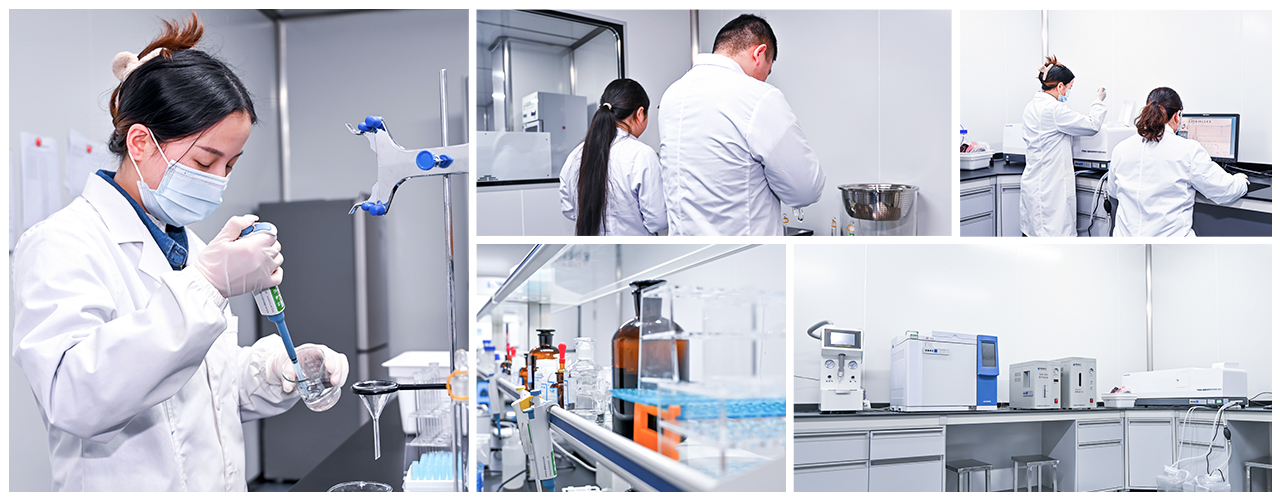
Before any batch leaves the facility, QC technicians run residual BDDE testing on finished, filled product using calibrated GC-MS equipment, with a detection limit of 0.01μg/g. All test records are stored for 3 years, and full batch reports are provided to every customer alongside shipment documentation. The team welcomes random third-party testing from clients, and will cover all associated costs if results do not match stated quality specifications.
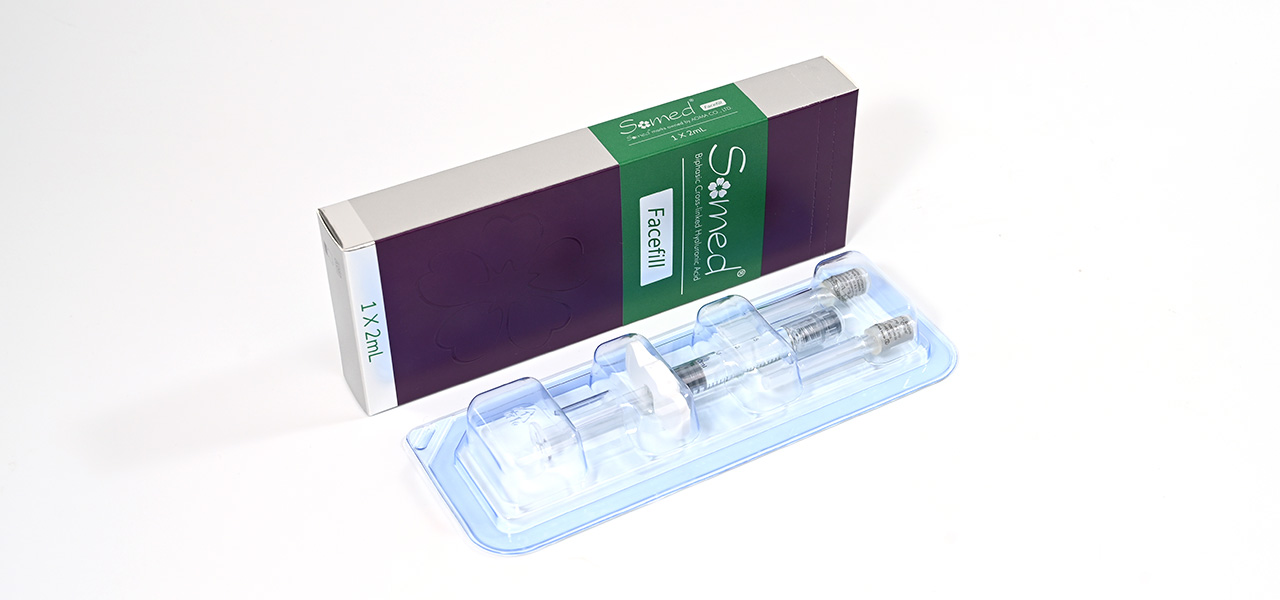
The brand’s flagship facial filler line, Facefill, is engineered for soft tissue augmentation across the cheeks, nasolabial folds, temples, and jawline, with a smooth extrusion profile and predictable lift capacity. Every batch of Facefill undergoes the full multi-stage BDDE control process, with residual BDDE levels consistently testing at 0.2μg/g or lower — well below the strictest global regulatory thresholds. Since its launch, the product has maintained a delayed adverse reaction rate of less than 0.02% across millions of units sold globally.
Brands and clinics sourcing HA fillers do not need advanced lab degrees to verify that residual BDDE testing meets required standards. A few straightforward checks will filter out high-risk suppliers before a purchase order is signed:
For partners working with AIMA International through supplierfiller.com, the team provides full, unredacted compliance documentation for every order, including residual BDDE test reports, CE certifications, FDA registration records, and ISO 13485 audit results — all verifiable through official issuing body databases. All orders placed through the Medical Aesthetics Wholesale channel on supplierfiller.com come with dedicated after-sales support, with a dedicated account manager available to resolve documentation, shipping, or product quality questions within 24 hours on business days. The company’s flexible OEM/ODM model removes MOQ pressure for emerging brands, with end-to-end support covering brand positioning, logo design, custom packaging, and tailored formulation and concentration adjustments. Sample orders ship within 3–5 business days, bulk orders deliver within 15–20 days with expedited production options available, and bulk discount structures are available for large clinic chains and established brands. To date, the team has delivered custom aesthetic product solutions for more than 521 brands across 60+ countries, with production capacity reaching 5 million units annually and 50,000 units per month.
Price differences between HA filler options are often written off as pure brand markup, but the largest cost gaps usually come down to the unglamorous, time-consuming quality control steps that no marketing campaign highlights. Extra hours of dialysis, regular GC-MS calibration, retained sample storage, and incoming raw material testing never make for flashy social media content, but those steps are what separate products that deliver consistent, safe results from inventory that puts patients and brands at risk. Residual BDDE testing is not a bureaucratic hurdle to clear for regulatory paperwork. It is a basic commitment to safety for every person who walks into a clinic expecting natural, uncomplicated results from their filler treatment.

Copyright @ 2026 AIMA International Group Co., Ltd.