



Welcome to visit AIMA International Group
 Spain
Spain

Your browser version is too low, in order to ensure a better browsing experience,Please click to update to a higher version browser.
Talk about it later.XWelcome to visit AIMA International Group
Spain




.jpg)
Home > News > Industry Trends > Private Label Aesthetic Brand Launch: The No-Fluff Playbook for Clinics, Beauty Entrepreneurs, and Distributors
Industry TrendsThink you need a six-figure startup budget to launch a private label aesthetic brand that competes with household names? Think again.
Mia, an independent nurse injector based in Miami, built a loyal 12,000-person local following on Instagram by posting unfiltered injection tutorials and honest product reviews. In 2022, she decided to stop pushing other brands’ dermal fillers and launch her own line tailored to the Latinx client base that made up 80% of her book. She picked a small local manufacturer, paid a 70% deposit for 3,000 units of a generic skin booster, and planned a big launch party for her top 100 clients.
The launch never happened.
The formula she received used animal-sourced hyaluronic acid with a high crosslink density better suited for deep cheek lifts than the fine-line, glow-focused treatments her clients booked. Three test clients developed delayed hypersensitivity reactions two weeks after treatment. She was stuck with $18,000 worth of unsellable inventory, and the manufacturer refused to accept returns or adjust the formula for smaller batches. That’s a hard hit for a solo practitioner running a 2-treatment-room clinic.
Why Most Private Label Aesthetic Brand Launches Fail Before They Hit Their First Sale
Mia’s story is not unique. Data from 2024 aesthetics industry reports shows 62% of first-time private label brand launches fold within the first 12 months, and almost none of those failures tie back to bad marketing or lack of audience demand. Most trace back to misaligned manufacturing partnerships that create avoidable friction long before a product reaches a client’s skin.
GlowMed, a three-location clinic chain in Dubai, learned that last lesson the hard way in 2023. The team planned to launch their private label anti-aging line to coincide with the Dubai Beauty Exhibition, a show that draws 40,000+ aesthetics professionals and high-net-worth consumers every year. They signed a contract with a European supplier that promised 30-day production turnaround, only to face six weeks of delays due to raw material shortages. When the shipment finally arrived at Jebel Ali Port, it was held for two additional months because the supplier could not provide full CE certification documentation for the batch. The team showed up to the exhibition with nothing but empty packaging mockups, lost 200+ collected leads to competing brands, and paid 12,000 AED in port storage fees. The failed launch cost them an estimated $118,000 in projected revenue.
Pick Your Hero SKU First: The Smartest Launch Move for New Aesthetic Brands
New brand owners often make the mistake of launching 10+ SKUs at once, from lip fillers to fat dissolving solutions to hair growth serums, in an attempt to cater to every possible client need. That approach spreads startup capital too thin, creates excess inventory risk, and makes it impossible to build a clear brand identity in a crowded market.
The highest-converting private label launches start with one hero SKU: a product with broad audience appeal, high repeat purchase rates, and low consumer education requirements. For 70% of new aesthetic brands that launch successfully, that hero SKU is a customizable Skinbooster.
The global skin booster market hit $1.8 billion in 2024, growing at a 22% annual clip, and for good reason. Unlike deep dermal fillers that target specific volume loss, skin boosters work by delivering micro-doses of hyaluronic acid (and optional active ingredients) directly into the dermis to boost hydration, smooth fine lines, and improve overall skin texture. Clients range from 18-year-olds looking to reduce post-acne texture to 65-year-olds seeking preventative skin maintenance, and most return for touch-up treatments every 3–4 months — driving 3x higher lifetime customer value than one-time filler treatments. Clinic margins on private label skin boosters regularly hit 75% or higher, compared to 40–50% margins on resold name-brand products.
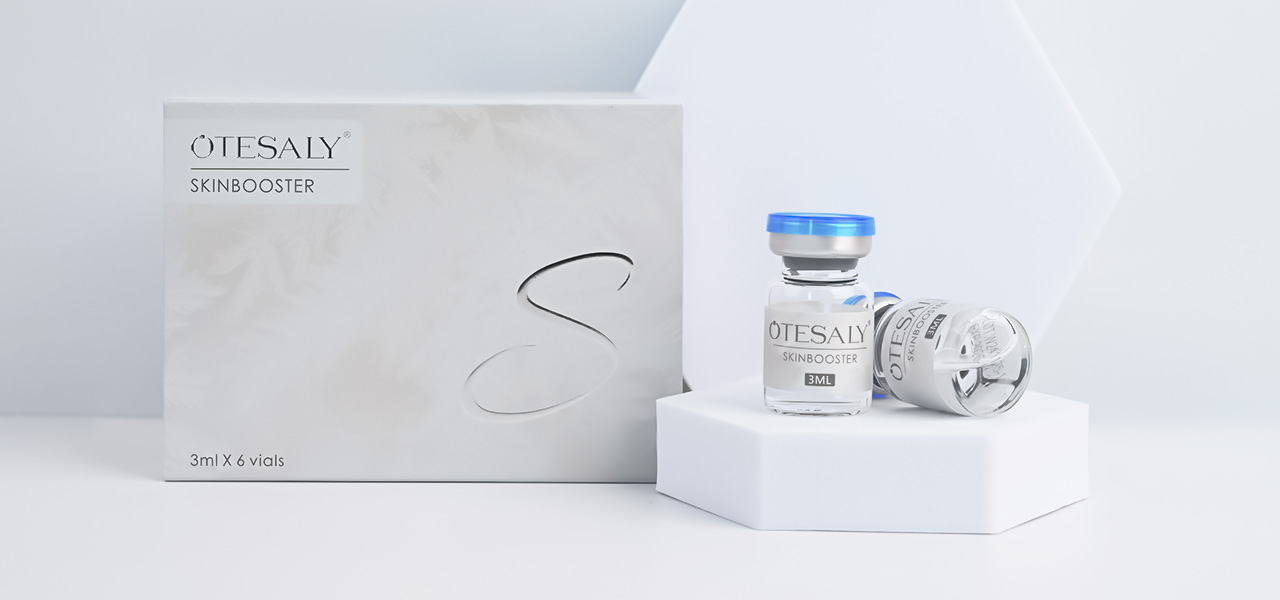
AIMA International Group Co., Ltd.’s custom-formulated Skinbooster is built specifically for private label partners looking to launch without the common pain points of generic white label products. The formula uses medical-grade, non-animal sourced hyaluronic acid valued at $45,000 per kilogram, processed with the company’s proprietary NASHA technology to create a smooth, low-crosslink gel that pushes evenly through fine needles, does not cause nodule formation, and carries an extremely low risk of adverse reaction. Partners can adjust the formula to match their audience: add PDRN for post-treatment repair and collagen stimulation, add lidocaine to reduce injection discomfort, adjust HA molecular weight for lightweight glow or deeper hydration, or blend in brightening actives for clients targeting hyperpigmentation.
Vet Your Manufacturing Partner Like Your Brand Depends On It (Because It Does)
Once you lock in your hero SKU, your next decision will make or break your launch: choosing a manufacturer that has the production capacity, regulatory credentials, and flexible terms to support brands at every stage of growth. AIMA, founded in 2003, is a recognized “Top 10 Dermal Filler Manufacturer” globally, with a track record of supporting both first-time founders and large multinational aesthetics brands.

The company operates a 4,800 square meter modern production facility outfitted with Class 100 GMP clean rooms and three dedicated production lines, with an annual output of 5 million units and monthly production capacity of 50,000 units. All production follows ISO 13485 quality management standards and Class III medical device manufacturing specifications. Every product carries valid EU CE certification and US FDA VCRP registration, and all raw materials are sourced from CE GMP-certified suppliers, with regular third-party testing conducted by SGS to verify purity and safety. The company’s in-house R&D team holds patents for both NASHA (Non-Animal Stabilized Hyaluronic Acid) and HICE (High-density Crosslinked Elastomer) technologies, allowing for precise control over gel viscosity, crosslink density, and longevity without adding unnecessary chemical additives.
Unlike manufacturers that force clients to pick from pre-set packages, AIMA’s OEM/ODM support covers every step of the brand building process. Partners can browse available formulations and request custom quotes directly through Supplierfiller.com, with transparent pricing listed upfront so there are no hidden fee surprises. Available support includes:
GlowMed turned to AIMA to rework their 2024 brand launch after the 2023 failure. The team worked with AIMA’s R&D team to adjust their Skinbooster formula for the Gulf region’s hot, humid climate, creating a slightly more cohesive gel that does not migrate even when clients spend time outdoors in high temperatures. The AIMA team finalized packaging design, produced 2,000 units of the custom formula, and shipped the order to Dubai in 18 days — arriving two full days before the 2024 Dubai Beauty Exhibition opened.
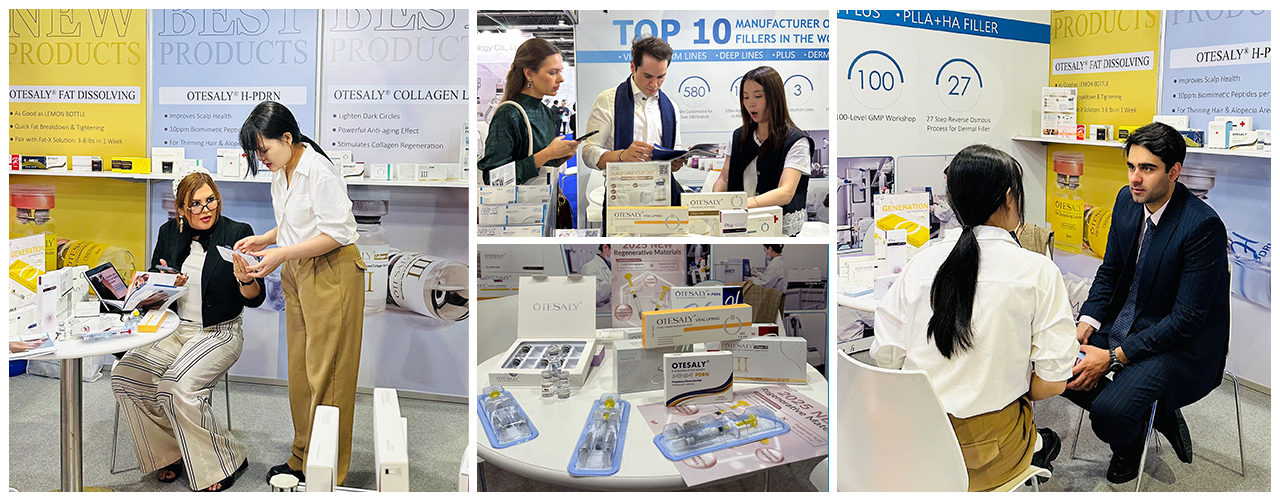
That launch generated 270,000 AED in on-site product sales, plus 12 local distribution contracts that now drive 60,000 AED in monthly recurring revenue for the clinic chain. Mia, the Miami-based injector, also partnered with AIMA later that year to launch her custom Skinbooster formula for sensitive Latinx skin, starting with an initial batch of 200 units. She sold out her first batch in 12 days, and now moves 400+ units a month to her own clients and 11 partner clinics in South Florida. To date, AIMA has delivered custom private label solutions for over 521 aesthetics brands across 47 countries.
Trust is non-negotiable in the aesthetics space, which is why AIMA’s Medical Aesthetics Wholesale support extends well past order delivery. Every partner works with a dedicated account manager available to answer questions within 24 hours, and the team provides full compliance documentation for every batch — including test reports, certification files, and labeling support — to smooth customs clearance and local regulatory registration. If any batch shows a quality defect (an issue that has impacted less than 0.2% of shipments over 21 years of operation), the team will replace the full order at no cost, with no lengthy claim processes or hidden fees. Partners also get access to free marketing and training materials, including before-and-after assets, product training decks for clinical teams, and safety data sheets to share with clients.
Your 90-Day Private Label Aesthetic Brand Launch Timeline
You don’t need a year of planning to pull off a profitable launch. This 90-day framework works for solo founders and large clinic chains alike:
Don’t Fall for These Overly Common Launch Traps
Even experienced brands make avoidable mistakes on their first launch. Watch for these missteps before you sign a manufacturing contract:
Skip the cheapest quote you get. A manufacturer offering skin boosters at $2 per unit is almost certainly cutting corners on raw material quality, using industrial-grade HA instead of medical-grade non-animal sourced material. A single adverse reaction from a low-quality product can destroy the trust you spent years building with your audience, and lead to costly liability claims.
Don’t skip compliance checks. Ask to see copies of a manufacturer’s ISO 13485 certification, CE marks, and FDA registrations before you pay a deposit. If a representative hesitates to share those documents, walk away.
Don’t overextend your inventory. Start with a small test batch, even if you qualify for a volume discount. It is far better to sell out of your first run and place a quick reorder than to sit on thousands of units of product that don’t resonate with your audience.
You don’t need a huge team, a seven-figure budget, or a household name to pull off a successful private label aesthetic brand launch. You do need a hero product your audience actually wants, a manufacturing partner that shows up with flexible terms and proven quality, and a clear timeline that keeps you focused on revenue instead of operational headaches.

Copyright @ 2026 AIMA International Group Co., Ltd.


