



Welcome to visit AIMA International Group
 Spain
Spain

Your browser version is too low, in order to ensure a better browsing experience,Please click to update to a higher version browser.
Talk about it later.XWelcome to visit AIMA International Group
Spain




.jpg)
Home > News > Industry Trends > Multilingual Labeling for Medical Aesthetic Products: A Practical Guide to Global Compliance, Localization, and Wholesale Supply Success
Industry TrendsHave you ever sent a full shipment of medical aesthetic products to a target market, only to have it held at customs for weeks because your packaging lacked mandatory label content in the local official language? You are far from alone. Many brand owners, clinic operators, and wholesale distributors pour resources into formula development, packaging design, and influencer marketing, only to face stalled launches, fines, or product recalls due to oversights in multilingual labeling.
Multilingual Labeling for Medical Aesthetic Products Is More Than Word-for-Word Translation
Back in 2022, our team connected with a startup dermal filler brand based in Barcelona, founded by three board-certified dermatologists. The brand had developed a high-cohesivity hyaluronic acid formula tailored for Southern European skin types, and had already secured verbal agreements with 12 dermatology clinic distributors across Germany ahead of the annual Munich Aesthetics Conference. The team printed all product labels in Spanish and English, assuming English would satisfy import requirements for medical products in the EU.
Their first 1,200-unit shipment was held at the Port of Hamburg for 27 days. German customs regulators rejected the lot because labels lacked full German translations of contraindications, post-injection care instructions, and the local EU authorized representative’s full physical address and 24-hour contact line. The brand paid €12,400 in port storage and detention fees, missed the conference launch window, and lost all 12 pre-negotiated distribution deals when competitors moved in to fill the gap.
This case is not an outlier. Regulators across every major market treat medical aesthetic product labels as a core patient safety tool, not a marketing afterthought. For injectable products classified as Class III medical devices, requirements extend far beyond a basic ingredient list. German regulators, for example, mandate that all safety-related text on injectable product labels use a minimum font height of 1.2mm, with no design elements obstructing safety warnings. Missing a single required element can result in full shipment seizure.
Costly Labeling Mistakes That Derail Market Launches
In 2023, a Bangkok-based medical aesthetic clinic chain approached our team for OEM supply support, after a costly misstep with a local supplier. The clinic had launched its own private label hyaluronic acid skin booster, with labels printed exclusively in English. During a routine inspection, Thai FDA officers flagged the products for missing mandatory Thai-language post-care instructions. The clinic received an ฿82,000 fine, was ordered to recall all 430 units already in stock across its 8 branches, and faced a wave of negative online reviews. Seventeen local patients, unable to read English post-care guidance, skipped required sun protection after injections and developed temporary hyperpigmentation, which they attributed to product defects. The chain saw a 21% drop in new consultation bookings that month.
After two decades supplying products to brands across 37 countries, our team has documented the most frequent multilingual labeling errors that lead to financial loss:
How AIMA International Builds Compliant, Localized Multilingual Labels for Global Partners
AIMA International Group Co., Ltd. has manufactured medical aesthetic products since 2003, supporting over 521 brands with OEM/ODM services across global markets. Our team built multilingual labeling into the core of our production workflow, rather than treating it as an add-on service for extra fees. Our end-to-end OEM/ODM support covers brand positioning, logo design, custom packaging, formula adjustments, and concentration tailoring, so partners can launch fully localized products without coordinating across multiple vendors. We operate a 4,800 square meter modern production facility with Class 100 GMP clean rooms and 3 dedicated production lines, with a separate quality control station dedicated entirely to label review and verification.
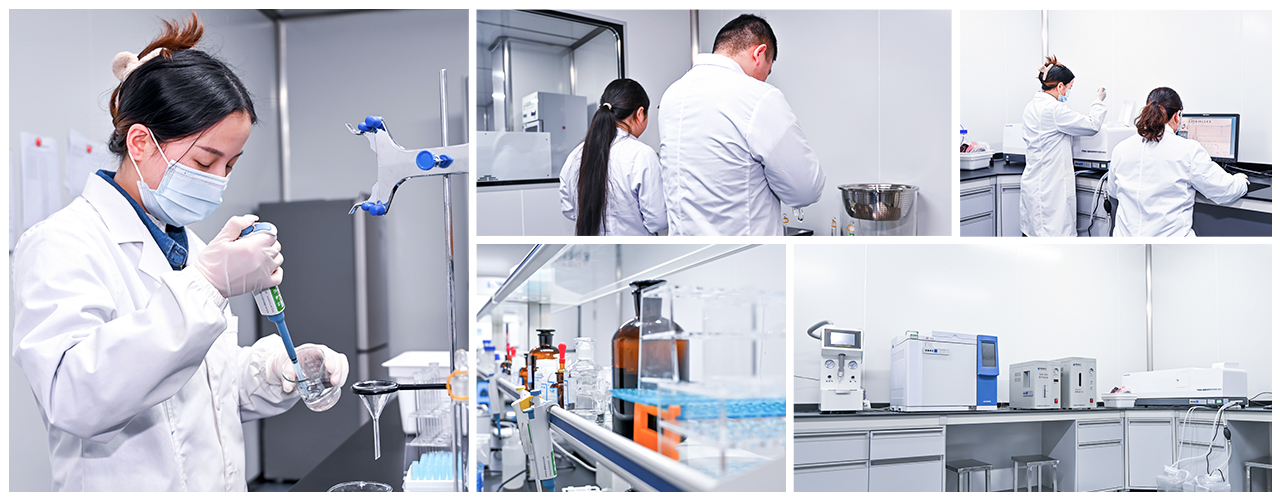
Every batch of multilingual labels passes three independent review checks before being applied to products. First, a local regulatory consultant for the target market reviews all text to confirm alignment with local rules, verifying medical terminology accuracy and mandatory content coverage. Second, brand partners review translated marketing copy and product selling points to ensure phrasing resonates with local consumer preferences, rather than relying on stiff, literal translation. Third, on-site QC staff cross-check every printed label against approved files to catch misprints, ink smudges, or font size violations before products move to packaging.
Our core product lines come with pre-vetted multilingual label templates covering 12 major global languages, so partners do not need to source translators or regulatory consultants on their own. One of our most widely distributed products, Facefill Lidocaine, a mid-face dermal filler formulated with 0.3% lidocaine for reduced injection discomfort, uses standardized label templates for English, Spanish, French, German, Italian, Arabic, Thai, Vietnamese, Indonesian, Korean, Japanese, and Russian. Each template is updated annually to reflect new regulatory changes in target markets.
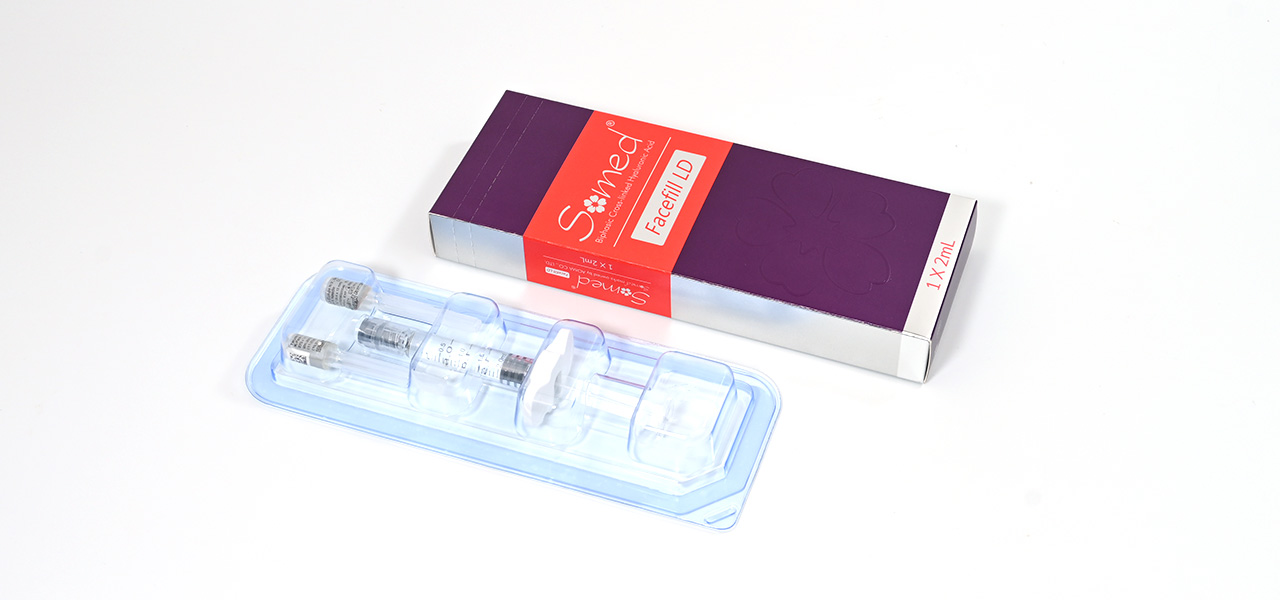
We formulate all products using non-animal derived medical-grade hyaluronic acid sourced from CE GMP certified suppliers, with raw material purity levels that command a $45,000 per kilogram market value. Raw material batches undergo regular third-party testing via SGS to meet global safety standards. Our production teams hold expertise in NASHA and HICE crosslinking technologies, with a library of over 1,000 mature formulations spanning dermal fillers, PDRN ampoules, fat dissolving solutions, hair growth products, and skin boosters. All raw material quality details, certification marks, and traceability information is accurately translated across every language version of product labels, with no omitted or exaggerated claims.
Core Components of a Regulation-Aligned Multilingual Label
Our team has refined label templates across every major market, drawing on two decades of clearance data and regulatory updates. While specific rules vary by jurisdiction, all compliant multilingual labels for medical aesthetic products cover four non-negotiable content blocks:
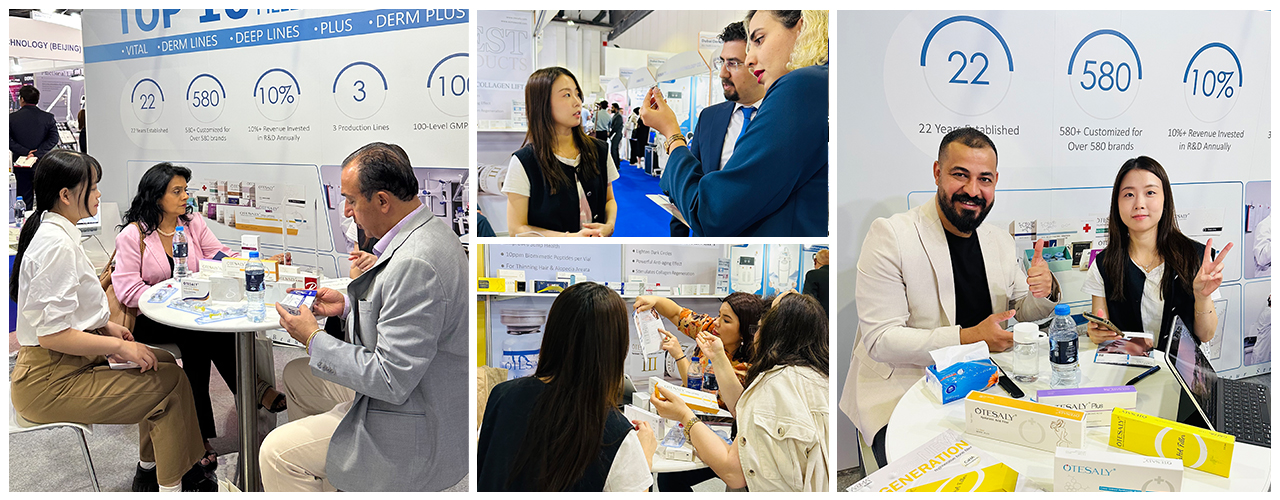
We connected with dozens of brand owners and distributors facing label-related challenges at the 2024 Dubai International Beauty Exhibition, one of the largest trade events for the Middle East and North Africa aesthetic market. Over three show days, 47 visitors stopped by our booth to discuss supply needs, 32 of whom cited non-compliant Arabic labeling as their biggest operational pain point. Many shared stories of working with suppliers who used free machine translation tools for Arabic text, leading to seized shipments or safety risks.
One Dubai-based distributor shared a particularly costly experience: a previous shipment of fat dissolving products he sourced carried an Arabic label that mistranslated “for subcutaneous injection only” to instructions for intravenous use. The error was caught by a clinic nurse before any patient was harmed, but the distributor paid AED 200,000 in settlement costs to the clinic and regulatory authorities to avoid a sales ban.
Flexible Support for Brands at Every Growth Stage
Many small brands and new clinic private labels struggle to find manufacturing partners that support low-volume orders with custom multilingual labels. Most large manufacturers set high minimum order quantities for custom label runs, forcing new brands to order tens of thousands of units before they have tested demand in a new market. We operate with no MOQ pressure for all partners, to support emerging brands testing new markets, while offering volume-based discounts for large enterprise partners and national retail chains. Even for 50-unit sample orders requiring less common language translations (such as Icelandic or Hebrew), our team delivers fully compliant labeled products within 3-5 working days. Standard bulk orders ship within 15-20 days, with expedited production options available for time-sensitive launches.
Our production capacity reaches 5 million units annually, with a monthly output of up to 50,000 units, to support large-scale brands and retail chains rolling out multi-market launches. We hold the “Top 10 Dermal Filler Manufacturers” industry award, with production aligned to ISO 13485 quality management standards and Class III medical device manufacturing specifications. All products carry EU CE certification and US FDA VCRP registration, with fully translated compliance documentation available for every market to support local registration and customs clearance.
We do not make outlandish guarantees of zero customs checks — every imported shipment faces a random chance of inspection, regardless of label quality. What we do guarantee is that every label we produce is reviewed against current local regulations, resulting in a label-related detention rate of less than 0.1% for all shipments we have sent over the past five years. If customs authorities raise questions about label content, our regulatory team provides full supporting documentation within 24 hours to help partners resolve issues fast. We also provide free, ongoing label template updates for all partners whenever a market updates its medical aesthetic labeling rules, so brands never get caught off guard by regulatory changes.
Brands often allocate the bulk of their launch budget to ad spend, trade show booths, and distributor commissions. But a product’s label is the first point of contact for both regulators and end consumers. A label printed in a customer’s native language, with clear, accurate safety information and locally relevant messaging, builds trust before a patient ever speaks to a provider. It cuts down on clearance delays, reduces fines and recall risks, and helps brands stand out in crowded markets where competitors rely on generic, English-only packaging.

Copyright @ 2026 AIMA International Group Co., Ltd.


