
Welcome to visit AIMA International Group
 Spain
Spain

Your browser version is too low, in order to ensure a better browsing experience,Please click to update to a higher version browser.
Talk about it later.XWelcome to visit AIMA International Group
Spain


.jpg)
Home > News > Industry Trends > How to Choose a Dermal Filler Manufacturer: A No-Fluff Guide for Clinic Owners, Brand Builders and Aesthetics Distributors
Industry TrendsIf you are searching for guidance on how to choose a dermal filler manufacturer, you are likely either navigating a past supply chain misstep or preparing to launch a new offering in the fast-growing aesthetics space. You might be a clinic owner looking to cut procurement costs with a private label line, a distributor tired of waiting on backordered stock from big-name brands, or a new founder hoping to carve out a niche in a market that saw 12% annual growth in dermal filler procedures for 8 straight years, per 2024 data from the American Society for Aesthetic Plastic Surgery.
Data from the 2023 International Medtech Regulator Forum shows 32% of dermal fillers sold globally come from unlicensed facilities using substandard materials. Pick the wrong partner, and you could end up covering medical bills for injured clients, paying regulatory fines, or watching a brand you spent years building collapse overnight. Have you ever come across a supplier that quotes you 30% below market average, but stumbles when you ask for a verifiable CE registration number? That is almost always a red flag.
Many new brand owners make the mistake of treating dermal fillers like ordinary skincare products, assuming a cosmetic GMP certificate is enough to sell them. Talk to any regulator in the EU, US, or UAE, and they will tell you: injectable dermal fillers fall under Class III medical device rules, the strictest category for non-implantable medical products. A cosmetic GMP certificate means nothing here.
Take Marta, a founder who launched a small boutique filler brand in Barcelona in 2021. She went with a supplier that offered prices 35% below the industry average, and shared a digitally altered CE certificate when she asked for compliance paperwork. She skipped the verification step to save time, placed an order for 5,000 units, and distributed stock to 12 partner clinics across Catalonia. Within two months, 8 clients reported hard nodules and persistent redness at injection sites, and 2 developed granulomas that required surgical intervention. Regulators from the Spanish Agency of Medicines and Medical Devices raided her storage facility, tested the product, and found BDDE crosslinker residues 17 times the EU safety limit. The CE certificate was fake. Marta paid €118,000 in client medical settlements, €23,000 in regulatory fines, and paused brand operations for 8 months to rebuild her supply chain from scratch.
When vetting a manufacturer’s compliance credentials, prioritize these non-negotiable checks:
AIMA International Group Co., Ltd., the manufacturer behind supplierfiller.com, has built its 20+ year reputation on meeting these compliance benchmarks. Founded in 2003, the firm holds ISO 13485 certification, operates in line with Class III medical device production standards, holds EU medical device CE certification and US FDA VCRP registration, and was named one of the Top 10 Dermal Filler Manufacturers by the Global Aesthetics Industry Association. Every batch shipped to clients comes with full traceability documentation, and the team welcomes third-party testing requests from all partners.
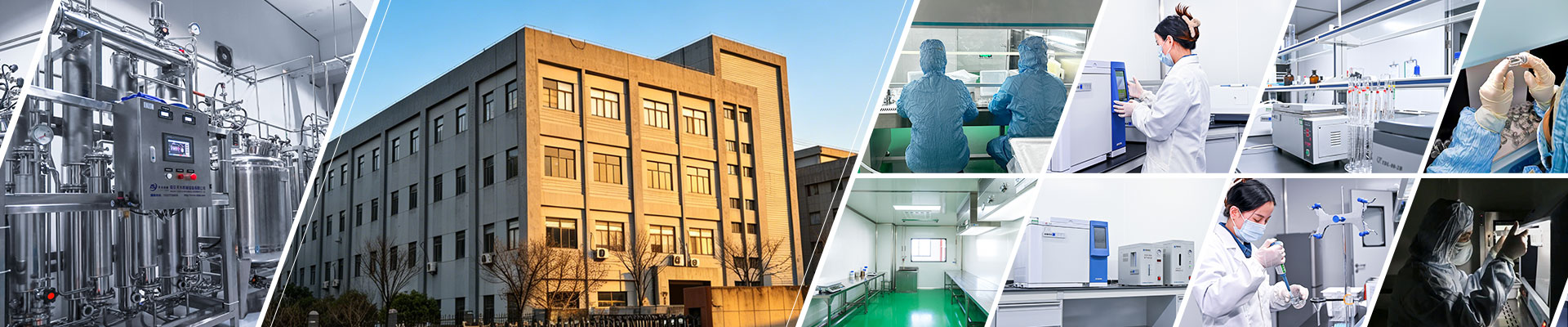
A polished website and glossy product photos tell you nothing about how a filler performs in a clinical setting. You do not need to fly across the world for an in-person audit on your first outreach. Ask for a live video tour of the production floor, the raw material storage area, and the quality control lab. If a supplier refuses to show you these spaces, or only shows you pre-recorded clips that look like they were pulled from a stock video site, walk away. I have heard too many stories of suppliers passing off rented office space as a production facility, with no actual clean room to speak of.
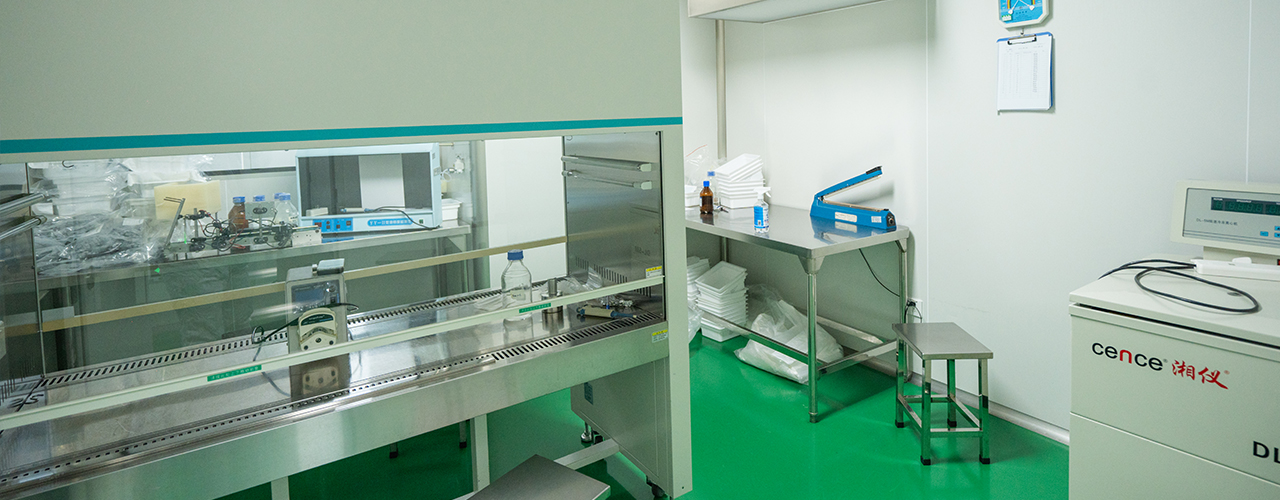
Start your production audit with raw material quality. Low-grade fillers use animal-derived hyaluronic acid (HA) or industrial-grade HA that costs 1/20 the price of medical-grade, non-animal sourced HA. These materials carry high risks of allergic reaction, impurity contamination, and uneven degradation in the body. Legitimate manufacturers source high-purity, medical-grade non-animal HA from CE GMP-certified suppliers, with raw material costs reaching as high as $45,000 per kilogram. Every batch of raw material goes through multi-round testing for endotoxins, microbial contamination, and purity before it hits the production line.
Next, ask about core production technology. Two technology standards separate premium filler manufacturers from low-end repackaging shops:
Many small facilities have no in-house R&D team. They buy pre-mixed HA gel in bulk from third-party suppliers, fill it into syringes, and sell it as their own product. These operations cannot control crosslink density or gel consistency, leading to batch-to-batch variation: one batch might be too firm to push through a fine needle, the next might be so thin it dissolves in 4 weeks instead of the advertised 12 months. Top manufacturers maintain large libraries of mature formulations to cover every injection need, from fine line correction to deep facial contouring. AIMA, for example, holds over 1,000 mature filler formulations developed over 20 years of R&D, so clients do not need to spend tens of thousands of dollars developing formulas from scratch.
Capacity matters, too. A small shop with one production line might only be able to produce a few thousand units a month, leading to multi-week delays during peak booking seasons when clinics run through stock fast. AIMA operates a 4,800 square meter modern production base with Class 100 GMP clean rooms and 3 dedicated production lines, reaching an annual output of 5 million units and monthly capacity of 50,000 units. Sample orders ship in 3-5 working days, bulk orders deliver in 15-20 days, and expedited production options are available for clients with tight deadlines.
Khalid, a procurement director for a 3-clinic medical aesthetics chain in Dubai, learned the cost of ignoring capacity and flexibility the hard way in 2023. He wanted to launch a private label filler line for his clinics, and signed on with a well-known European manufacturer that required a 20,000 unit minimum order. His clinics only used 1,200 units of filler per month, meaning the order would sit in inventory for 14 months. He could not find another compliant supplier with lower order minimums at the time, so he moved forward with the purchase. By early 2024, he still held 9,000 units with 6 months left before expiration, and was forced to sell the stock to competing clinics at 50% off, losing AED 780,000 (roughly $212,000) in the process. He later switched to AIMA, which offers no MOQ pressure for new partners. He now orders 1,200 units per month to match his clinic usage, carries zero dead stock, and pays 42% less per unit than he did with his previous European supplier. He qualifies for bulk order discounts as his order volume grows, without being forced to take on more stock than he can use.
No two clients have the same needs when sourcing dermal fillers. A new founder launching their first brand might need support with every step of the process, from brand positioning to packaging design, with a small initial order to test market response. A large international distributor might need custom formulation adjustments, exclusive packaging, and dedicated account support to serve hundreds of clinic clients. A manufacturer that only offers pre-set, standardized products with no room for customization will not be able to grow with your business.
AIMA’s full-spectrum OEM/ODM service covers every stage of product launch, even for first-time brand owners. The team works with clients to define their brand positioning: for high-end clinic clients focused on structural contouring, they recommend high crosslink density fillers with strong lifting power; for brands targeting younger clients seeking subtle, natural results for lip and fine line treatment, they recommend softer, low crosslink density gels with minimal swelling. The in-house design team handles logo creation and packaging design that meets local medical device labeling requirements, and R&D specialists adjust formulation details to match client needs, from HA concentration to lidocaine addition for reduced injection pain.
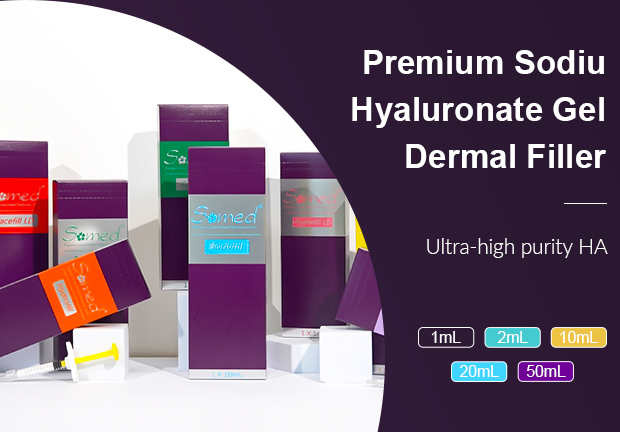
One of the brand’s most popular formulations for private label clients is Facefill Lidocaine, a mid-density facial filler designed for injection into the mid-to-deep dermis.
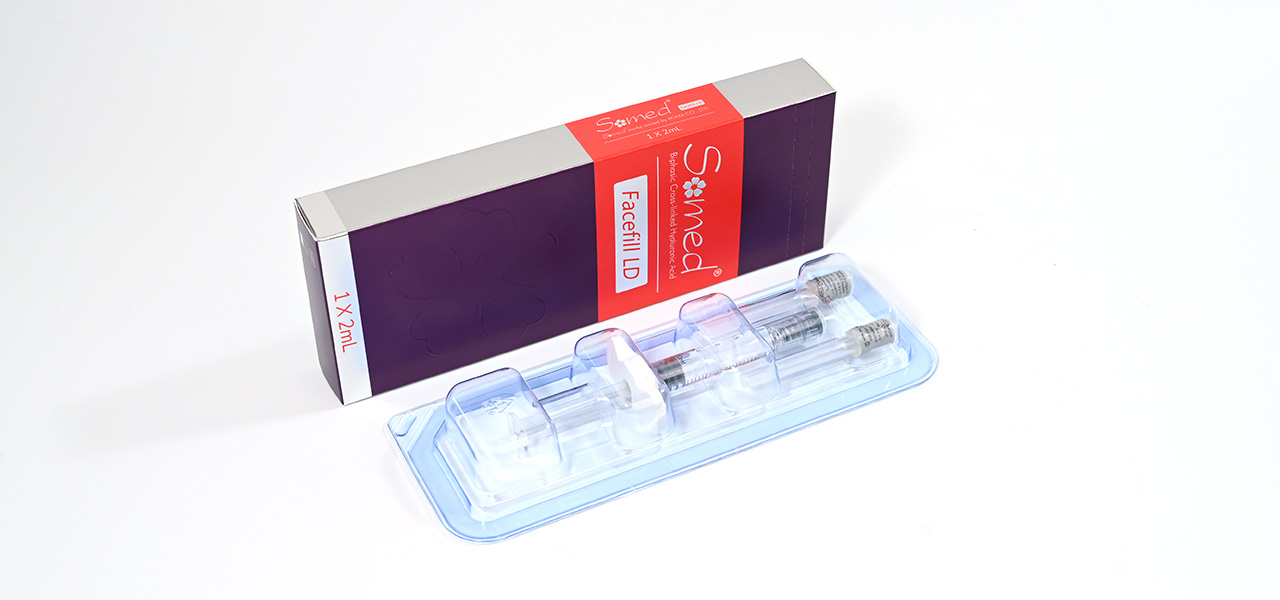
Manufactured with NASHA technology and blended with 0.3% lidocaine hydrochloride to cut injection pain, Facefill Lidocaine delivers smooth, natural results for nasolabial fold correction, apple cheek augmentation, and temple hollow filling. Results last 9-12 months, with a consistent push force that makes the product easy for injectors to control, reducing the risk of overcorrection. The formulation is a top-seller across 300+ private label brands served by the manufacturer.
The flexible cooperation model is built to support both new and established partners. Unlike suppliers that lock new brands into five- or six-figure minimum orders, AIMA accepts small initial orders for brands testing the market, with bulk pricing tiers that kick in as order volumes grow. To date, the team has delivered custom dermal filler solutions for over 521 brands across 60+ countries, from independent clinic brands just launching their first product to large-scale distributors moving hundreds of thousands of units per year.

No amount of sales calls, certification documents, or factory tours replaces hands-on testing of the actual product. Any legitimate manufacturer will offer low-cost sample units you can test before placing a bulk order. If a supplier refuses to send samples, or pressures you to place a large order before you can evaluate the product, end the conversation.
When you receive samples, run these practical checks before moving forward:
Post-sales support is another non-negotiable factor many buyers overlook. A large number of suppliers in the market disappear as soon as a bulk order is delivered, leaving clients to handle quality issues, regulatory questions, or client complaints on their own. Through its Medical Aesthetics Wholesale channel, AIMA assigns a dedicated account manager to every client, with a 72-hour response window for all quality or logistics issues. The team provides full compliance documentation for customs clearance, replaces damaged units at no cost, and works with clients to resolve any clinical questions that arise after delivery. Every unit is traceable from raw material input to final delivery, so clients never have to guess about the safety or origin of the product they sell.
Picking a dermal filler manufacturer is not about finding the cheapest quote, or the supplier with the flashiest social media ads. It is about finding a partner that will help you build a reputation for safe, consistent results, while protecting you from the compliance and quality risks that can sink a business in this industry. Every hour you spend verifying credentials, touring facilities, and testing samples is time spent avoiding costly mistakes down the line. If you are exploring reliable dermal filler manufacturing options, you can browse full product specifications, book a live factory tour, and request test samples directly at es.supplierfiller.com. Seeing the production process for yourself, and testing the product with your own team, will always give you more clarity than any sales pitch.
Copyright @ 2026 AIMA International Group Co., Ltd.