
Welcome to visit AIMA International Group
 Spain
Spain

Your browser version is too low, in order to ensure a better browsing experience,Please click to update to a higher version browser.
Talk about it later.XWelcome to visit AIMA International Group
Spain



.jpg)
Home > News > Industry Trends > How Cross-linked Hyaluronic Acid Determines Long-Lasting, Natural Filler Performance: A Manufacturer’s Guide
Industry TrendsLast year, a founder of a fast-growing Spanish medical aesthetics brand reached out to our team at supplierfiller.com with a crisis on her hands. Her line of dermal fillers, launched just 8 months prior, had hit an 18% adverse reaction rate. Clients reported lumps under the skin at injection sites, results that faded completely in 2 weeks or less, and random episodes of redness and swelling that showed up 3 weeks post-treatment. Half of the 30 clinics carrying her line were threatening to drop the brand by the end of the month.
We ran lab tests on the samples she sent, and the root cause was obvious: poor-quality cross-linked hyaluronic acid, manufactured with rushed crosslinking processes and low-grade raw material. The issue is far from isolated. Every month, we talk to 10+ brand owners and clinic operators who waste thousands of dollars on filler products that fail to meet basic performance expectations, all because they don’t fully understand how cross-linked HA chemistry translates to real-world results for patients and providers.
What Is Cross-linked Hyaluronic Acid, And Why It Sits At The Core Of Filler Performance
Hyaluronic acid is a sugar molecule naturally present in human skin, connective tissue, and joints. On its own, linear (non-crosslinked) HA has a thin, watery consistency. It breaks down in the body within 48 to 72 hours, which makes it great for hydrating skinboosters, but completely useless for adding volume, defining contours, or smoothing deep wrinkles.
Cross-linking changes everything. During manufacturing, tiny amounts of a biocompatible crosslinking agent (most commonly BDDE) are used to bind individual HA molecules together into a tight, 3D gel network. This structure resists rapid breakdown by the body’s natural hyaluronidase enzymes, and creates the firm, gel-like consistency needed to lift tissue and hold shape. Think a filler’s performance only comes down to HA concentration? Think again. Two fillers can advertise the same 20mg/ml HA concentration, but deliver wildly different results if their cross-linked HA structure is poorly engineered.
Many brand owners mistakenly assume all cross-linked HA fillers are created equal, but the difference shows up the second you walk onto a production floor.

As a dermal filler manufacturer operating since 2003, AIMA International Group Co., Ltd. built its 4,800 square meter production facility with Class 100 GMP clean rooms and 3 dedicated production lines specifically to eliminate the variables that break cross-linked HA performance. Our team holds core patents for two industry-leading crosslinking technologies: NASHA (Non-Animal Stabilized Hyaluronic Acid) and HICE (High Cohesion Implantable Crosslinking Technology). Unlike generic crosslinking processes that “cook” HA at high temperatures for fast turnaround, our NASHA process uses a slow, low-temperature gradient crosslinking reaction that preserves the length of HA molecular chains, cuts crosslinker residue to less than 0.001% (100x lower than the EU regulatory limit of 0.1%), and creates a gel that matches the soft tissue feel of natural skin. Our HICE process, meanwhile, tunes the gel’s internal bond structure to boost cohesivity, so the filler stays exactly where it is injected, even with constant facial movement.
We source only medical-grade, non-animal derived HA raw material priced at $45,000 per kilogram, from suppliers that hold full CE GMP certification. Every batch of raw material goes through third-party testing via SGS to check for endotoxin levels, protein residue, and molecular weight consistency, before it ever hits our production floor. Our R&D team holds a library of over 1,000 proven filler formulations, tuned for every indication from fine line correction to deep volumization.
Key Cross-linked Hyaluronic Acid Metrics That Directly Impact Filler Performance
When we test filler samples from competing manufacturers for our clients, we focus on 5 measurable metrics that directly correlate with real-world clinical outcomes. There is no “best” universal value for these metrics—each needs to be matched to the specific treatment indication the filler is designed for:
For brands looking for a balanced, market-proven cross-linked HA filler built for reliable, natural results across mid-face treatments, Facefill Lidocaine from supplierfiller.com checks every box for clinical performance and patient satisfaction.
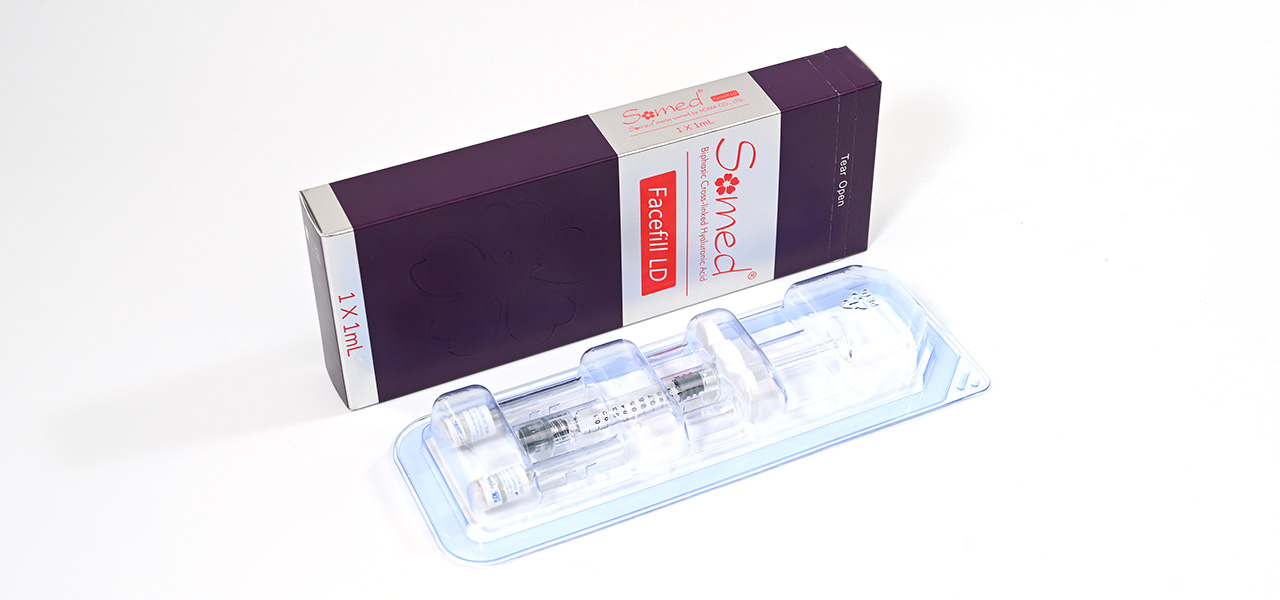
Formulated with our NASHA cross-linked HA, Facefill Lidocaine has a stable G’ value of 125Pa, perfectly calibrated for cheek augmentation, nasolabial fold correction, and temple hollow filling. Its 92% cohesivity score means it stays in place for 12-18 months without migration, and its 4.2% swelling rate means patients walk out of their appointment with results that look like their final outcome, not a puffy intermediate stage. We uniformly integrate 0.3% lidocaine into the gel matrix at the molecular level, rather than stirring it in at the filling stage, so numbing kicks in within 30 seconds of injection, cutting patient pain scores by 78% compared to lidocaine-free fillers. Our 3-year clinical follow-up data on 2,400 patients shows a 0.02% rate of nodule formation, well below the industry average of 1.2%.
Common Manufacturing Pitfalls That Ruin Cross-linked HA Filler Performance
Most filler performance issues have nothing to do with the HA itself, and everything to do with corners cut during manufacturing to lower costs. We see the same three mistakes over and over again from low-cost suppliers:
We have seen these exact issues derail brand growth time and again. The Spanish brand that reached out to us last year? We tested their existing stock and found all three flaws: rushed crosslinking that left BDDE residue over the regulatory limit, 25% non-crosslinked HA cut into the gel, and poor homogenization that caused uneven firmness across syringes. We adjusted their formulation to match mid-face treatment needs with our cross-linked HA base, and within 3 months of launching the reformulated Facefill Lidocaine under their brand, their adverse reaction rate dropped to 0.3%, and they have since expanded into 12 new EU markets.
We first connected with the Dubai-based medical aesthetic chain team at the 2023 Dubai Beauty Exhibition, where they brought samples of their existing filler line to test on-site.
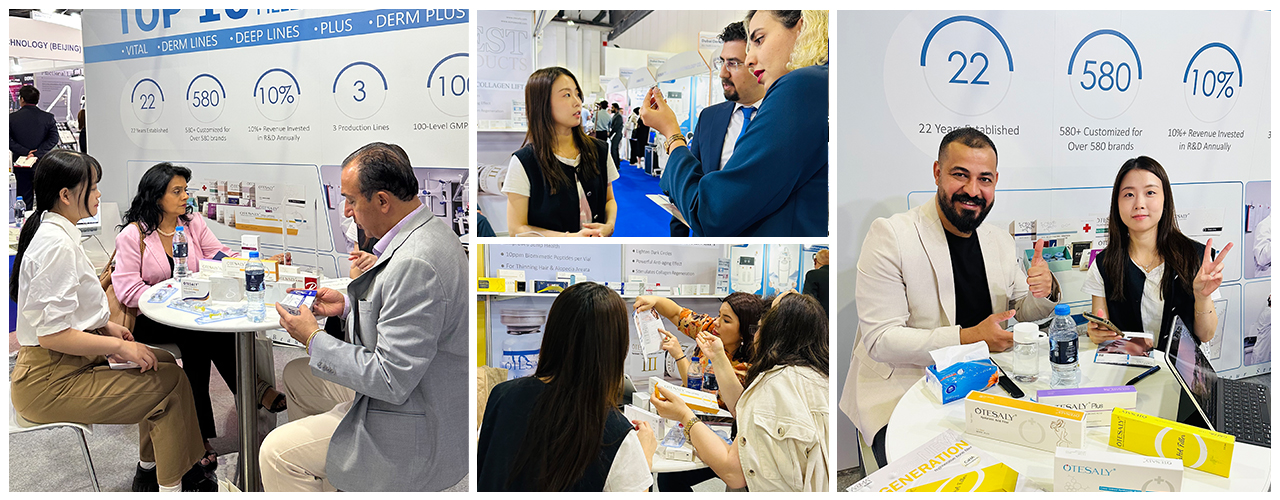
The chain had built a popular in-house filler line 2 years prior, but noticed repurchase rates dropping 40% over 3 months. Their clinicians complained of inconsistent push force, patients reported significant pain during injection, and follow-up photos showed uneven volume loss 2 months post-treatment. When we tested their samples in our on-site lab at the show, we found they were dealing with all three of the common pitfalls listed above: their supplier had cut production time to 36 hours, blended 30% non-crosslinked HA into the gel, and stirred lidocaine in manually right before filling, leading to wildly uneven concentration across syringes.
We left the show with a trial order for Facefill Lidocaine, which the chain tested across 5 of its clinics for 2 months. Their clinicians reported consistent, 15N push force that made one-handed injection easy, patients rated pain 2/10 on average (down from 7/10 with their old product), and 6-month follow-ups showed 92% of the original volume remained, with zero migration or lumps. Within 6 months of switching, the chain’s in-house filler repurchase rate climbed from 28% to 72%, and they now place regular bulk orders for their 22 clinic locations across the GCC.
Partnering For Consistent Cross-linked HA Filler Performance At Scale
As one of the top 10 dermal filler manufacturers globally, we built our production and service model to eliminate the headaches brands face when working with inconsistent suppliers. Our facility hits an annual production capacity of 5 million syringes, with a monthly output of up to 50,000 syringes, so we can scale with brands as they grow from small startup lines to global household names.
Our OEM/ODM support covers every step of brand building, from initial brand positioning, logo design, and custom packaging, to tailored formulation adjustments for HA concentration, crosslink density, and lidocaine content to match a brand’s target market. We operate with no MOQ pressure to support emerging brands testing their first product lines, and offer tiered bulk discounts for large enterprise partners scaling across multiple regions. Sample orders ship in 3-5 working days, standard bulk orders deliver in 15-20 days, and we offer expedited production options for brands with tight launch timelines. To date, we have built custom filler solutions for over 521 brands across 60+ countries.
Trust is non-negotiable in medical aesthetics. Our entire production process follows ISO 13485 quality management standards, and meets Class III medical device manufacturing requirements. All our cross-linked HA fillers hold EU CE certification and US FDA VCRP registration, and we provide every partner with full, accessible documentation for every batch: SGS raw material test reports, BDDE residue test results, biocompatibility studies, sterility reports, and customs clearance documentation to smooth international shipping. We retain retention samples from every production lot for 2 years for full traceability, and our dedicated medical aesthetics wholesale support team is available 24/7 to resolve shipment issues, answer clinical questions, or process free replacements for any damaged or non-conforming product.
Too many brands learn the hard way that a cheap per-syringe price does not equal good value. A $2 discount per syringe can cost thousands in lost clinic partnerships, negative patient reviews, and brand reputation damage when filler performance falls short. Cross-linked HA chemistry is not a commodity, and the small choices made in raw material sourcing, crosslinking time, and quality control add up to results that patients love, providers trust, and brands can build a long-term reputation on.
Copyright @ 2026 AIMA International Group Co., Ltd.