



Welcome to visit AIMA International Group
 Spain
Spain

Your browser version is too low, in order to ensure a better browsing experience,Please click to update to a higher version browser.
Talk about it later.XWelcome to visit AIMA International Group
Spain




.jpg)
Home > News > Industry Trends > HA Skin Booster: Formulation Science, Real-World Use Cases & Reliable OEM/ODM Supply for Global Aesthetic Brands
Industry TrendsIf you have spent any time in aesthetic clinic supply rooms or brand product development meetings over the past three years, you have heard HA skin booster come up more often than nearly any other injectable skin treatment. Global market data puts HA skin booster segment growth at 127% between 2019 and 2024, driven by patient demand for natural, skin-quality improvements rather than overdone volumetric changes. Many brands and clinic groups rush to add HA skin boosters to their offerings, only to run into preventable issues with product safety, supply reliability, or formulation mismatches for their local customer base.
HA skin booster refers to an injectable formulation designed to deliver hyaluronic acid directly into the mid to superficial dermis, using microdroplet injection techniques to improve skin hydration, elasticity, fine line texture, and overall radiance, rather than adding volumetric fullness to facial features. A common mistake new brands make is treating HA skin boosters as a thinner version of dermal filler. The two product categories serve entirely different purposes.
Traditional dermal fillers use highly crosslinked, firm HA gels injected into deep dermal or subcutaneous layers to lift sagging skin, define facial contours, or plump lips and cheeks. HA skin boosters, by contrast, use low-crosslinked or non-crosslinked HA with a blended molecular weight profile, injected in tiny aliquots across a wider treatment area. The goal is not to change facial shape, but to replenish the HA that naturally breaks down in skin with age, boost fibroblast activity, and create a long-lasting dewy, even skin texture. Treatments can be used on the face, neck, décolletage, and even the backs of the hands, areas where traditional filler is rarely used for textural improvement.
After 20 years of working with aesthetic brands across six continents, our team has seen the same costly mistakes repeat across markets. Take a small aesthetic startup based in Barcelona that reached out to our team in late 2022. The brand had launched its first line of HA skin boosters six months prior, working with a small local contract manufacturer that offered rock-bottom per-unit pricing. Within three months of launch, 12% of their clinic accounts reported customer adverse reactions: persistent redness at injection sites, small hard nodules under the skin that lasted 4+ weeks, and inconsistent hydrating effects that faded within 7 days for 30% of patients. When the brand asked the manufacturer for batch testing reports, they received incomplete documents that showed residual BDDE (the crosslinking agent used in HA products) levels 3x higher than the EU CE safety limit. Worse, the manufacturer required a 50,000-unit minimum order for any formulation adjustments, which the startup could not afford as a new business with limited cash flow. The brand lost three key clinic accounts and spent nearly €18,000 on product returns and customer compensation before reaching out for a new supply partner.
A second example comes from a multi-location medical aesthetic chain based in Dubai, which connected with our team during the 2023 Dubai Beauty Exhibition. 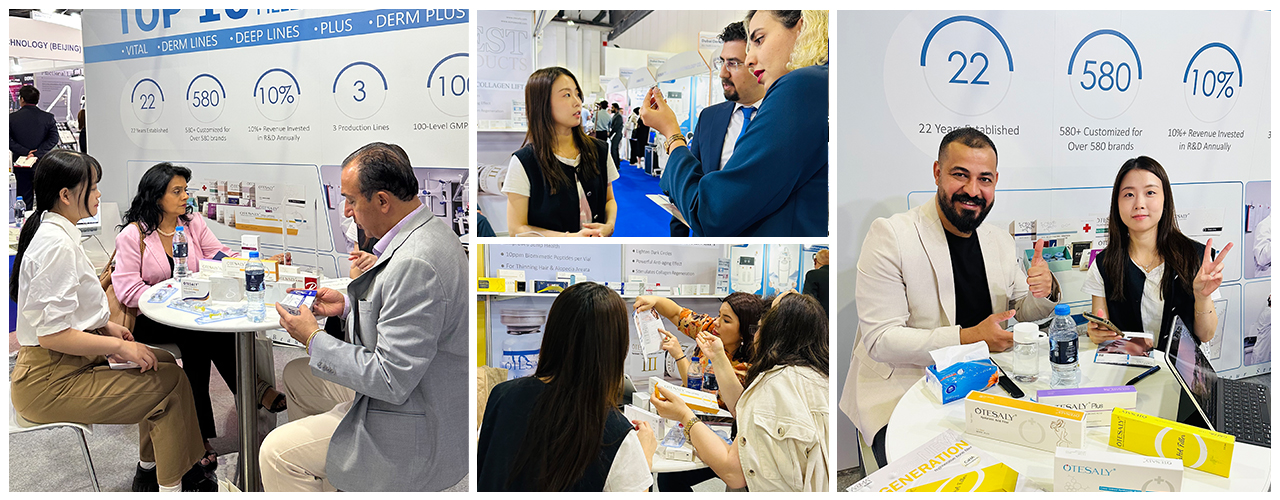 The chain had sourced a premium European HA skin booster line for four years, but ran into consistent supply chain and customization issues. The region’s arid climate means patients require HA formulations with a higher ratio of high-molecular-weight HA to lock in moisture for longer periods in low-humidity conditions, but the European supplier only offered a one-size-fits-all formulation with no option to adjust molecular weight ratios or HA concentration. Delivery lead times stretched to 8 weeks during peak season (the months leading up to Ramadan and major holiday periods), leading to stockouts that cost the chain an estimated 18% of its skin booster treatment revenue in 2022. The chain’s procurement team also noted that the supplier provided no localized marketing support or staff training materials, which made it hard for their new injectors to standardize treatment protocols across 7 clinic locations.
Not all HA skin boosters on the market deliver the safety and results clinics and patients expect. Formulation choices make a measurable difference in patient outcomes, and brands that cut corners on these core standards face high rates of adverse events and reputational damage.
For brands and clinic groups looking for a reliable HA skin booster that meets global regulatory standards and can be customized to local market needs, AIMA International Group Co., Ltd.’s Skinbooster line is built to address the exact pain points we have seen across hundreds of brand partnerships. 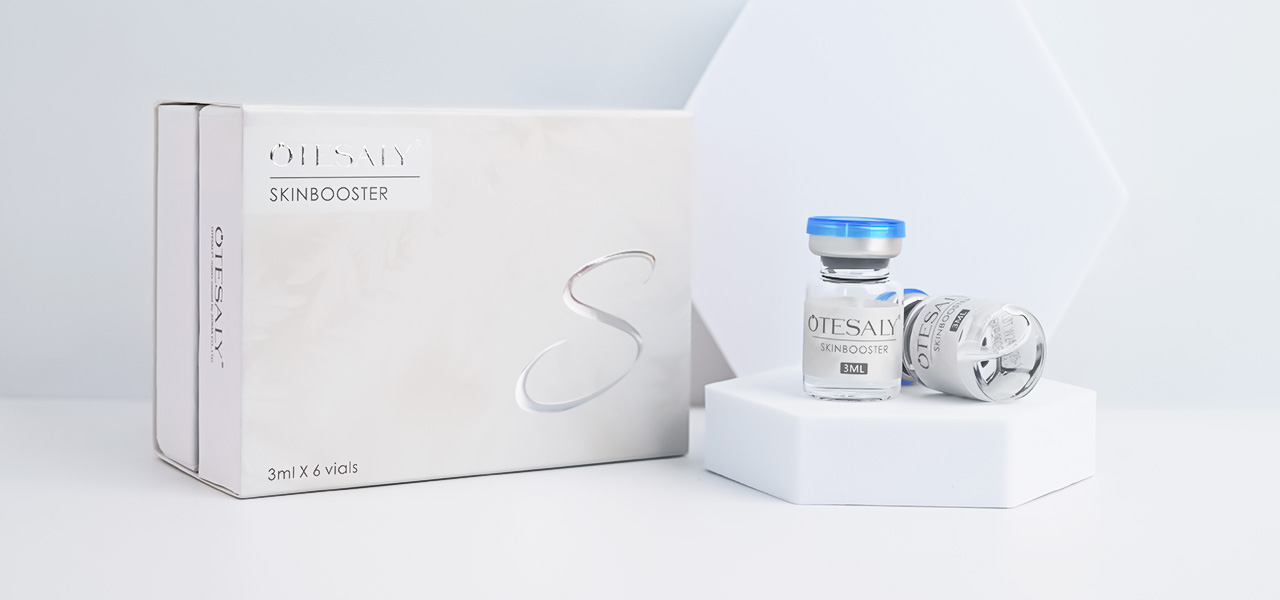
The core Skinbooster formulation uses the same high-purity, non-animal derived medical-grade HA referenced in global quality standards, processed with a combination of NASHA and HICE technology to create a smooth, evenly distributed gel. Residual BDDE levels sit below 0.02ppm, 5x lower than the EU CE safety limit of 0.1ppm, to minimize post-injection redness and reaction risk. The gradient molecular weight blend delivers immediate hydration within 24 hours of treatment, with results lasting 3-4 months for most patients. Formulations can be adjusted to match market needs: 12mg/ml HA concentration for East Asian markets where patients prefer subtle, natural results, 18-20mg/ml concentration for dry climates like the Middle East, or formulations with added lidocaine to reduce injection discomfort for sensitive patients.
AIMA has operated as a dedicated medical aesthetic product manufacturer since 2003, building a reputation as one of the Top 10 Dermal Filler Manufacturers globally for both finished products and OEM/ODM services. 
Our 4,800 square meter modern production facility houses Class 100 GMP clean rooms and 3 dedicated production lines, with an annual output capacity of 5 million units and monthly production capacity of 50,000 units. This scale allows us to offer lead times far shorter than many European and North American suppliers: sample orders ship in 3-5 working days, bulk orders are completed in 15-20 days, and expedited production options are available for partners facing unexpected stock gaps.
We structure our OEM/ODM services to support partners at every stage of growth, with No MOQ Pressure for emerging brands that are still testing product market fit. The Barcelona startup we mentioned earlier placed its first order for just 500 units of custom-formulated Skinbooster, with support from our team to adjust HA concentration, finalize packaging design, and compile full EU compliance documentation. Within 18 months, the brand grew to stock its products in 87 clinics across Spain, ranking among the top 12 local HA skin booster brands in the region. For larger enterprise partners like the Dubai clinic chain, we offer tiered bulk discounts, exclusive custom formulations, and localized marketing and training materials. After switching to our custom 18mg/ml Skinbooster formulation, the chain saw a 42% rise in skin booster treatment revenue in 2023, with zero stockouts during peak season.
Our in-house R&D team holds more than 1,000 mature aesthetic product formulations, allowing us to turn custom product requests into functional samples in days rather than months. All production follows ISO 13485 quality management standards and Class III medical device production protocols, with products holding EU CE certification and US FDA VCRP registration for global market access.
Our partnership process is built to cut down on back-and-forth and get products to market as quickly as possible, with full transparency at every step:
It is worth noting that HA skin boosters are not a one-time solution for all skin concerns. Patients with active inflammatory acne, skin infections at injection sites, or who are pregnant or breastfeeding are not suitable candidates for treatment. We provide all our partners with clear patient screening guidelines to reduce adverse event risk, and never make unsubstantiated claims about product longevity or effects. Independent clinical testing of our Skinbooster line shows 92% of patients reported improved skin hydration and radiance 4 weeks after treatment, with an adverse event rate of less than 0.2%, consistent with global safety benchmarks for premium HA injectables.
As demand for natural, skin-quality focused aesthetic treatments continues to grow, HA skin boosters will remain a core offering for clinics and brands across every global market. The difference between building a loyal customer base and dealing with costly product issues comes down to choosing a manufacturing partner that prioritizes raw material quality, regulatory compliance, and flexible support for partners of all sizes. Partners can review full product specifications, compliance documents, and case studies at https://supplierfiller.com/ at any time. To date, AIMA has provided custom HA skin booster and aesthetic product solutions for more than 521 brands across 62 countries, with partnership terms designed to support both new startups entering the market and large clinic chains scaling their operations.

Copyright @ 2026 AIMA International Group Co., Ltd.


