



Welcome to visit AIMA International Group
 Spain
Spain

Your browser version is too low, in order to ensure a better browsing experience,Please click to update to a higher version browser.
Talk about it later.XWelcome to visit AIMA International Group
Spain




.jpg)
Home > News > Industry Trends > Dermal Filler Product Catalog Design: Playbook for Aesthetic Brands & Wholesale Distributors
Industry TrendsWalk around any global aesthetic trade show, and you will see the same scene play out hundreds of times. Attendees tote bags stuffed thick with dermal filler catalogs, most of which land in the nearest trash can before they even leave the exhibition hall.
A small Spanish aesthetic brand we partnered with in 2023 learned this the hard way. The team spent €12,000 on glossy, full-page catalogs for their first launch at a Barcelona beauty expo, printing 200 copies with airbrushed model shots and generic marketing copy about “youthful radiance.” They left the show with 47 leads, and only two converted to small trial orders over the next three months. When their sales team followed up with lost leads, the feedback was consistent: no one could find clear details on lidocaine content, injection depth recommendations, or product G-prime values. Half the clinic owners who flipped through the catalog assumed the brand did not carry a dedicated lip filler, even though their lip formulation was listed on page 17.
That is the hidden cost of bad dermal filler product catalog design. It does not matter how good your formulation is, how competitive your pricing is, or how much you spend on booth space if your catalog cannot answer the exact questions buyers ask before they place an order.
A Dubai-based aesthetic distributor we worked with faced an even costlier misstep a year prior. Their previous dermal filler supplier provided generic catalogs with heavily edited before-and-after shots, no visible CE certification numbers, and no mention of ISO 13485 production standards. When the distributor presented the catalog to a network of 22 high-end aesthetic clinics across the UAE, every single clinic’s compliance team rejected the materials outright. The delay cost the distributor an estimated €120,000 in projected quarterly revenue, and pushed their market launch back six months.
These are not isolated incidents. After reviewing more than 300 dermal filler catalogs from brands across 40+ markets over the past 20 years, we see the same mistakes repeated over and over:
Think of a dermal filler catalog as a silent sales rep that sits on clinic shelves, gets passed between practice managers and lead injectors, and gets referenced long after a trade show ends. It needs to answer every question a buyer might have, without making them send three follow-up emails to your sales team.
Clinician-facing specification panels for every SKU
Injectors do not choose fillers based on pretty packaging. They select products based on measurable, technical attributes that directly impact patient outcomes. Every product listing needs clear, scannable details on:
Skip the generic copy about “luxury beauty” or “age-defying results.” Injectors see that language on every catalog they pick up. Give them the numbers they need to feel confident using your product on their patients.
Transparent quality and compliance documentation
Clinic compliance teams do not take marketing claims at face value. They need visible, verifiable proof that your products meet regional regulatory requirements. Every relevant product page should clearly mark applicable certifications, including CE marks for EU markets, FDA VCRP registration for US distribution, and ISO 13485 quality management compliance for production facilities. Add a scannable QR code linked to batch-specific test reports, raw material sourcing documents, and SGS third-party testing results so buyers can pull documentation in seconds, without waiting for a sales rep to send attachments.
As a dermal filler manufacturer operating since 2003, AIMA International Group Co., Ltd. builds these compliance details directly into every custom catalog we create for OEM/ODM partners. Our 4,800 square meter production facility runs Class 100 GMP clean rooms across three dedicated production lines, with processes aligned to Class III medical device manufacturing standards. We source only medical-grade, non-animal derived hyaluronic acid (valued at $45,000 per kilogram) from CE GMP certified suppliers, with regular third-party audits to maintain consistency across every batch.

AIMA International’s GMP Class 100 clean production workshop, with dedicated lines for HA dermal filler manufacturing
Realistic outcome references and intuitive navigation
Skip the heavily filtered model photos that show impossible, poreless results. Use unretouched photos of diverse patients, with clear notes on injection volume, product used, and time elapsed post-treatment. Be honest about expected results: no HA filler lasts two years, and claiming otherwise only creates frustration for patients and liability for clinics. Organize product sections by use case (lip enhancement, facial contouring, fine line correction, body volume restoration) instead of SKU number, so buyers can locate the right product in 30 seconds or less.
Many brands assume catalog design is a job exclusively for marketing agencies. But agencies rarely understand the technical nuances of dermal filler formulations, regional regulatory rules, or the specific questions injectors ask before they trial a new product. That is where an experienced manufacturing partner adds tangible value, long before the first catalog goes to print.
AIMA holds the “Top 10 Dermal Filler Manufacturers” industry award, and has delivered custom dermal filler solutions for more than 521 brands across global markets. All custom catalog and manufacturing services are available to global partners via supplierfiller.com, where brands can browse formulation options and request custom samples at any time. Our in-house R&D team holds more than 1,000 mature filler formulations, and our OEM/ODM services cover every step of brand building, from brand positioning and logo design to custom packaging, formulation tweaks, and concentration adjustments for specific market needs. We operate with no MOQ pressure to support emerging brands building their first product line, and offer volume discounts for large distributors scaling across regions. Our production capacity hits 5 million units annually, with monthly output of up to 50,000 units, leading to fast turnaround times: 3-5 working days for sample orders, 15-20 days for bulk production, with expedited options available for time-sensitive launches.
Take our dedicated lip filler formulation, Lipfill, as an example. The formula is built specifically for the delicate lip tissue, with a 24mg/ml HA concentration, 0.3% lidocaine to reduce injection discomfort, and a balanced G-prime value that delivers smooth volume without feeling stiff or unnatural. Clinical feedback shows the formula delivers consistent results for 6-8 months, with low rates of swelling or lump formation. When we support brands building catalog entries for Lipfill, we do not just send a generic product photo. We provide full technical specification sheets, real clinical case photos from our network of test injectors, compliance documentation tailored to the brand’s target market, and clear, accurate language for risk disclosures.
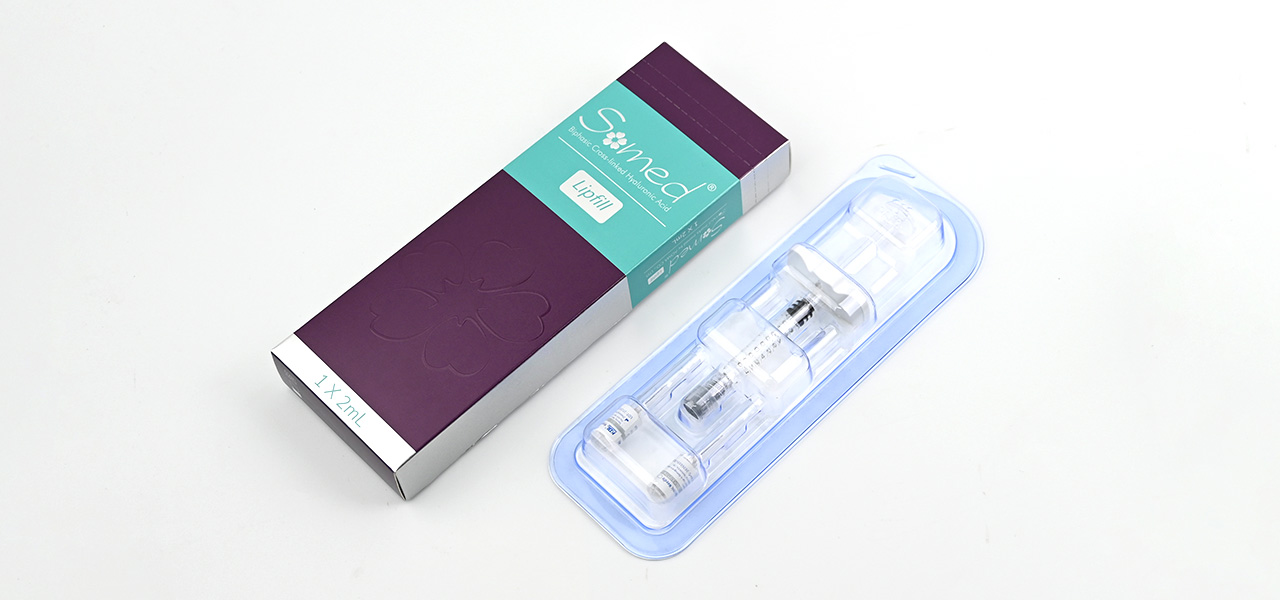
AIMA’s Lipfill dermal filler, formulated for natural lip volume enhancement with integrated lidocaine for patient comfort during injection
We worked with that same Dubai-based distributor to rebuild their full product catalog in 2023, restructuring their product listings by use case, adding visible CE certification numbers on every relevant page, and swapping overedited stock photos for real case shots of regional patients. We also added clear information about our post-delivery support: 24/7 clinical consultation support for injectors, no-cost replacements for units damaged in shipping, and instant access to batch-specific test reports for every order.
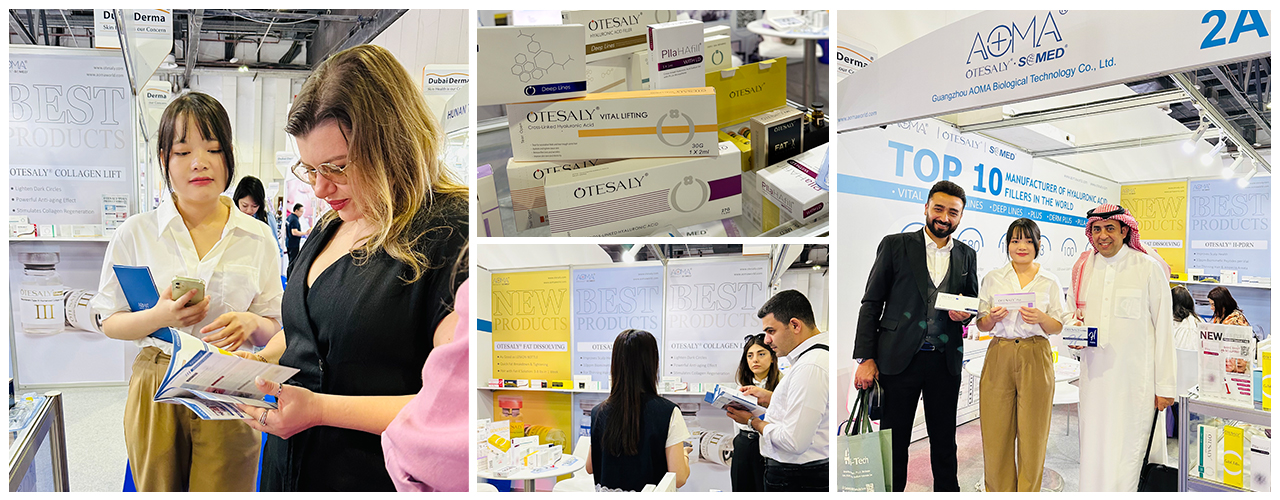
AIMA’s team connecting with distributors and clinic owners at the Dubai Beauty Exhibition, sharing custom catalog designs built for Middle East market partners
The distributor brought the revised catalog to the 2023 Dubai Beauty Exhibition, bringing 150 printed copies. Within 30 days of the show, they signed partnership agreements with 17 high-end clinics, with first-order volumes 60% higher than their initial projections for the market. The team reported that clinic compliance teams approved their product submissions in an average of two days, compared to the three-plus week wait they experienced with their previous supplier’s materials.
Even with all the core technical and compliance details in place, small missteps can still undermine a catalog’s effectiveness. Keep these rules in mind as you build your materials:
Think back to the last trade show you attended. How many of the catalogs you picked up made it back to your office, instead of landing in a bin outside the venue? The ones that stick around are not the glossiest, or the most expensive to print. They are the ones that give buyers the exact information they need, when they need it, without forcing them to dig through pages of marketing fluff.
For brands and distributors building out a dermal filler line, that level of clarity does not come from hiring a fancy design firm. It comes from working with a manufacturer that knows the products, knows the regulations, and knows exactly what injectors and clinic owners look for when they choose a filler supplier. We have seen brands spend five figures on catalogs that generate almost no leads, and we have seen simple, clearly laid out catalogs help new brands lock in distribution deals within weeks of launch. The difference is never the paper quality or the graphic design. It is whether the catalog speaks the same language as the people actually buying and using your products.

Copyright @ 2026 AIMA International Group Co., Ltd.


