
Welcome to visit AIMA International Group
 Spain
Spain

Your browser version is too low, in order to ensure a better browsing experience,Please click to update to a higher version browser.
Talk about it later.XWelcome to visit AIMA International Group
Spain


.jpg)
Home > News > Industry Trends > Dermal Filler Particle Size: A Complete Guide to Formulation, Performance & Clinical Outcomes
Industry TrendsMost practitioners and private label aesthetics brands evaluate dermal fillers by obvious metrics: hyaluronic acid concentration, cross-linking degree, price per milliliter, or lidocaine content. Many overlook dermal filler particle size until problems surface: clogged needles mid-procedure, palpable lumps under the skin, rapid product breakdown, or visible blueish bumps in thin skin areas. These issues rarely trace back to bad injection technique alone. More often, they stem from poorly controlled particle size during the manufacturing process.
Dermal filler particle size refers to the average diameter of cross-linked gel or biocompatible microspheres suspended in the filler gel carrier. Average diameter alone tells only part of the story. The polydispersity index (PDI) — a measurement of how much individual particle sizes vary from the average — is the marker that separates clinical-grade fillers from low-quality, budget alternatives.
A PDI of 0 means every single particle is exactly the same size, a standard no manufacturing process can hit perfectly. Most mass-market fillers on the market have a PDI between 0.2 and 0.3, meaning particle sizes can vary by 50% or more from the labeled average. When PDI climbs above 0.25, clinical risks rise sharply: oversized particles jam fine needles, undersized particles break down within weeks, and irregular particle edges trigger excess inflammation or granuloma formation.
AIMA International, a 20-year veteran dermal filler manufacturer honored as one of the Top 10 Dermal Filler Manufacturers globally, controls PDI to a tight 0.1–0.15 across all its filler lines, using proprietary NASHA and HICE cross-linking technologies paired with multi-stage wet sieving. This level of consistency is why its products are used by hundreds of brands across 60+ countries.
There is no “best” particle size for all dermal filler applications. Size is matched directly to injection depth, treatment area, and desired outcome:
Mismatch particle size to injection depth, and problems are inevitable. Inject large particles into the superficial dermis, and patients will see visible, palpable bumps that can take months to resolve. Inject small particles into deep bone-level layers, and the product will disappear in 2–3 months with no meaningful contour change.
Take the case of a Barcelona-based independent aesthetics brand founder who reached out to AIMA in early 2023. She had worked with a small local contract manufacturer to launch a “long-lasting jawline filler” advertised to have 800μm particles for deep contouring. Within three months of launch, she received 27 customer complaints from clinics carrying her line. Providers reported repeated clogging of 25G cannulas mid-injection, requiring frequent needle changes that extended procedure times by 15 minutes per patient. A subset of patients reported hard, tender lumps along the jawline 4 weeks post-injection, plus three cases of product migration below the jaw margin that created a jowly appearance.
AIMA’s R&D team ran laser particle size analysis on samples of her existing product, and found a PDI of 0.42 — far outside acceptable clinical ranges. The largest particles measured over 1800μm, sharp-edged and irregular, which caused the clogs and inflammatory lumps. More than 20% of particles measured under 400μm, too small and low-cohesion to stay placed in deep tissue, leading to migration and rapid breakdown. The AIMA team worked with her to reformulate the product using the same controlled-size framework as its flagship deep-contour filler, and the reworked line saw a 98% drop in complaints within six months of relaunch, with clinic reorder rates climbing 47%.
A large share of low-cost dermal fillers on the wholesale market cut corners on particle size control, because precision sieving adds production time and material waste. Brands that source these products without third-party testing often face predictable, costly issues:
A second case comes from a large Dubai-based medical aesthetics chain. We first connected with the group’s procurement lead at the 2022 Dubai Beauty Exhibition, where they brought samples of the problematic filler to our booth for on-site analysis.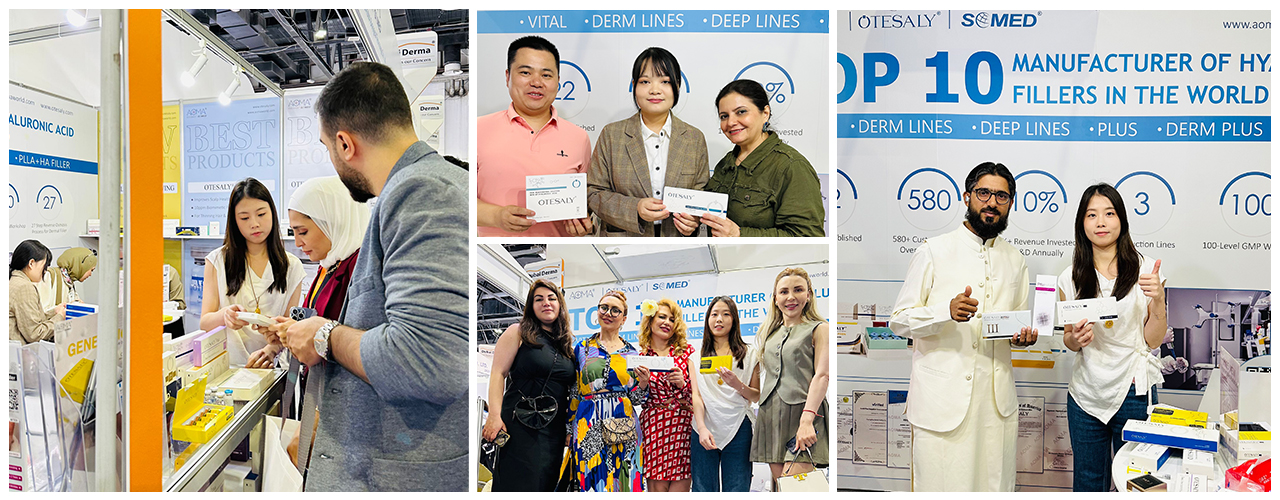 The chain had purchased a bulk shipment of “medium-particle nasolabial fold filler” from an unvetted trade supplier, and used it on 120 patients over two months. Eighteen of those patients reported visible pale blue bumps in the treated area, visible under direct sunlight, with hard palpable nodules under the skin. Other patients reported their results faded completely within 3 months, instead of the advertised 12 months.
Lab analysis found the filler had no consistent particle size profile at all. Thirty-five percent of particles measured over 700μm — large-particle grade, unsuitable for the mid-dermis injection depth used for nasolabial folds — which caused the visible bumps. Forty percent of particles measured under 200μm, small enough to be broken down and absorbed by the body within weeks, causing the rapid loss of effect. The chain switched to AIMA’s size-matched filler lines for all their clinics, and completed AIMA’s provider training on particle size and injection depth matching. In the 18 months since, they have reported zero cases of particle-related nodules or premature product breakdown.
Consistent particle size doesn’t happen by accident. It requires investment in raw material quality, specialized production equipment, and rigorous batch testing that many low-cost manufacturers skip. AIMA’s production process is built around size control at every step:
The process starts with raw materials: AIMA uses medical-grade, non-animal derived hyaluronic acid priced at $45,000 per kilogram, sourced exclusively from CE GMP-certified suppliers, with every incoming batch tested by third-party labs including SGS for purity and molecular weight consistency. Cross-linking uses NASHA and HICE technologies to create uniform gel matrices, rather than the uneven, clumpy gel produced by fast, low-temperature cross-linking methods used by budget manufacturers.
After cross-linking, the gel goes through a 5-stage wet sieving process in sterile, isotonic buffer solution, passed through medical-grade mesh screens of precise pore sizes to filter out oversize irregular particles and undersized uncross-linked fragments. Unlike dry sieving, which can create sharp, broken particle edges that cause inflammation, wet sieving produces smooth, uniform spheres that glide through needles and integrate evenly with surrounding tissue. Every batch is tested with a laser diffraction particle size analyzer to confirm average diameter and PDI before it moves to filling and packaging. All of these precision production processes take place in AIMA’s 100-class GMP cleanrooms, where every step of filler manufacturing follows strict ISO 13485 and Class III medical device production standards.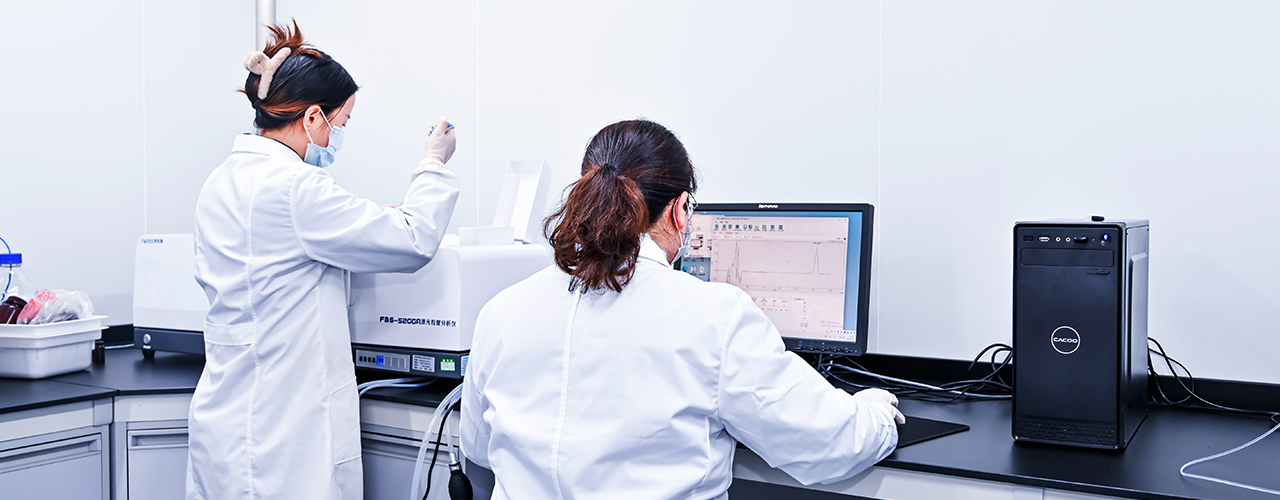
The brand’s most size-stringent product, PLLAVoluFill, is formulated for deep volume replacement and contouring, with PLLA-HA composite microspheres calibrated to a tight 800–1000μm diameter range, with a maximum PDI of 0.12.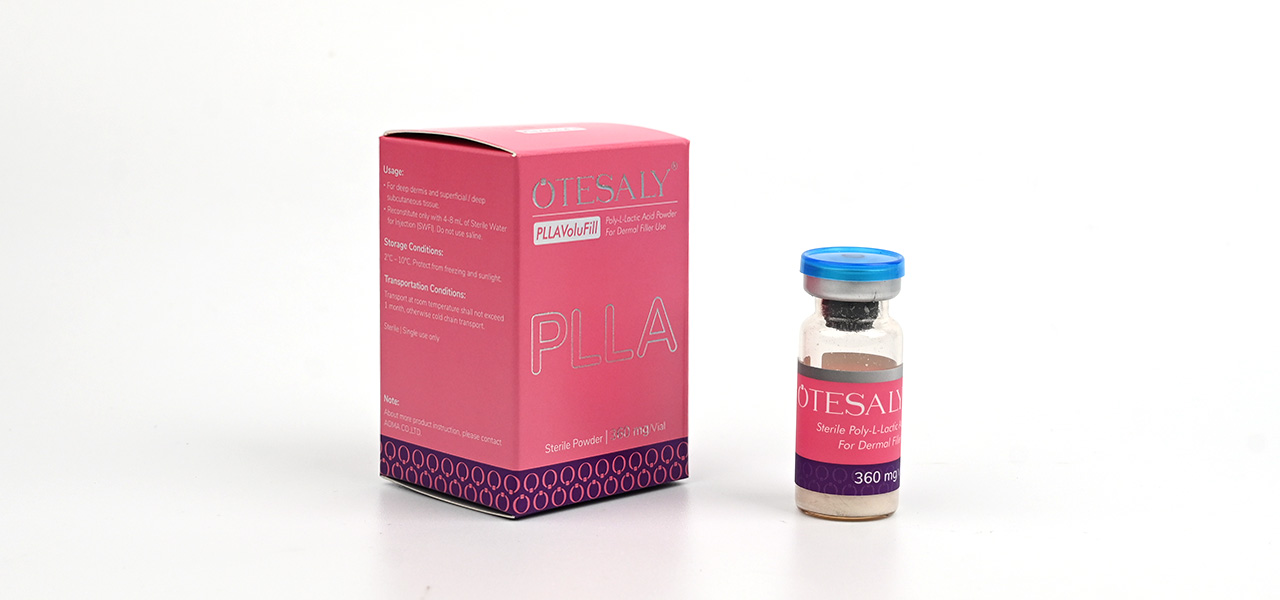 The smooth, uniformly sized microspheres deliver consistent extrusion through 25G cannulas with no clogging, provide 180Pa of elastic support to hold contour shape without migration, and biodegrade evenly over 18–24 months with minimal inflammatory response. The product is a top seller for brands focused on high-end facial contouring treatments, thanks to its predictable, repeatable clinical results.
If you are sourcing dermal fillers for private label or clinical use, don’t take a supplier’s word for particle size claims. Ask to see batch-specific laser particle size test reports, confirming both average particle diameter and PDI for the exact SKU you plan to purchase. Avoid suppliers that cannot provide these reports, or that brush off questions about size distribution as “unimportant.”
As a dedicated medical aesthetics wholesale supplier, AIMA provides full documentation for every shipment: certificates of analysis including particle size results, sterility and endotoxin test reports, CE certification, FDA VCRP registration documentation, and ISO 13485 compliance paperwork to support market registration in any region. The company’s OEM/ODM services cover every step of brand development, from brand positioning, logo design and custom packaging to custom formulation adjustments for specific particle sizes, HA concentrations, and cross-linking levels. With no MOQ pressure for emerging brands, bulk discounts for large enterprise clients, 3–5 day lead times for sample orders and 15–20 day lead times for bulk production (with rush options available), AIMA has delivered custom filler solutions for more than 521 brands worldwide since its founding in 2003. Its in-house clinical support team provides ongoing training for provider teams on proper injection depth matching for each particle size, plus 24-hour response for any product-related questions or concerns.
Ask any injector with 10+ years of clinical experience what makes a filler reliable, and they will talk about feel: consistent push force through the needle, no lumps, predictable placement, natural results that last as long as advertised. That feel doesn’t come from marketing claims or fancy packaging. It comes from tight, uncompromising control of every single particle in every syringe.

Copyright @ 2026 AIMA International Group Co., Ltd.