
Welcome to visit AIMA International Group
 Spain
Spain

Your browser version is too low, in order to ensure a better browsing experience,Please click to update to a higher version browser.
Talk about it later.XWelcome to visit AIMA International Group
Spain



.jpg)
Home > News > Industry Trends > Dermal Filler Cohesivity: The Overlooked Metric That Defines Treatment Outcomes & Product Line Success
Industry TrendsHave you ever seen a dermal filler treatment that left a patient with lumpy, shifted cheek volume 6 months post-injection? Odds are, the product’s cohesivity was to blame. Most practitioners, brand owners, and even procurement teams focus on familiar metrics when evaluating fillers: crosslinking rate, elastic modulus (G’), expected duration, and price. Few dig into cohesivity data, even though this single property controls whether filler stays where it is injected, feels natural to the touch, and creates the smooth results patients pay for.
What Exactly Is Dermal Filler Cohesivity?
Industry outsiders often mix up cohesivity with viscosity or G’, but the three measure entirely different properties. G’ tracks a gel’s ability to resist deformation under pressure. Viscosity measures how much force is needed to push the gel through a needle or cannula. Cohesivity, by contrast, quantifies the strength of molecular bonds between individual gel particles — put simply, how well the filler holds itself together instead of spreading or fragmenting in tissue.
The global aesthetic industry uses a standardized diffusion assay to test cohesivity across all filler types. Lab technicians place a 0.2ml dot of gel on graded qualitative filter paper, hold it at a constant 25°C for 30 minutes, then measure the average diameter the gel spreads across the paper. A smaller diameter equals higher cohesivity. Many brands market fillers as “high-support” using only G’ data, but a product can have a high G’ and low cohesivity: think of crumbled feta cheese, which feels firm to the touch but breaks into loose fragments at the slightest pressure. Those fragments migrate through facial tissue planes, causing the puffy, distorted “overdone” look that makes patients wary of filler treatments.
Why Cohesivity Makes or Breaks Treatment Results
Cohesivity levels are not universally “better” when higher or lower. Each treatment area and injection depth requires a specific cohesivity range to deliver natural, long-lasting results:
Take the 2022 case of a U.S.-based indie aesthetic brand that launched its first deep-volume filler line without auditing cohesivity metrics during production. The brand selected a contract manufacturer that quoted 30% below market average, relying solely on G’ values to market the product as “high-support, long-lasting.” Within 4 months of launch, 12% of patients treated with the filler reported visible migration: cheek filler drifted down to sit along the nasolabial folds, jawline filler spread to create a jowly appearance, and the brand faced over $210,000 in refund requests and liability claims. An independent lab test later found the filler’s cohesivity measured 22mm on the diffusion assay — well below the 10mm threshold required for deep placement, despite having a G’ value on par with leading premium brands.
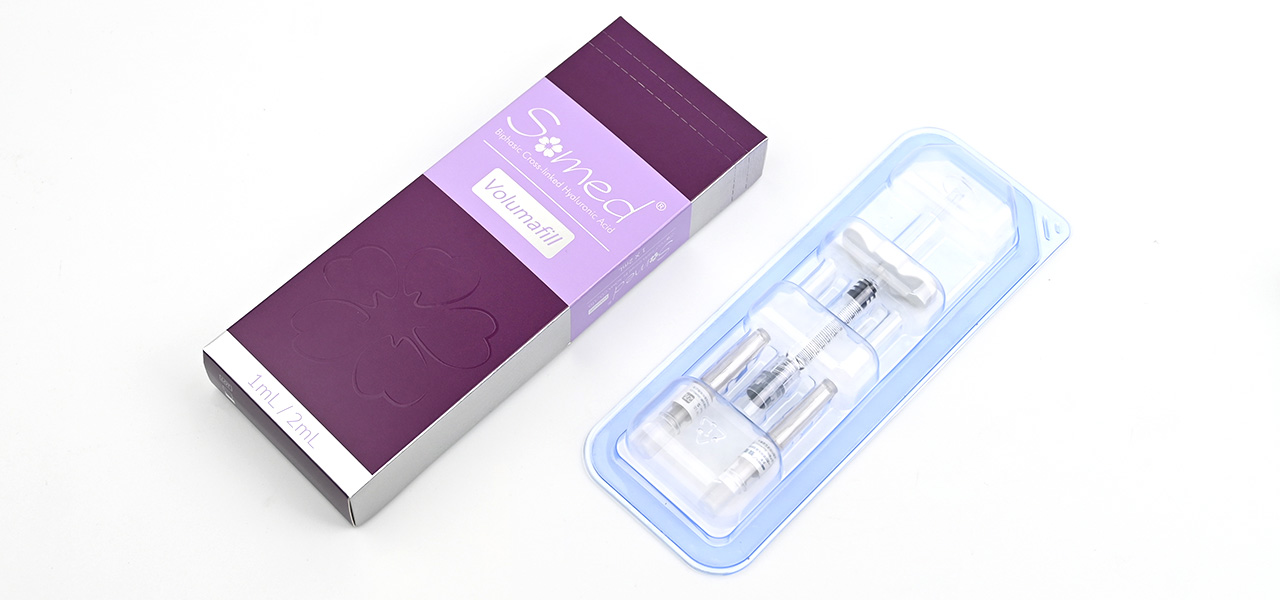
This is exactly why veteran brand owners and clinic operators treat cohesivity as a non-negotiable quality check when sourcing dermal fillers. For clients seeking a reliable high-cohesivity deep-volume filler that meets global clinical standards, Volumafill from AIMA International Group Co., Ltd. is engineered to deliver consistent, predictable results across every batch.
Volumafill is calibrated to a consistent 8-9mm diffusion diameter across every production run, formulated with proprietary HICE (High Internal Cohesion Encapsulation) technology that locks crosslinked HA gel matrices together without creating excessive firmness. The gel pushes smoothly through 25G and 27G cannulas, reducing physician fatigue and patient discomfort during injection, and maintains its shape for 12-18 months post-placement without migration or fragmentation.
How Manufacturers Control Filler Cohesivity (And Where Most Cut Corners)
Cohesivity is not a random property — it is determined at every step of production, from raw material selection to crosslinking protocols to final purification. Even minor deviations in crosslinking temperature, HA molecular weight, or purification time can shift cohesivity levels by 30% or more, turning a well-formulated filler into a migration risk.

AIMA operates a 4,800 square meter GMP Class 100 clean room production facility with 3 dedicated filler production lines, where every batch of dermal filler undergoes 17 separate quality checks, including a standardized cohesivity diffusion test before release. The facility uses non-animal sourced medical-grade HA, valued at $45,000 per kilogram, sourced exclusively from CE GMP-certified suppliers, with every raw material batch tested by third-party labs including SGS to verify purity and molecular weight. Unlike manufacturers that cut costs by reducing crosslinking time and adding free HA to artificially boost G’ values, AIMA’s NASHA and HICE crosslinking processes create uniform gel particle sizes with consistent intermolecular bonds, eliminating the loose fragments that cause migration. The R&D team holds over 1,000 mature filler formulations, allowing clients to adjust cohesivity levels precisely for their target treatment areas, from ultra-low cohesivity fine-line fillers to maximum-cohesivity volume builders.
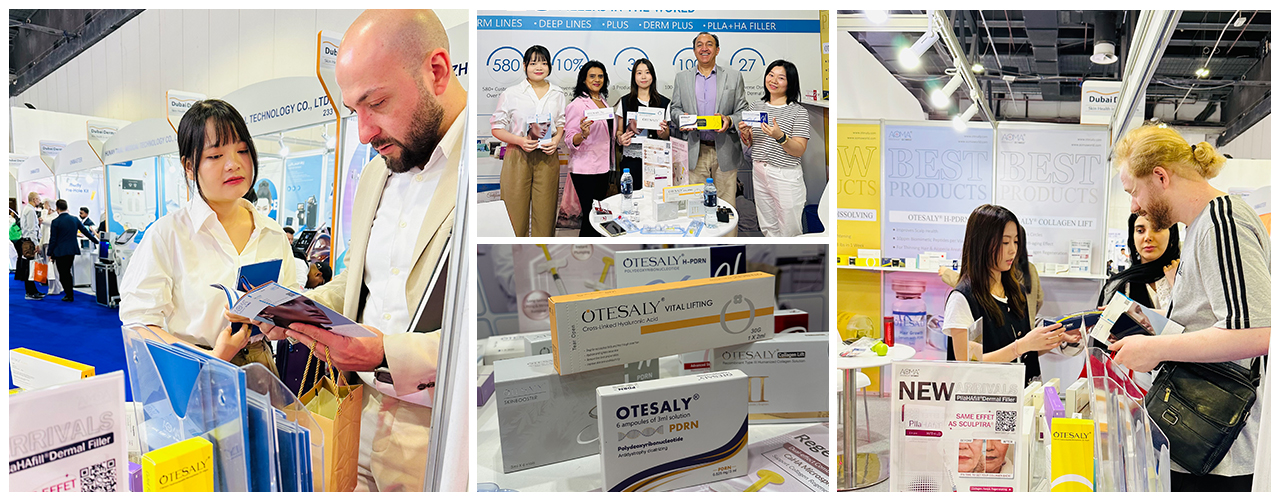
A high-end aesthetic clinic chain based in Dubai learned this difference first hand in 2023. The chain had been sourcing a premium European high-cohesivity filler for 3 years, but high wholesale costs cut their treatment profit margins to just 14%. The clinic’s procurement team tested samples from 7 different filler manufacturers, looking for a cost-effective alternative that matched the premium product’s performance. Most samples failed on cohesivity: 4 had diffusion diameters over 15mm, meaning they would migrate in deep placement, while 2 were overly crosslinked, requiring excessive injection force that caused increased patient bruising. When the team tested Volumafill at the 2023 Dubai Beauty Exhibition, they found its cohesivity, push force, and tissue integration matched the premium brand exactly, at a 42% lower wholesale cost. Within 6 months of switching, the clinic’s margin on deep volume treatments jumped to 47%, with zero patient reports of migration or lumps.
What To Look For When Sourcing Fillers By Cohesivity Profile
Sourcing dermal fillers without verifying cohesivity data is like buying a car without checking if the wheels stay attached at highway speeds. Keep these checks top of mind during supplier evaluations:
There is no single “best” cohesivity level for all dermal filler treatments. A filler perfect for jawline definition will feel stiff and unnatural in the lips, while a soft fine-line filler will lack the support to lift sunken temples. The mistake many brands and clinics make is treating cohesivity as an afterthought, rather than a core design parameter that dictates every clinical outcome. Many low-cost filler suppliers skip cohesivity testing entirely, churning out generic gels that look identical to premium products in the syringe but fail to hold their shape once injected. These products drive short-term cost savings but lead to long-term reputational damage, patient harm, and lost revenue.
For medical aesthetics wholesale clients, AIMA removes that risk. Every filler product, including Volumafill, comes with full regulatory documentation to support market entry in the EU, North America, Middle East, and Southeast Asia. The quality team retains batch samples for 3 years post-production, allowing full traceability in the rare event of a quality concern, and a dedicated account manager responds to all client inquiries within 48 hours. Clients can request custom cohesivity adjustments for their own branded lines, whether they need a soft, low-cohesivity lip filler, a medium-cohesivity wrinkle corrector, or a high-cohesivity volume builder like Volumafill.
Next time you evaluate a dermal filler sample, skip the flashy marketing claims first. Place a 0.2ml dot on a piece of filter paper, wait 30 minutes, and see how far it spreads. That small test will tell you more about long-term performance than any brochure or sales pitch.

Copyright @ 2026 AIMA International Group Co., Ltd.