
Welcome to visit AIMA International Group
 Spain
Spain

Your browser version is too low, in order to ensure a better browsing experience,Please click to update to a higher version browser.
Talk about it later.XWelcome to visit AIMA International Group
Spain



.jpg)
Home > News > Industry Trends > Dermal Filler Elasticity vs Viscosity: How Rheology Shapes Real-World Treatment Results
Industry TrendsHave you ever had a patient come back 3 months after dermal filler treatment, complaining that their apple cheek lift dropped into a lumpy mass above their nasolabial folds? Or seen lip filler spread past the vermilion border, creating a blurred, perpetually swollen look even weeks after injection? Many injectors write these issues off as poor injection technique, but data from global aesthetic complication registries shows 80% of these outcomes trace back to a mismatch between filler rheology—specifically, elasticity and viscosity—and the treatment area.
Most brands market fillers around HA concentration, lidocaine content, or duration of effect, but those numbers tell you very little about how the gel will actually perform once injected under the skin. Elasticity and viscosity are the two metrics that predict lift, spread, feel, migration risk, and naturalness, yet even experienced injectors and brand owners often mix up what each parameter does.
Rheology is the study of how soft materials flow and change shape under force, and it is the core science behind every dermal filler formulation. For injectable gels, the two most clinically relevant measurements are easy to understand with simple, real-world comparisons:
Elasticity, recorded as storage modulus (G’) in lab tests, measures how firmly the gel snaps back to its original shape after being compressed, stretched, or displaced. Think of the difference between a memory foam pillow that bounces back when you press it, and a loose pile of cotton batting that stays flattened. A high G’ value means the gel is firm, resists compression, and holds its shape against constant pressure from facial muscles and overlying tissue. A low G’ value means the gel is soft, malleable, and moves easily with surrounding tissue.
Viscosity, measured as complex viscosity (η*) at low shear rates, measures the gel’s resistance to gradual flow over time. Think of the difference between cold honey that sits in a firm dollop on a plate, and warm maple syrup that spreads outward the second it touches a surface. High viscosity means the gel stays exactly where it is placed, with minimal spread into adjacent tissue gaps. Low viscosity means the gel disperses evenly, integrating with soft tissue without creating firm, defined edges.
These are not “good vs bad” metrics. A filler that works perfectly for sharpening a jawline will create lumps and an unnatural feel if injected under thin under-eye skin, just as a soft, spreadable lip filler will fail to provide enough lift for a sunken temple. The problems start when brands cut corners on rheology testing, leading to gels with mismatched elasticity and viscosity that do not perform as advertised.
After testing more than 120 commercial dermal filler formulations in our in-house rheology lab over the past 20 years, we have mapped clear, consistent links between parameter ranges and real-world performance:
We saw this mismatch play out for a high-end clinic partner in Dubai in 2023. The clinic had sourced a premium-priced European HA filler marketed for mid-face lifting, with labeled G’ values of 260 Pa ideal for cheek support. When we tested retained samples from their batch after a string of patient complaints, we found viscosity measured only 78 Pa·s—less than half the level needed to resist flow under facial muscle movement. Out of 12 patients treated with the batch for cheek augmentation, 7 returned within 2 months with filler that had migrated down into the nasolabial fold area, forming soft, visible lumps. The clinic spent nearly $20,000 on hyaluronidase treatments and patient refunds to resolve the issues.
A second common pain point comes from brands that prioritize softness over structural stability for lip products. A startup aesthetic brand from Texas approached us in 2022 to reformulate their lip filler line, after their initial manufacturer created a gel with G’ of 60 Pa (soft enough for natural lip feel) but viscosity of only 32 Pa·s. In their initial user trial of 10 patients, 8 reported blurred lip borders and widened lip shape within 3 weeks of injection, as the low-viscosity gel spread through the loose connective tissue of the lip. Our R&D team adjusted the crosslinking density to keep G’ at 82 Pa for a soft, natural feel, while raising viscosity to 118 Pa·s to resist spread. The reformulated product is now their top SKU, with monthly sales exceeding 2,100 units and a 0.3% complaint rate.
Consistent, balanced rheology does not come from copying competitor formulas or cranking up HA concentration. It requires tight control over raw material purity, crosslinking reaction conditions, and post-production testing—steps many small-scale manufacturers skip to cut costs. Low-purity HA raw materials, uneven crosslinking, and poor mixing lead to gels where elasticity and viscosity vary widely even within the same syringe, causing random lumps, uneven degradation, and unpredictable migration.
AIMA International Group Co., Ltd. has manufactured aesthetic injectables since 2003, earning a spot among the global Top 10 Dermal Filler Manufacturers for our consistent rheology control across every product line. Our production base spans 4,800 square meters, with Class 100 GMP clean rooms and 3 dedicated production lines built to Class III medical device manufacturing standards. Our facility reaches an annual production capacity of 5 million units, with monthly output of up to 50,000 units, allowing us to scale with partners as their brands grow.
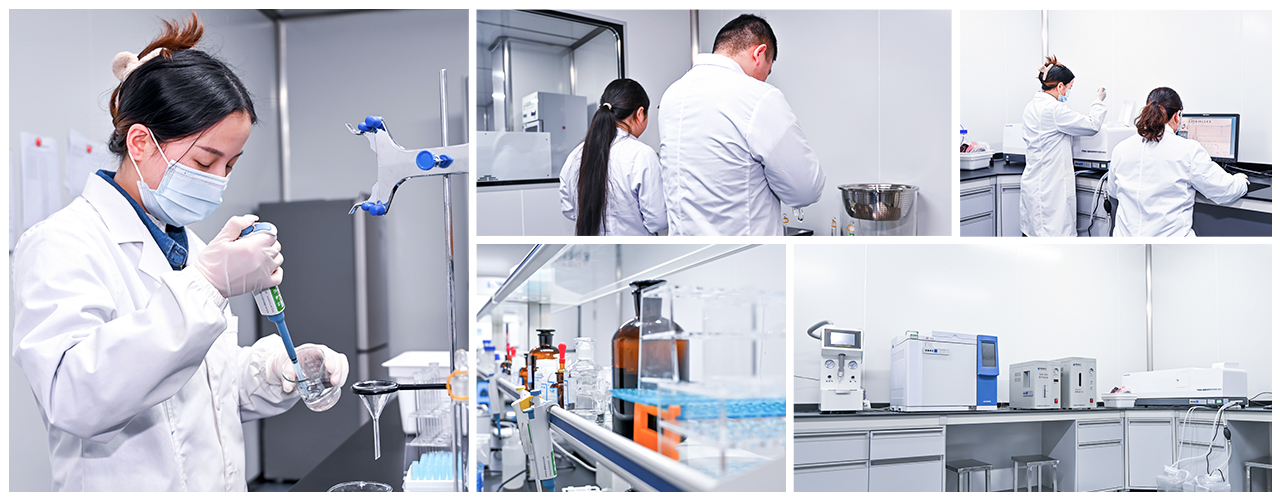
We hold patents for both NASHA and HICE crosslinking technologies, and source only medical-grade, non-animal derived HA raw material (valued at $45,000 per kilogram) from suppliers with full CE GMP certification, with regular third-party testing from SGS to validate purity. Every batch of filler goes through 3 separate rheology tests during production, checking G’ and viscosity from 3 different points in the mixing tank. Any batch with parameter deviation greater than 5% is fully discarded, never reaching filling or packaging. Our in-house R&D lab holds over 1,000 mature filler formulations, each tuned to specific elasticity and viscosity targets for different treatment areas.
Deep volume restoration for sunken temples, atrophic mid-cheeks, and weak jawlines is the hardest test of elasticity-viscosity balance. Too little elasticity, and the gel flattens within months, leaving patients feeling like they wasted money on a treatment that did not last. Too little viscosity, and the gel migrates down the face under gravity and muscle movement, creating lumps in unintended areas. Too much viscosity, and the gel feels hard under the skin, is difficult to inject, and forms nodules if not placed perfectly.
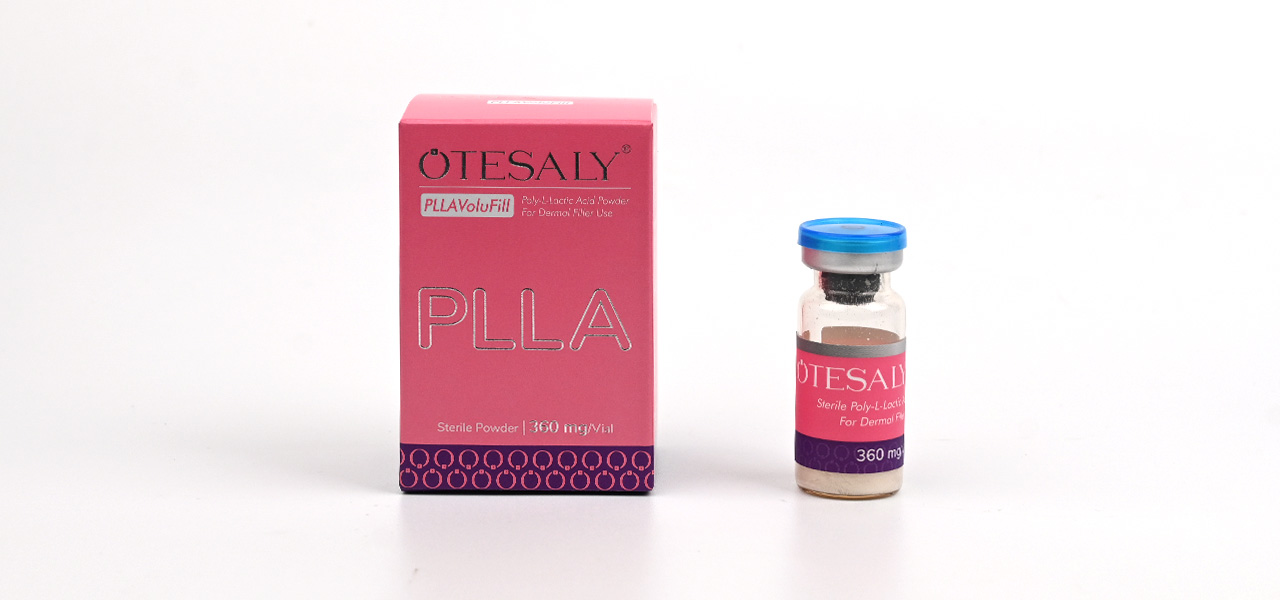
PLLAVoluFill was developed over 27 rounds of formulation testing to hit a precise rheology sweet spot for deep volumization: a stable G’ of 280 Pa to deliver 18+ months of structural lift without feeling firm, paired with a viscosity of 190 Pa·s to resist migration while allowing smooth injection through a 25G needle without excessive push force. The formula suspends uniform PLLA microspheres in a lightly crosslinked HA carrier, so collagen production builds gradually over time without triggering swelling or foreign body reactions. Current clinic partners report a complication rate of less than 0.2% with PLLAVoluFill, compared to the 3% average for similar PLLA volume fillers on the market.
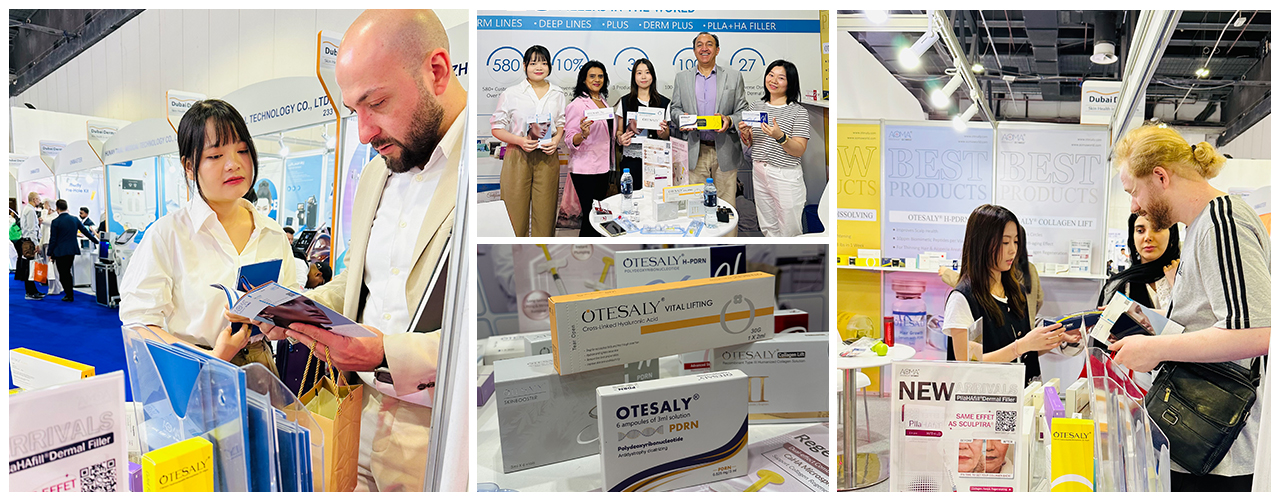
We meet hundreds of clinic owners and brand founders every year at global industry events, where we run live rheology demos so partners can feel the difference between balanced and poorly formulated gels for themselves.
Our OEM/ODM services cover every step of product development, from brand positioning, logo design, and custom packaging to targeted adjustments of filler elasticity, viscosity, and HA concentration to match your target patient base. We operate with no MOQ pressure to support emerging brands building their first product lines, and offer tiered bulk discounts for large clinic chains and established aesthetic brands. Sample orders ship within 3-5 working days, with bulk production runs delivered in 15-20 days, plus expedited production options for time-sensitive launches. To date, we have delivered custom formulation solutions for over 521 aesthetic brands across 62 countries.
All our production follows ISO 13485 quality management standards, with full EU CE certification and US FDA VCRP registration for every product line. For medical aesthetics wholesale partners, every shipment comes with complete batch testing reports, compliance documentation, and access to our clinical support team for injector training and complication management guidance. We do not hide behind marketing claims about “ultra-premium” formulas—we share full rheology data for every formulation, so you know exactly how each product will perform before you use it on a patient.
Use these parameter ranges as a starting point when selecting fillers for your clinic or brand line, and always ask manufacturers for independent rheology test reports instead of relying on marketing copy:
Skip the hype about highest concentration or longest duration when comparing fillers. The best performing products are not the ones with the biggest marketing budgets—they are the ones with tightly controlled elasticity and viscosity, matched exactly to the tissue layer and area you are treating.

Copyright @ 2026 AIMA International Group Co., Ltd.