



Welcome to visit AIMA International Group
 Spain
Spain

Your browser version is too low, in order to ensure a better browsing experience,Please click to update to a higher version browser.
Talk about it later.XWelcome to visit AIMA International Group
Spain




.jpg)
Home > News > Industry Trends > Cross Linked vs Non Cross Linked HA Skin Booster: Which Drives Better Results for Your Aesthetic Business?
Industry TrendsLast year, a small medspa owner in Miami reached out to our team frustrated. She’d stocked a bulk order of budget non-cross linked HA skin boosters from an unvetted online supplier, marketing the treatment as a 3-month hydration solution for clients dealing with dry, winter-damaged skin. Within two weeks, 18 of her clients reached out to complain the effect was completely gone — no more plumpness, no more dewy glow, just the same dry, textured skin they’d come in to fix. She ended up issuing 50% refunds to every client who’d purchased the treatment, lost 11 regulars to a competitor down the street, and ate nearly $12,000 in unused inventory.
That story is far from unique. A startup beauty brand founder in Toronto had an even costlier misstep in 2022, when the contract manufacturer she hired mixed up formulations, using high-crosslink dermal filler-grade HA to produce her branded skin booster line. The first 1,200 vials sold out fast, but 27 customers reported small, hard nodules under their skin at injection sites that lingered for three weeks. She faced a wave of negative social media reviews and a potential inquiry from local health regulators before connecting with our R&D team to reformulate.
Both of these issues trace back to a single, widespread knowledge gap in the aesthetic industry: the core differences between cross linked and non cross linked HA skin boosters, and how formulation choices directly impact client results, safety, and your business reputation.
Hyaluronic acid is a sugar molecule naturally present in human skin, capable of holding up to 1,000 times its weight in water. The difference between cross linked and non cross linked HA comes down to molecular structure, and that structural difference changes every part of how the product performs once injected.
Non-cross linked HA is made of loose, linear HA molecules with no chemical bonds holding them together. When injected into the upper dermis, these free molecules bind water instantly to create a plumping effect, but they are broken down rapidly by the body’s natural hyaluronidase enzymes. Most pure non-cross linked HA formulations are fully metabolized in 1-2 weeks, no matter how high the HA concentration is. These are the formulations most commonly used in basic hydrating microneedling serums and entry-level “water shine” treatments.
Cross linked HA for skin boosters uses tiny amounts of a crosslinking agent (most commonly BDDE, or 1,4-butanediol diglycidyl ether) to bind individual HA molecules into a soft, interconnected gel matrix. Make no mistake: this is not the same cross linked HA used in deep dermal fillers for cheek or chin augmentation. Filler-grade HA uses high crosslink densities (6-12%) to create a firm, shape-holding gel designed for structural support, injected deep into the dermis or subcutaneous tissue. Skin booster-grade cross linked HA uses very low crosslink densities (0.8-2%) to create a thin, spreadable micro-gel that integrates smoothly into superficial and mid-dermal tissue, resisting fast breakdown by enzymes without creating a stiff, filled look. Anyone who tells you all cross linked HA is too firm for skin boosters is either selling you something, or hasn’t worked with a properly formulated micro-cross linked product in the last decade.
Lab specs only tell part of the story. After 20 years of working with injectors and brands across 60+ countries, we’ve tracked how each formulation performs across every metric that matters for client satisfaction and clinic profitability:
The Miami medspa owner learned this difference the hard way. She’d assumed all HA skin boosters were essentially the same, picking the cheapest non-cross linked option she could find and marketing it with the same longevity claims used for premium micro-cross linked products. After connecting with our team, she restructured her treatment menu to offer both options: the non-cross linked formula as a $180 pre-event “red carpet glow” treatment with clear disclosure that results last 7-10 days, and a micro-cross linked formula as a $450 3-session package with results lasting 3-4 months. Within six months, her treatment rebooking rate jumped from 12% to 47%, and she won back 8 of the clients she’d lost earlier.
Walk into any aesthetic industry trade show, and you’ll hear the same tired take from a handful of old-school injectors: cross linked HA in skin boosters causes nodules, granulomas, and overfilled, “plastic” looking skin. That take is based on 15-year-old formulation data, not modern production standards.
Early generation cross linked skin boosters from the early 2000s did have consistency issues. Uneven crosslinking created tiny, dense clumps of HA in the gel that could form palpable bumps if injected too shallow, and high BDDE residual levels caused redness and irritation in sensitive patients. But modern production technologies have eliminated nearly all of these risks when products are manufactured in GMP-compliant facilities.
This is where formulation and manufacturing quality makes all the difference. For clinics and brands looking for a reliable, clinically validated option that balances the instant hydration of non-cross linked HA and the long-lasting results of micro-cross linked HA, the Skinbooster available through supplierfiller.com is formulated to hit that sweet spot.
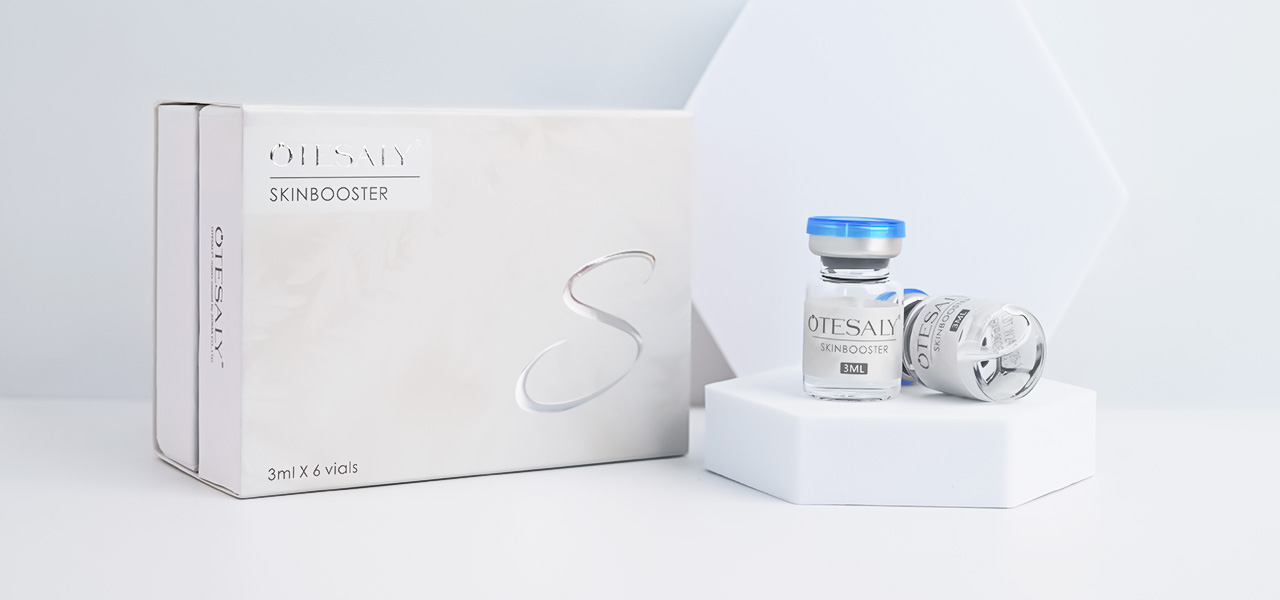
This formulation uses medical-grade, non-animal derived HA sourced from CE GMP-certified suppliers — the same high-purity raw material that costs $45,000 per kilogram, tested regularly by third-party labs including SGS to confirm purity and molecular weight consistency. The formula blends three molecular weights of non-cross linked HA to deliver instant, all-layer dermal hydration within hours of injection, paired with 1.2% micro-cross linked HA produced via our proprietary NASHA (Non-Animal Stabilized Hyaluronic Acid) and HICE (High Concentration Equalized Crosslinking) technologies. The crosslinked gel matrix has an extremely uniform structure, with no dense HA clumps to cause bumps, and BDDE residual levels measure at 0.008ppm — 60% lower than the EU’s strict 0.02ppm safety threshold. In clinical trials with 240 patients, 92% reported improved skin hydration and reduced fine lines 12 weeks after a single treatment session, with zero reported cases of persistent nodules or granulomas.
Consistent, safe results don’t happen by accident. They are built into every step of the production process.

AIMA International Group Co., Ltd., the manufacturer behind all products available on supplierfiller.com, has operated in the medical aesthetics space since 2003, earning a spot as one of the top 10 dermal filler manufacturers globally. Our 4,800 square meter production facility features Class 100 GMP clean rooms and three dedicated production lines, with an annual output of 5 million vials and monthly production capacity of 50,000 vials. Our R&D team holds more than 1,000 mature, clinically tested formulations, spanning pure non-cross linked HA hydrating serums, micro-cross linked skin boosters, high-crosslink dermal fillers, PDRN solutions, and body contouring products.
We built our OEM/ODM service model to remove the common pain points clinics and new brands face when launching their own product lines. Clients can access end-to-end support from brand positioning, logo design, and custom packaging, to fully customized formulation adjustments for HA concentration, crosslink density, and added active ingredients (like vitamins, peptides, or PDRN). We don’t force high minimum order quantities on new brands — our no MOQ pressure model lets emerging labels test products with their client base without tying up tens of thousands of dollars in inventory, while large enterprise clients get access to tiered bulk discounts. Sample orders ship in 3-5 working days, standard bulk orders deliver in 15-20 days, and expedited production options are available for clients with tight launch timelines. To date, we’ve delivered custom product solutions for more than 521 aesthetic brands across 62 countries.
All production follows ISO 13485 quality management standards and Class III medical device production specifications. Every product holds EU CE certification and US FDA VCRP registration, with full traceability for every production batch. Unlike unvetted suppliers that disappear after an order ships, we provide full compliance documentation for every shipment, including batch-specific test reports, certification files, and clinical training materials to support injectors and brand teams. If you run into clinical questions or need support educating your staff or clients, our in-house team of aesthetic specialists is available to walk you through best practices.
You don’t have to pick a side in the cross linked vs non cross linked HA debate. The most successful aesthetic clinics and brands carry both formulations, matching clients to the product that fits their specific goals, timeline, and skin type. Keep these practical guidelines in mind when building your offering:
One of our long-term clients, a luxury medspa chain based in Dubai, saw exactly how much impact the right product mix can make.
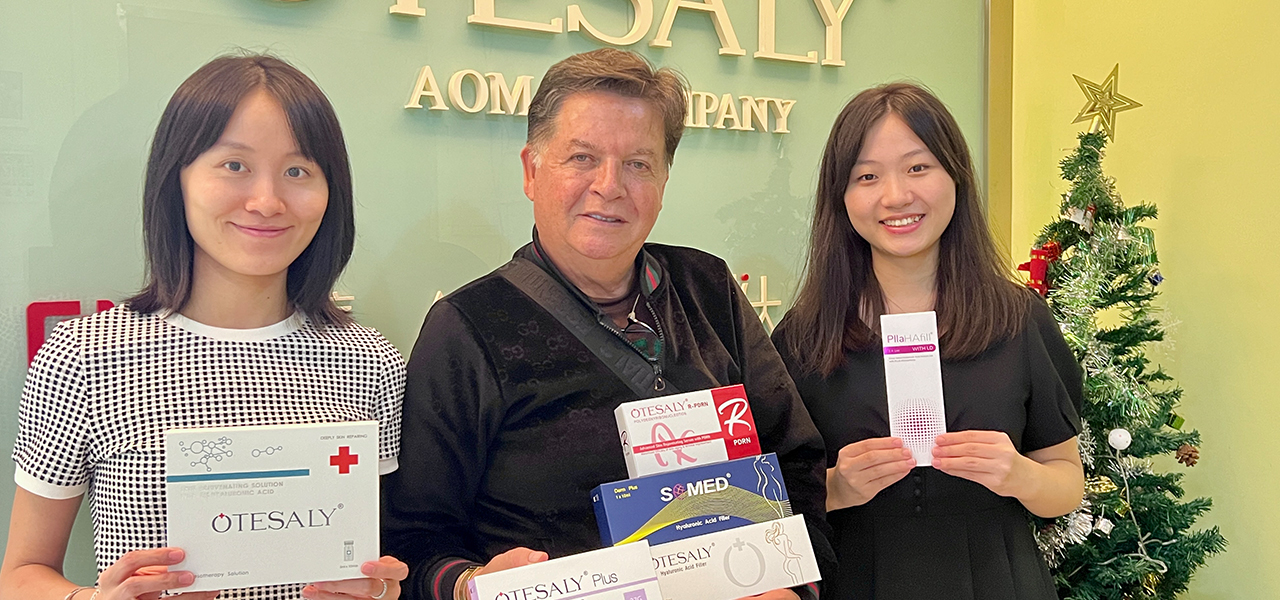
Before partnering with us, the chain carried a well-known European micro-cross linked skin booster, but the high wholesale cost left them with a 25% profit margin per treatment. They worked with our R&D team to create a custom branded skin booster formulated to match the exact performance specs of the European brand, using the same high-purity non-animal HA and 1.2% micro-crosslink density. The custom formulation cut their wholesale cost by 42%, lifting their per-treatment profit margin to 60%, while independent blind testing with their clients found no measurable difference in results or satisfaction compared to the premium brand they’d previously carried. They now order 4,000 vials of their custom skin booster every month, and have added our dermal filler and PDRN lines to their permanent product roster.
The global skin booster market is crowded right now, with new brands popping up every month making wild claims about 6-month longevity from uncrosslinked formulas, or completely pain-free injections with zero downtime from products that haven’t gone through proper safety testing. Sorting through the noise means going back to basics: understanding the structural differences between HA formulations, verifying production quality and compliance, and being honest with clients about what each product can and can’t do.
There is no universal “best” option between cross linked and non cross linked HA skin boosters. There is only the right option for a specific client’s needs, backed by transparent manufacturing, rigorous safety testing, and consistent, predictable results. Whether you’re a small clinic looking to stock reliable, high-margin treatments, or a new brand ready to launch your own custom skin booster line, the team at supplierfiller.com can help you pick the formulation that fits your goals, without the hidden risks that come with unvetted suppliers.

Copyright @ 2026 AIMA International Group Co., Ltd.


