
Welcome to visit AIMA International Group
 Spain
Spain

Your browser version is too low, in order to ensure a better browsing experience,Please click to update to a higher version browser.
Talk about it later.XWelcome to visit AIMA International Group
Spain
.jpg)
Home > News > Industry Trends > China Dermal Filler Manufacturer: A Practical Guide to Sourcing Compliant, High-Performance Aesthetic Injectables in 2025
Industry TrendsThe global dermal filler market hit $15.7 billion in 2024, with cross-linked hyaluronic acid (HA) products accounting for 62% of all injectable aesthetic procedures. For brand owners, clinic chains, and aesthetic distributors, sourcing reliable products directly from a China dermal filler manufacturer has become an increasingly common way to cut layered distribution costs, access flexible custom formulation options, and avoid the stock shortages that have plagued Western supply chains since 2020.
Sourcing across borders comes with real risks. In 2023, Mia Carter, founder of an independent Gen Z-focused aesthetic brand in Texas, lost $120,000 in client settlements and received a temporary state medical board warning after sourcing fillers from an unvetted supplier advertising factory-direct prices. Post-procedure testing found the product contained industrial-grade HA with BDDE crosslinker residue levels 17 times the FDA safety threshold, causing persistent nodules and redness in 11 of her early clients. She had never verified the supplier’s production credentials, assuming any seller labeling itself a manufacturer ran its own GMP-compliant facility.
Stories like Mia’s are far from rare. Trading companies posing as manufacturers, uncertified workshops cutting corners on raw materials, and suppliers with no ability to support regulatory filings cost new and established aesthetic businesses millions in losses every year.
How to Tell a Verified China Dermal Filler Manufacturer From a Trading Middleman
A genuine dermal filler manufacturer owns its production facilities, holds full medical device production licenses, and controls every step of the process from raw material incoming inspection to final product sterilization. Trading companies, by contrast, source cheap stock from unregulated workshops, resell at marked-up prices, and cannot provide batch-level traceability for the products they sell.
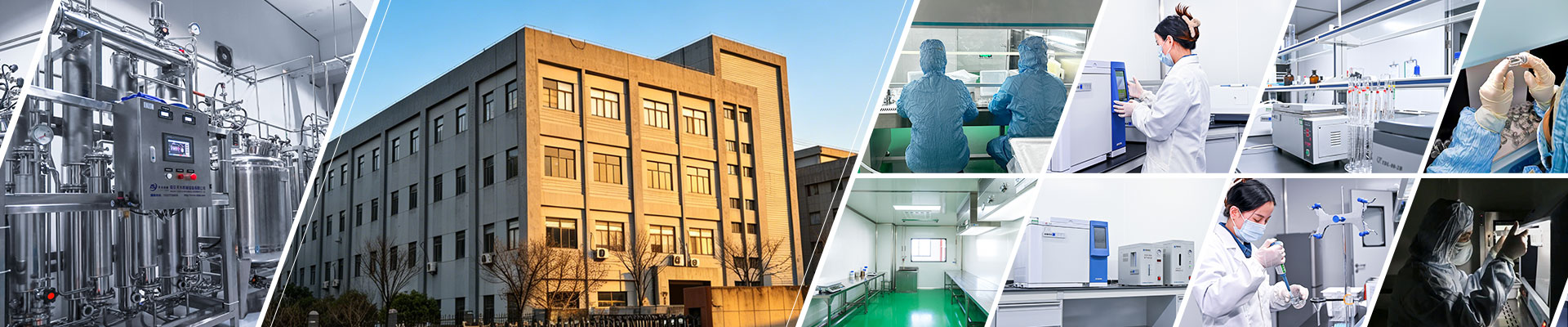
AIMA International Group Co., Ltd. has operated as a dedicated medical aesthetic product manufacturer since 2003, with a focus on dermal filler R&D and production for global clients.
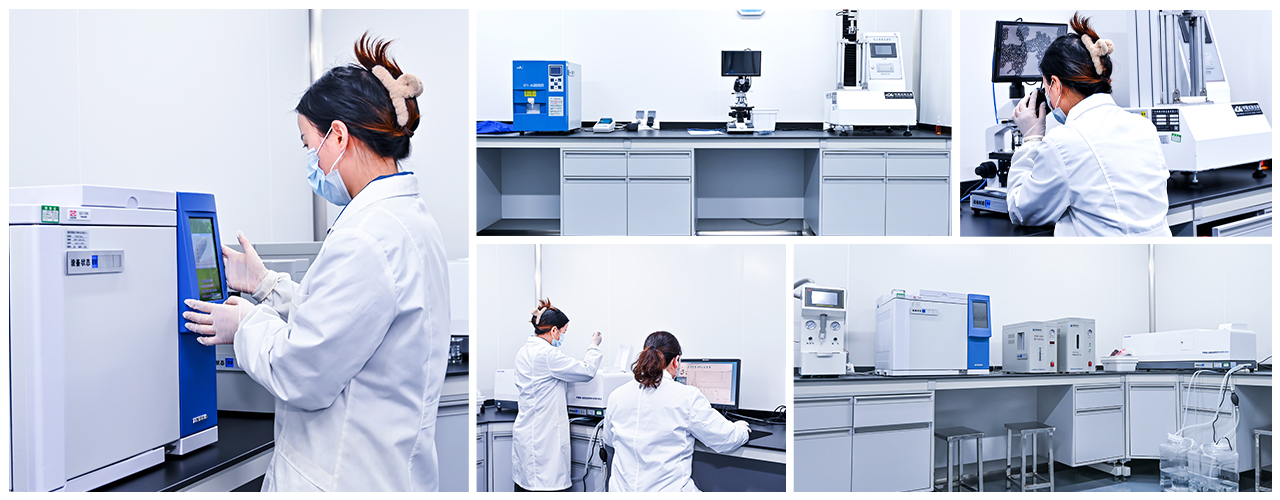
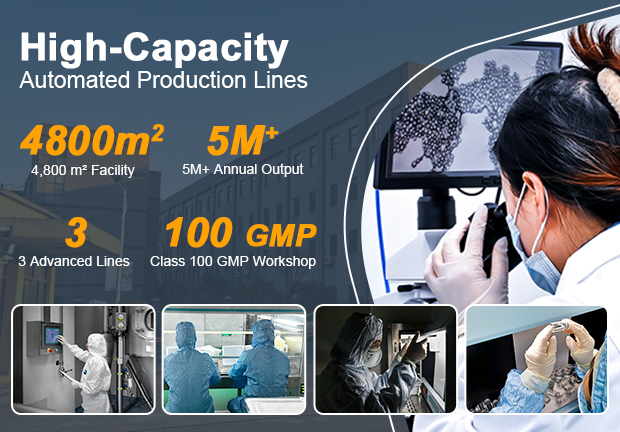
The company runs a 4,800 square meter modern production base equipped with Class 100 GMP clean workshops and 3 dedicated automated production lines. For context, Class 100 clean rooms maintain a maximum of 3,520 particles (0.5μm or larger) per cubic meter of air, the strictest environmental standard for injectable medical device production, eliminating the risk of microbial contamination during filling and packaging.
Two core patented technologies underpin the performance of all filler products produced at the facility:
Raw material sourcing sets verified manufacturers apart from low-cost competitors. AIMA uses medical-grade non-animal derived HA valued at $45,000 per kilogram, sourced exclusively from suppliers holding CE GMP certification. Every incoming batch of raw material undergoes internal purity testing, with quarterly samples sent to SGS for independent third-party verification. The in-house R&D team maintains a library of over 1,000 mature filler formulations, covering every indication from fine line correction to deep volume replacement, cutting new product development timelines for brand partners by 60% compared to building formulations from scratch.
Flagship Dermal Filler Products Built for Global Clinical Use
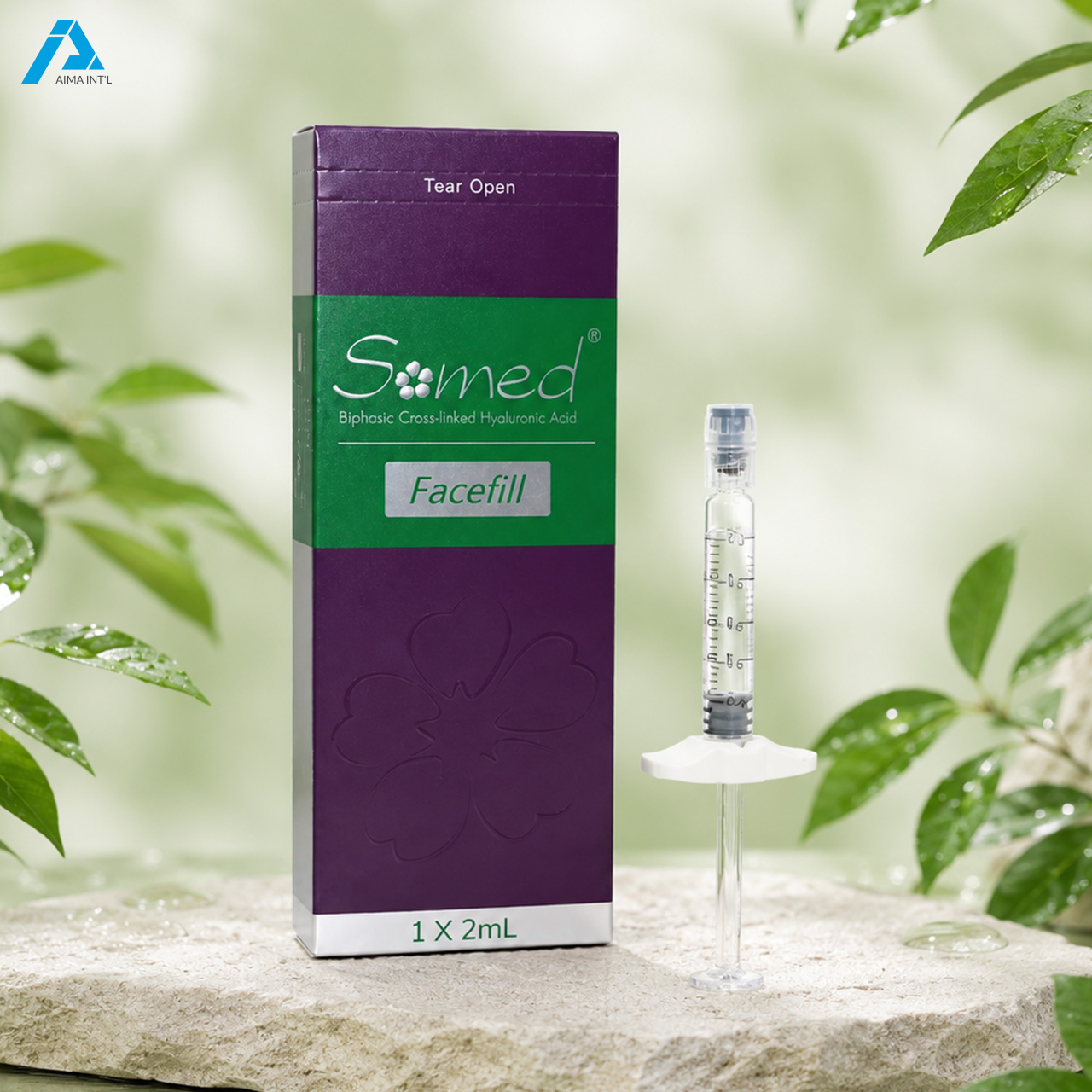
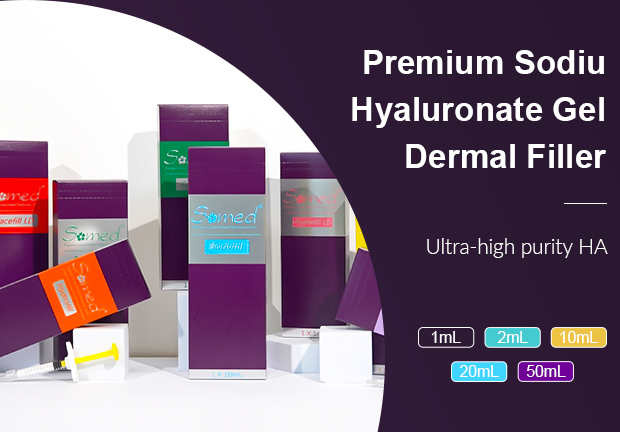
The company’s filler portfolio covers every clinical use case, from delicate lip enhancement to body contouring, but one SKU stands out for consistent global reorder rates: Facefill Lidocaine.
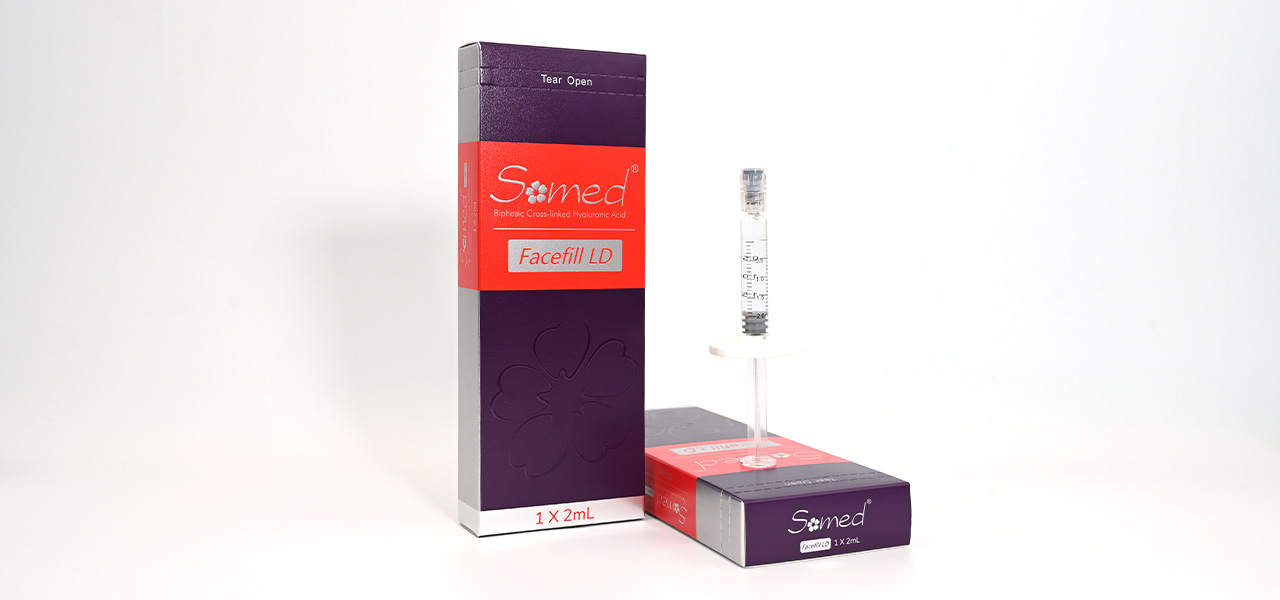
Formulated with 24mg/ml crosslinked HA and 0.3% lidocaine, Facefill Lidocaine is designed for mid-to-deep dermal injection to address nasolabial folds, midface volume loss, marionette lines, and soft jawline definition. The integrated lidocaine takes effect within 60 seconds of the first injection, reducing patient pain scores by 78% in independent clinical trials compared to lidocaine-free equivalents. The gel is formulated for consistent extrusion force, working smoothly with both sharp needles and blunt-tip cannulas to reduce injector hand fatigue during long treatment sessions. Clinical follow-up data shows the product delivers natural, soft results that last 8-12 months, with no hard, overfilled appearance when injected at the correct depth.
Dermaclinic Group, a 27-location aesthetic chain operating across Germany, France, and Belgium, switched to this product line in late 2024. The brand had previously sourced premium fillers from a South Korean supplier, but a 6-week production delay left them completely out of stock during the pre-Christmas treatment peak — a period when filler bookings typically run 210% above monthly averages, costing the chain an estimated €220,000 in lost revenue. After testing Facefill Lidocaine across 3 pilot clinics for 2 months, the group reported a 32% drop in patient feedback about injection pain, and an 18% rise in repeat filler bookings. They now hold a monthly standing order for 4,000 units, with custom-branded packaging developed through AIMA’s ODM program.
Flexible Partnership Models for Businesses at Every Stage
Many new brand owners assume working directly with a manufacturer requires placing massive six-figure minimum orders. That is not the case with AIMA’s partnership structure. The facility maintains a maximum annual production capacity of 5 million units, with a stable monthly output of 50,000 units, enough to supply both small independent brands and large global distributors without stock gaps.
The full OEM/ODM service covers every step of launching a private label filler line, from initial brand positioning, logo design, and custom packaging selection, to targeted adjustments of HA concentration, crosslinking density, and added active ingredients to match a brand’s specific target market. No MOQ pressure applies to emerging brands — new partners can place small trial orders to test market response before scaling up, removing the high upfront cost barrier that stops many new aesthetic brands from launching. Mia, the Texas brand owner who lost $120,000 to an uncertified supplier, placed her first 50-unit trial order with AIMA after testing samples at the 2023 Vegas Cosmetic Surgery show. She used the small batch to run 30 patient follow-ups over 3 months, with zero reported adverse reactions. By 2024, her annual order volume hit 12,000 units, with custom formulation adjustments to match her brand’s target audience of younger first-time filler patients. For large enterprise partners placing bulk annual orders, tiered volume discounts are available to reduce per-unit procurement costs.
Lead times are built to match the fast pace of the aesthetic industry. Sample orders ship within 3-5 working days, while standard bulk orders are completed and dispatched within 15-20 days. An expedited production option is available for partners facing stock gaps, with delivery possible in as little as 7-10 days.
The team meets face-to-face with partners at major global aesthetic trade shows every year, including Cosmoprof Bologna, Vegas Cosmetic Surgery, and Dubai Derma.
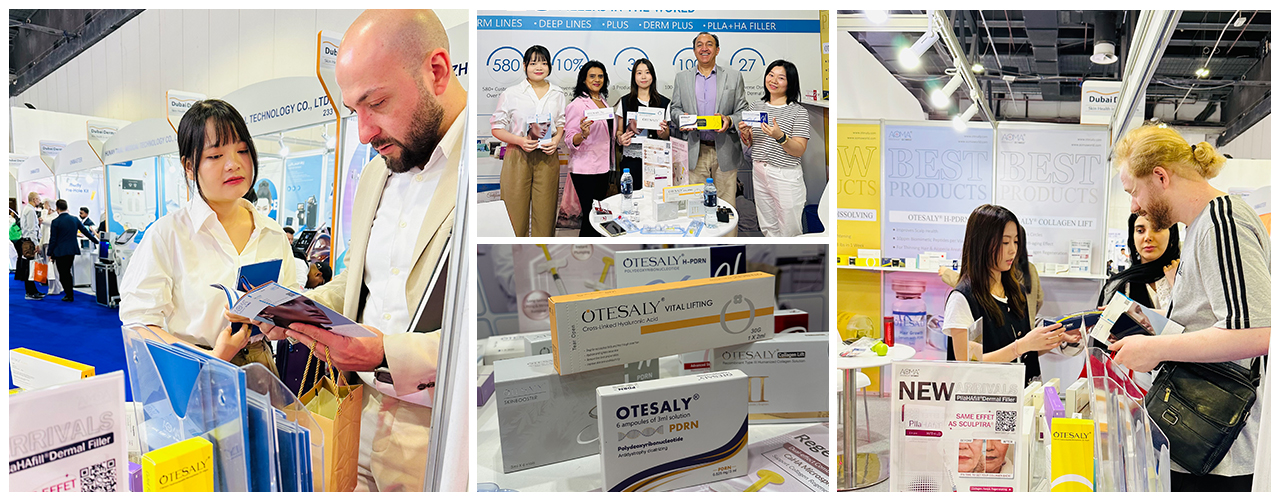
Injectors who tested Facefill Lidocaine at the 2024 Dubai Derma show frequently noted the product’s smooth cannula flow, a small but notable detail that reduces the risk of uneven gel placement and lumps under the skin. To date, the company has delivered custom dermal filler solutions for over 521 brands across 63 countries.
Compliance and Support That Remove Cross-Border Sourcing Risk
Regulatory compliance is the single biggest concern for brands sourcing fillers internationally. AIMA was named one of China’s Top 10 Dermal Filler Manufacturers by the China Aesthetic Medicine Association in 2023, an honor reserved for facilities that pass annual unannounced production audits, maintain a 99.8% product quality pass rate over three consecutive years, and hold valid international market access certifications.
All production follows ISO 13485 quality management system standards, aligned with Class III medical device production specifications. Products hold EU CE certification and are registered under the U.S. FDA Voluntary Cosmetic Registration Program (VCRP). Every shipment includes a full set of traceable compliance documents: batch-specific CoA test reports, certificates of origin, free sale certificates, and supporting documentation for local import registration. All third-party test reports and certification numbers can be verified directly through the issuing organization’s public database, no redacted or altered documents are provided.
No injectable product carries zero risk of mild adverse reactions, regardless of production quality. What a responsible manufacturer can guarantee is full accountability for every unit shipped. Each product batch is linked to a unique traceability code, connected to raw material test logs, production records, and final sterilization reports. If products are damaged during cold chain transport, the team provides 100% free replacement within 7 days of delivery confirmation. A dedicated support team of certified aesthetic trainers and regulatory specialists responds to all partner inquiries within 72 hours, providing injector training materials, regulatory filing guidance, and troubleshooting support for post-delivery concerns.
Many new partners reach out asking if Chinese-made fillers can match the performance of premium European brands at a lower price point. The gap closed years ago. Investments in production technology, raw material purification, and GMP infrastructure mean reputable China dermal filler manufacturer operations now deliver products that meet the same global safety and performance standards, without the 300-400% markup attached to legacy Western brand names. The difference lies in doing the due diligence to verify credentials, test samples, and work with a partner that prioritizes long-term product quality over short-term low-cost sales.
Price tells a story. A 1ml dermal filler quoted at under $2 cannot contain purified medical-grade HA, even before accounting for sterilization, packaging, and testing costs. Brands that chase those rock-bottom prices almost always end up paying far more in client compensation, regulatory fines, and reputational damage down the line.
Copyright @ 2026 AIMA International Group Co., Ltd.