
Welcome to visit AIMA International Group
 Spain
Spain

Your browser version is too low, in order to ensure a better browsing experience,Please click to update to a higher version browser.
Talk about it later.XWelcome to visit AIMA International Group
Spain

.jpg)
Home > News > Industry Trends > Class III Medical Device Manufacturer: AIMA International’s Compliant, Custom Aesthetic Solutions for Global Brands
Industry TrendsGlobal demand for injectable aesthetic products has climbed 28% since 2020, according to data from the International Society of Aesthetic Plastic Surgery. With that growth has come a flood of new suppliers claiming to be a Class III medical device manufacturer, many of which lack the production infrastructure, quality controls, and regulatory documentation to back up those claims. Brand owners, clinic chains, and wholesale distributors that cut corners on supplier vetting often face consequences far beyond lost revenue: seized shipments, regulatory fines, product-related patient adverse events, and permanent damage to their reputation.
What separates a legitimate Class III medical device manufacturer from unvetted suppliers listed on generic B2B marketplaces? The answer rarely lies in flashy product catalogs or rock-bottom unit prices. It comes down to verifiable production standards, end-to-end traceability, regulatory alignment across major global markets, and a track record of delivering consistent, safe products to clients over years of operation.
Class III is the highest risk category for medical devices across nearly all major regulatory frameworks, including the U.S. FDA, EU CE marking system, and ASEAN medical device directives. Products in this category are designed to be implanted or injected into the human body, carry a known risk of severe adverse events if manufactured improperly, and require the strictest level of pre-market approval and ongoing production monitoring.
For aesthetic injectables like dermal fillers, collagen stimulators, and implantable skin boosters, qualified manufacturers must meet non-negotiable standards:
Many new market entrants confuse cosmetic GMP certification with medical device manufacturing certification. That is a costly mistake. Cosmetic production standards allow for higher levels of environmental contaminants, do not require biocompatibility testing for injectable products, and do not mandate the same level of batch traceability needed to pass regulatory checks for Class III devices.
The risks of working with a supplier that falsely claims Class III medical device manufacturer status are not hypothetical. Two recent client stories from AIMA International’s roster highlight just how expensive these missteps can be.
In 2022, a Miami-based startup brand GlowLine Aesthetics, founded by a board-certified aesthetic nurse, planned to launch a line of hyaluronic acid fillers targeted at millennial patients seeking subtle, natural-looking results. The brand signed on with a supplier offering unit prices 40% below the industry average, placing a 12,000-unit order for its first launch. When the shipment arrived at the Port of Miami, FDA agents seized the entire load. The supplier could not provide valid Class III device manufacturing registration, biocompatibility test data for the filler gel, or traceability documents for the raw hyaluronic acid used in production. The entire shipment was destroyed, and the brand faced $12,000 in regulatory fines on top of the $260,000 it had already paid for the goods and shipping. GlowLine’s launch was delayed 14 months while its founder rebuilt capital and searched for a compliant partner.
A second case played out in 2023 for ClinicCore, a Spain-based chain of 12 aesthetic clinics looking to launch a private label filler line for its 30,000+ active patients. The local manufacturer the group initially approached required a 50,000-unit minimum order, with a 90-day production lead time. The upfront inventory cost would have topped 400,000 euros, and the supplier refused to adjust its standard filler formulation to meet ClinicCore’s request for a low-crosslink, low-residue formula for patients with sensitive skin. The group nearly scrapped its private label plans entirely, assuming all established manufacturers operated with the same rigid, high-barrier terms.
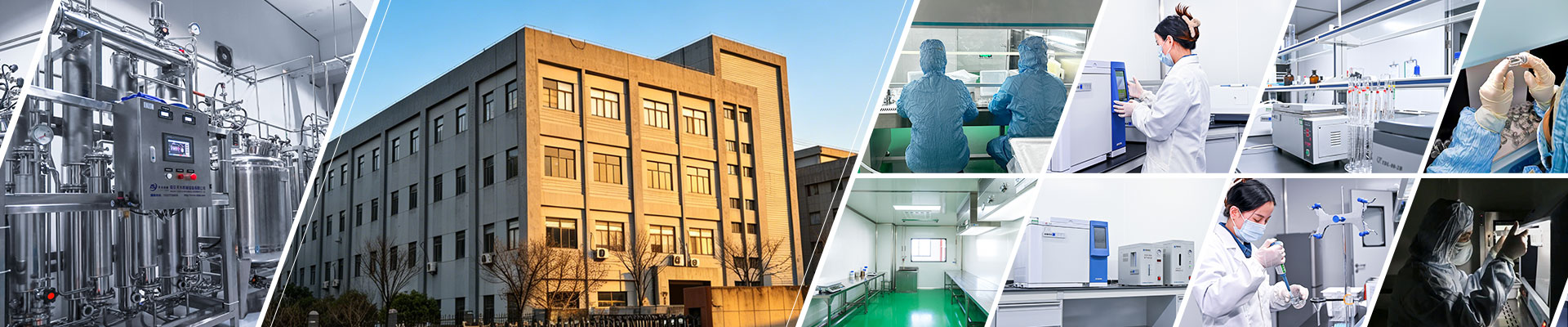
AIMA International’s Class 100 GMP cleanroom, purpose-built for Class III medical device production
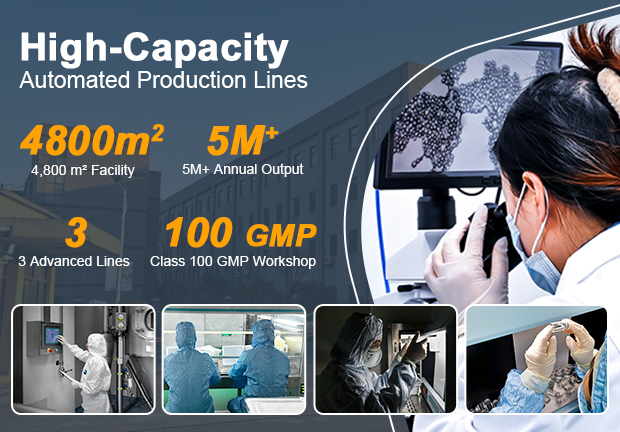
Founded in 2003, AIMA International Group Co., Ltd. has spent two decades building its reputation as a specialized manufacturer of Class III medical aesthetic devices, earning a spot among the Top 10 Dermal Filler Manufacturers in the global aesthetic supply space. The company operates a 4,800-square-meter modern production base, with three dedicated production lines housed in Class 100 GMP cleanrooms designed exclusively for injectable medical device manufacturing. Its annual production capacity hits 5 million units, with monthly output reaching 50,000 units to support both small startup orders and large-scale enterprise contracts.
AIMA’s core technical advantage stems from its mastery of two industry-leading production technologies:
All raw materials used in AIMA’s production meet the strictest medical grade standards. The company sources high-purity non-animal hyaluronic acid at a cost of $45,000 per kilogram, from suppliers that hold full CE GMP certification. Every incoming batch of raw material undergoes third-party testing via SGS to verify purity, molecular weight, and absence of contaminants before it enters the production line. AIMA’s in-house R&D team holds more than 1,000 mature, clinically tested formulations across dermal fillers, skin boosters, PDRN products, hair restoration solutions, and fat-dissolving injectables.
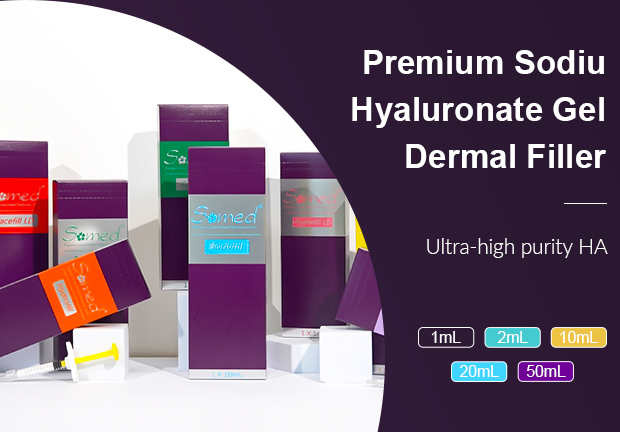
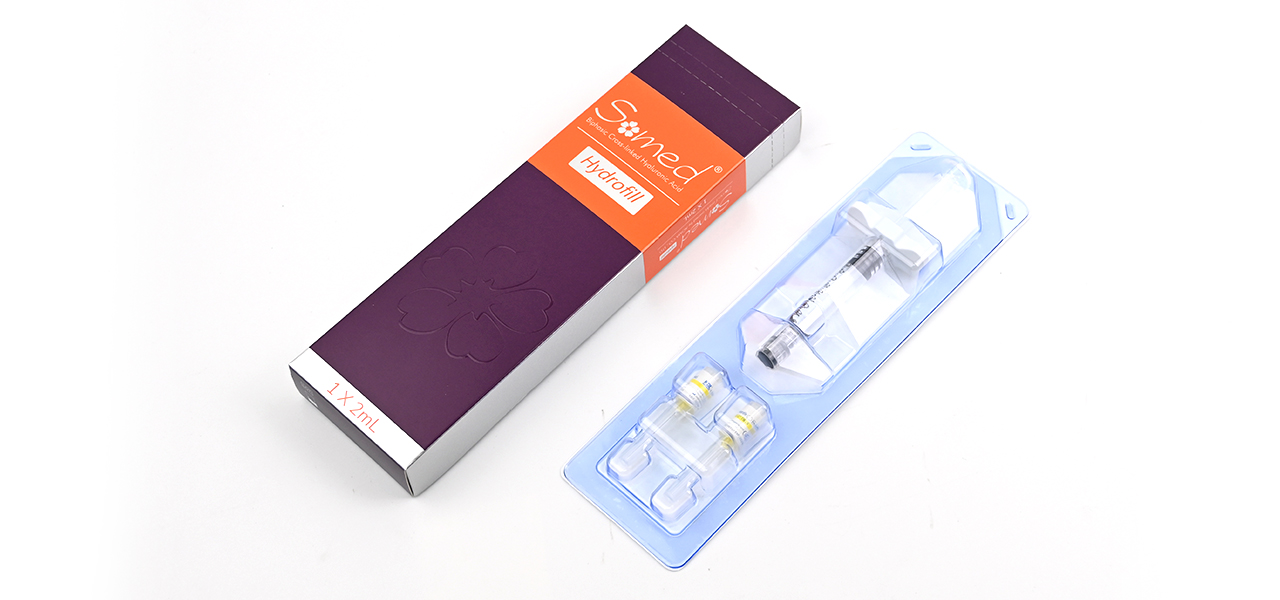
Take its flagship Hydrofill line of crosslinked hyaluronic acid dermal fillers, a Class III medical device designed for multi-level facial contouring and wrinkle correction. The line uses NASHA-processed non-animal HA, with BDDE residue levels held below 0.02ppm—well below the EU CE limit of 0.1ppm—to minimize post-injection swelling and immune response. SKUs range from soft, low-crosslink formulations for fine perioral lines to high-viscosity formulations for cheek and jawline contouring, giving clients a full range of options to match their target customer base.
Unlike many Class III medical device manufacturers that cater exclusively to large, established brands with massive order volumes, AIMA built its OEM/ODM service model to support partners at every stage of growth, with No MOQ Pressure for new and emerging brands. The company also offers tiered volume discounts for large clinic chains and global distribution partners, ensuring pricing aligns with order scale.
Its end-to-end OEM/ODM support covers every step of the product launch process: brand positioning guidance, custom logo design, bespoke packaging production, and custom formulation adjustments to match specific client requests for HA concentration, crosslink density, or added active ingredients. Sample orders ship within 3-5 business days, while full bulk orders are completed within 15-20 days, with expedited production options available for clients working against tight launch deadlines. To date, AIMA has delivered custom private label solutions for more than 521 brands across 60+ countries.
That flexible model is what allowed GlowLine Aesthetics to get back on track after its initial supplier setback. The brand placed its first order for just 300 units of Hydrofill filler to test market response, with custom branded packaging designed by AIMA’s in-house team. The order shipped in 4 days, complete with full FDA VCRP documentation to support smooth U.S. customs clearance. Today, GlowLine places steady monthly orders of 1,200 units, and has built a loyal customer base across southern Florida.
For ClinicCore, the AIMA team adjusted the standard Hydrofill formulation to reduce crosslink density for sensitive skin patients, and offered a tiered volume discount that cut the group’s upfront inventory cost by 62% compared to its initial local supplier quote. The full 8,000-unit order was produced and delivered in 18 days, arriving a full week before the chain’s annual member sale event. The private label line generated 120,000 euros in revenue in its first 30 days on the market.
No manufacturer can guarantee 100% barrier-free entry to every global market, as regulatory rules shift frequently across regions. AIMA structures its quality and support systems to eliminate as much risk as possible for every partner, from small startup brands to large Medical Aesthetics Wholesale distributors. All production follows Class III medical device manufacturing specifications, and the company holds valid EU CE certification and U.S. FDA VCRP registration for its core product lines, including the Hydrofill filler range.
Every client, regardless of order size, receives a full documentation packet for their shipments:
For Medical Aesthetics Wholesale partners distributing products to clinics and licensed practitioners across regions, AIMA extends the same compliance and support framework, with additional perks including regional marketing material support, dedicated account managers, and a 6-month unopened product exchange policy to reduce inventory risk. No client is left to navigate regulatory checks or product questions on their own.
This commitment to quality played out in late 2023, when a pre-shipment quality check found a 0.2% seal failure rate in a 12,000-unit Hydrofill order bound for a distributor in Germany. The entire batch was sent back to the packaging line for re-sealing and re-testing, delaying delivery by three days. AIMA did not pass any of the rework cost to the client, and added 5% extra units to the shipment as an apology for the delay.
Regulators across every major market are tightening rules for aesthetic injectables. Thailand and Malaysia introduced new rules in 2024 requiring all imported dermal fillers to provide proof of Class III medical device certification from the product’s country of origin, with uncertified products subject to seizure and permanent sales bans. The EU’s updated MDR regulation has also raised the bar for clinical evidence required to sell injectable medical devices in member states. This shift means partnering with an experienced Class III medical device manufacturer is no longer a nice-to-have for brands targeting long-term growth—it is the baseline requirement to avoid being pushed out of regulated markets.
Any brand that has dealt with seized shipments, product-related patient reactions, or inflexible supplier terms knows the frustration of working with partners that cut corners on compliance to offer lower prices. AIMA International’s 20 years of production experience, flexible cooperation terms, and end-to-end quality control for Class III medical devices remove those common pain points, whether a founder is launching their first 100-unit test order or a global clinic chain is scaling a seven-figure private label line.

Copyright @ 2026 AIMA International Group Co., Ltd.