



Welcome to visit AIMA International Group
 Spain
Spain

Your browser version is too low, in order to ensure a better browsing experience,Please click to update to a higher version browser.
Talk about it later.XWelcome to visit AIMA International Group
Spain




.jpg)
Home > News > Industry Trends > Skin Boosters: Formulation Standards, Manufacturing Insights, and Reliable Sourcing for Aesthetic Brands
Industry TrendsData from the International Society of Aesthetic Plastic Surgery (ISAPS) 2023 annual report puts global growth for skin booster injection procedures at 28.7% year-over-year, outpacing growth for traditional dermal fillers for the third year running. Consumers are moving away from over-filled, obvious aesthetic results, chasing that lit-from-within skin glow that reads as “well-rested” rather than “work done.” Industry insiders often refer to these treatments as lunchtime glow fixes, given minimal downtime and natural, gradual results. For brands and clinic owners looking to capture share in this fast-growing category, however, supply chain pitfalls can sink even the most well-planned launch.
What Sets Skin Boosters Apart From Traditional Dermal Fillers?
New entrants to the aesthetic space often lump skin boosters in with standard hyaluronic acid (HA) fillers, but the two product categories serve entirely different clinical purposes. Traditional dermal fillers use high-crosslinking HA formulations designed to add structural volume, injected into the deep dermis or subcutaneous layer to smooth deep folds, define jawlines, or plump lips. These formulas prioritize G-prime (a measure of firmness and lifting capacity) to hold shape over time.
Skin boosters, by contrast, use low-crosslink or non-crosslinked high-purity HA, often blended with active ingredients like PDRN, amino acids, or antioxidant complexes. Providers inject these formulas in tiny microdroplets across the mid to superficial dermis, using techniques like superficial puncture or cannula delivery. The goal is not to add volume or reshape facial structure, but to boost dermal hydration from within, smooth fine lines, reduce visible pore size, and improve overall skin texture. A common shortcut among unvetted manufacturers is to sell diluted, non-crosslinked HA mixed with saline as a premium skin booster. Clients see results fade in 7 to 10 days, and retention rates plummet fast.
Recurring Supply Chain Pain Points for Skin Booster Brands
We talk to dozens of brand owners and clinic procurement teams every month, and the same frustrations come up again and again. Take Maja, founder of a small independent aesthetic brand in Poland, who reached out in early 2023 after a disastrous first production run with a local contract manufacturer. She went through seven rounds of samples that either had inconsistent extrusion force (making it impossible for injectors to control dose during treatment) or failed endotoxin testing. During her initial clinical trial, 18% of test subjects experienced redness and firm nodules that lasted longer than 72 hours post-injection. After launching, return rates hit 32%, and negative reviews on local beauty forums nearly erased the 1,200-person loyal customer base she had built over two years.
Karim, procurement director for a multi-location aesthetic clinic chain in Dubai, faced a different but equally costly problem in 2022. He placed an order for 1,200 units of custom-branded skin boosters ahead of the pre-Ramadan marketing window, when demand for skin glow treatments spikes 3x in the Gulf market. His Southeast Asian supplier missed the delivery deadline by 47 days, leaving him with no inventory to fulfill 300+ pre-sold treatment packages. He issued full refunds to every customer, taking a direct revenue hit of more than 120,000 EUR. A subsequent audit from the local health authority found the supplier could not provide valid CE certification for the product, resulting in a 23,000 AED fine for the clinic.
These stories are not outliers. Across the market, brands sourcing skin boosters regularly run into the same issues:
Non-Negotiable Manufacturing Standards for Clinical-Grade Skin Boosters
A high-performing skin booster is not just HA in a syringe. Cut corners on any of the core production standards, and you will see issues pop up as soon as the product reaches clinical settings.
Start with raw materials. Injectable-grade, non-animal sourced HA is non-negotiable. Animal-derived HA carries a high risk of xenoprotein contamination that can trigger severe allergic reactions. True injectable-grade HA for dermal use costs roughly 45,000 USD per kilogram — a price point that shocks many new brand owners who are used to the low cost of cosmetic-grade HA used in topicals. Every raw material batch must come from CE GMP-certified suppliers, with independent third-party testing from firms like SGS to verify purity, molecular weight distribution, and absence of contaminants.
Production technology makes an equally large difference. The NASHA (Non-Animal Stabilized Hyaluronic Acid) process creates a uniform, soft HA gel network even at very low crosslinking levels, so the product spreads smoothly under the skin without forming lumps, and degrades at a steady rate over 3-6 months instead of breaking down all at once. The HICE (High Concentration & Uniform Crosslinking Efficiency) process reduces residual BDDE (the crosslinking agent used in HA gels) to less than 0.001%, well below the EU’s 0.003% safety threshold, cutting post-treatment redness and reaction risk dramatically.
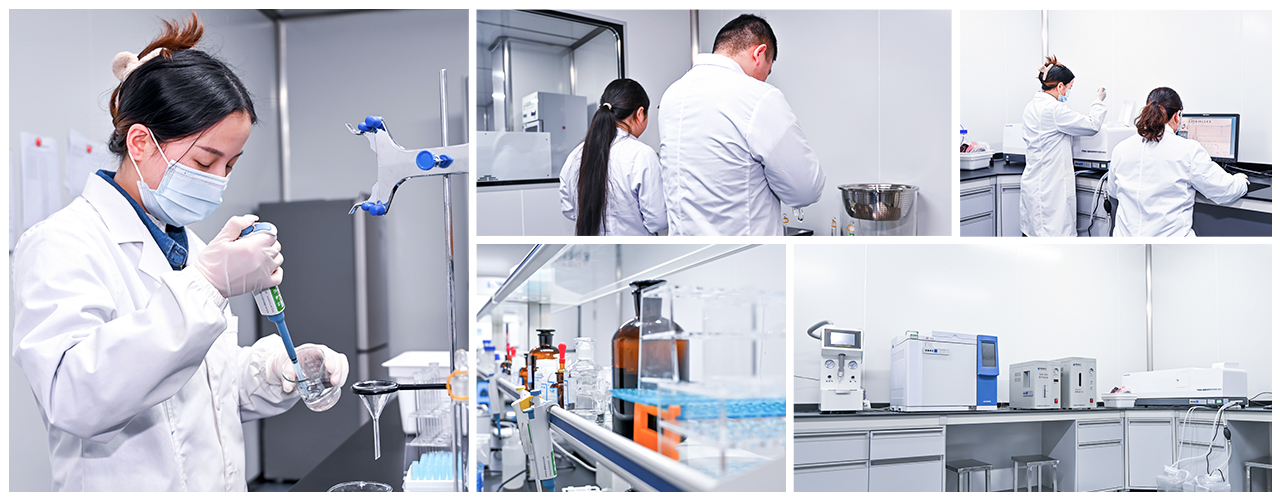
Production environment matters just as much as formulation. All injectable products must be manufactured in Class 100 GMP cleanrooms, with environmental controls for particulate matter and microbial contamination that meet Class III medical device production standards. Full compliance with ISO 13485 quality management systems means every step of production, from raw material intake to final packaging, is documented and traceable. Every finished unit should pass 12 separate quality checks, including seal integrity, extrusion force consistency, endotoxin testing, and sterility validation, before it leaves the facility.
AIMA International’s Skinbooster: Built for Long-Term Brand Success
AIMA International Group Co., Ltd. has manufactured aesthetic injectable products since 2003, earning a spot among the top 10 dermal filler manufacturers globally. Our flagship Skinbooster formulation is refined over 12 years of clinical feedback, and currently powers private label offerings for 521 brands across 62 countries.
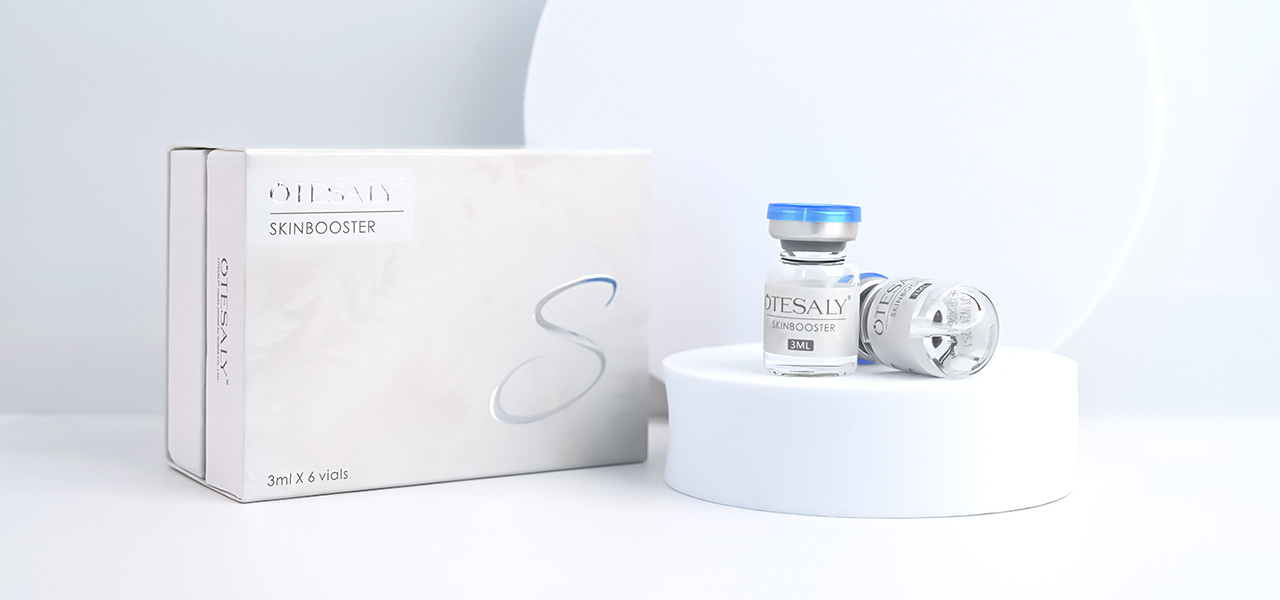
The formulation is built to check every box clinicians and clients look for:
Our 4,800 square meter production facility runs 3 dedicated production lines, with annual output capacity of 5 million units and stable monthly capacity of 50,000 units — so you never have to worry about missed delivery windows during peak season. Maja, the Polish brand founder, worked with our R&D team to adjust the base Skinbooster formula with 0.5mg/ml PDRN for her sensitive-skin client base. She approved the second sample round, placed an initial test order of 300 units with zero MOQ pressure, and now places consistent monthly orders of 1,200 units. Her brand’s repeat purchase rate now sits at 48%.
Karim, the Dubai clinic chain director, worked with our team to create custom Arabic-language packaging for his clinic brand, and used our expedited production option to receive his 1,200-unit order in 10 days, just in time for the 2023 Dubai Shopping Festival promotion. His clinic sold 2,100 skin booster packages during that event, and he now lists AIMA as his core injectable supplier, with annual purchasing volume topping 800,000 EUR.
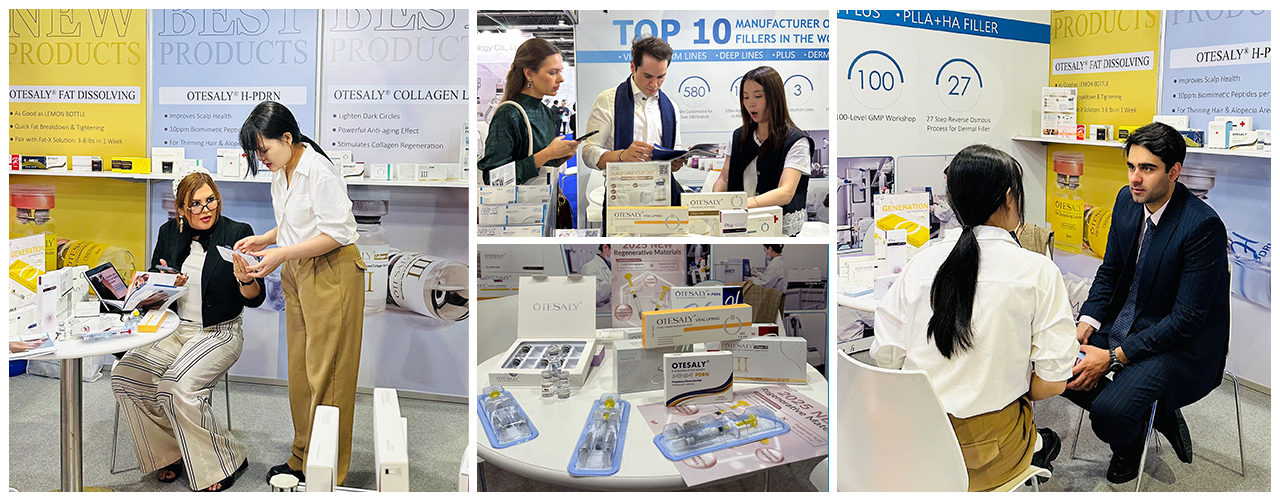
We exhibit at the Dubai Beauty Exhibition every year to meet face-to-face with partners across the GCC, Europe, and Africa, collecting direct clinical feedback to refine our formulations year over year.
Flexible OEM/ODM Support for Medical Aesthetics Wholesale Clients at Every Growth Stage
We built our partnership model to remove the common barriers that keep new brands from launching and growing established brands from scaling:
Plenty of manufacturers will offer you a low price per unit on skin boosters. Few can back that price with consistent clinical results, valid global certifications, reliable lead times, and the support to help your brand grow long-term. The money and time lost to bad batches, missed deadlines, and compliance fines will always cost more than investing in a production partner that understands the aesthetic space and prioritizes quality over rock-bottom pricing. You can request a sample of our Skinbooster formulation at any time to test extrusion feel, purity, and clinical results before discussing a larger partnership.

Copyright @ 2026 AIMA International Group Co., Ltd.


