



Welcome to visit AIMA International Group
 Spain
Spain

Your browser version is too low, in order to ensure a better browsing experience,Please click to update to a higher version browser.
Talk about it later.XWelcome to visit AIMA International Group
Spain




.jpg)
Home > News > Industry Trends > Professional Scalp Mesotherapy Safety: Evidence-Based Protocols, Risk Mitigation, and Trusted Supply for Aesthetic Clinics
Industry TrendsFor aesthetic clinics adding scalp mesotherapy to their service menus, conversations about treatment outcomes rarely outlast talks of safety. The scalp holds dense superficial blood vessels, delicate nerve endings, and fragile hair follicles sitting just 1.5–3mm below the skin’s surface — the exact target layer for mesotherapy injections. A single misstep, whether from contaminated product, poor technique, or non-compliant sourcing, can turn a high-demand hair restoration service into a costly liability.
In 2022, a small hair care clinic in Madrid, Spain, made the decision to cut supply costs by sourcing unbranded, unlabeled scalp mesotherapy solutions from an unvetted online reseller. Within 48 hours of treating three female clients, all three developed tender red papules, pustules, and inflammatory folliculitis across injection sites. Local health authorities fined the clinic €12,000 for using unapproved medical products, and the clinic’s Google Business Profile rating dropped from 4.8 to 2.1 in less than two weeks. It took 18 months of consistent, compliant service for the business to win back local client trust.
Many clinic owners mistakenly frame scalp mesotherapy safety as a matter of injector skill alone. In clinical practice, safety is a full-chain standard that covers every touchpoint from raw material sourcing to post-treatment follow-up. Common preventable risks tied to poor safety practices include:
Any clinic owner who has been in the aesthetic space for more than a few years has at least one horror story about a supplier that cut corners on production or faked paperwork to land a contract.
There is no shortcut to building a safe scalp mesotherapy program. Clinics that maintain near-zero adverse event rates hold every part of their process to clear, documented standards. For products used in scalp injections, that means sourcing only medical-grade, non-animal derived raw materials, with production taking place in GMP-certified cleanrooms and every batch tested by third-party laboratories for purity and sterility. For clinical operations, that means mandatory pre-treatment allergy screening, strict injection depth controls, and full sterile technique during every procedure. For supply chains, that means working with manufacturers who can produce full, unredacted compliance documentation on demand, with full batch traceability for every vial used on clients.
In 2023, a three-location medical aesthetic chain in Bangkok, Thailand, ran into exactly this supply chain barrier while rolling out its scalp mesotherapy service. Over three months, the practice cycled through three different suppliers, one of which offered PDRN-based hair growth solutions at 30% below average market price. When the team asked for original CE certification documents and batch test reports, the supplier provided altered, edited files that did not match product lot numbers. During a routine Thai FDA audit, the unvetted inventory was seized on site, and the clinic was ordered to suspend its hair restoration service for two weeks to complete compliance training. The pause cost the practice nearly 200 pre-paid clients and tens of thousands of dollars in lost revenue.
Injectable product safety starts long before a vial reaches a clinic’s treatment room. It is built into every step of the manufacturing process, from raw material selection to final packaging. As a top 10 dermal filler manufacturer recognized by global industry bodies, AIMA International Group Co., Ltd. has centered production safety across its operations since its founding in 2003.

The company operates a 4,800 square meter modern production facility outfitted with Class 100 GMP cleanrooms and three dedicated production lines, with all workflows aligned to ISO 13485 quality management standards and Class III medical device production specifications.
Raw material selection follows strict safety guardrails, too. AIMA uses high-purity, medical-grade non-animal derived hyaluronic acid valued at $45,000 per kilogram, sourced exclusively from suppliers with active CE GMP certification. Every batch of raw material and finished product undergoes regular third-party testing from agencies including SGS to rule out microbial contamination, heavy metal residue, or ingredient impurity. The company’s in-house R&D team holds patents for NASHA and HICE technology, with a library of more than 1,000 mature, tested formulations tailored for aesthetic use.
Among these formulations, Hair Growth PDRN is purpose-built to support safe, effective professional scalp mesotherapy treatments.
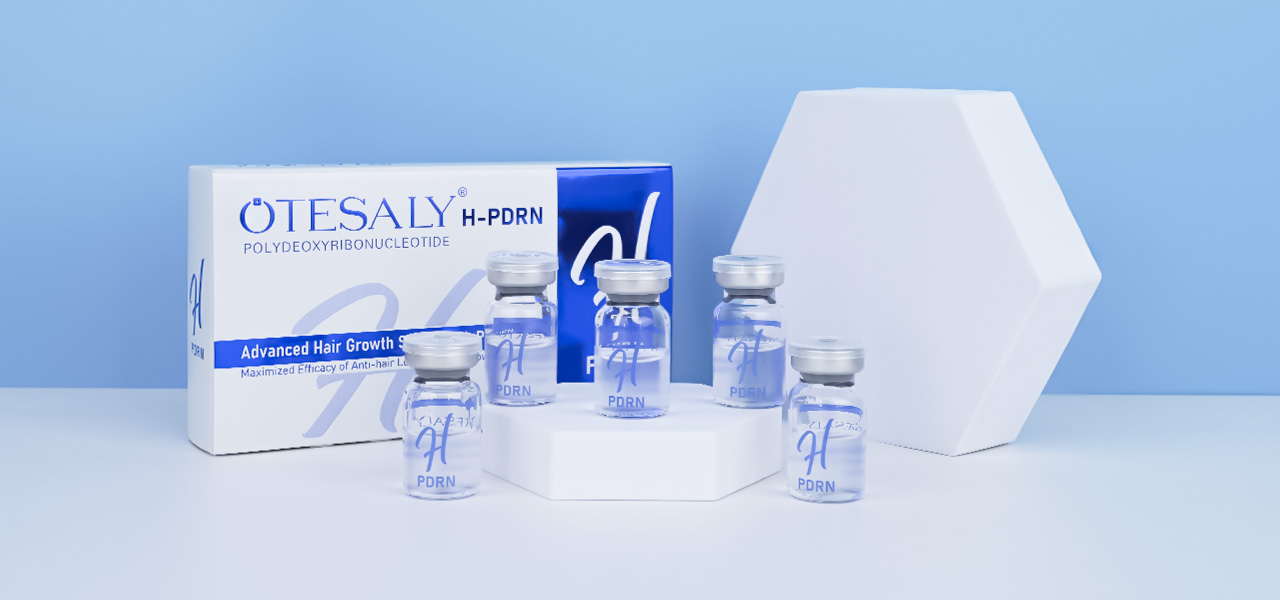
The formula uses high-purity polydeoxyribonucleotide (PDRN) sourced to medical grade, with no added corticosteroids, banned antibiotics, or harsh preservatives that can irritate sensitive scalp tissue. When injected into the superficial dermal layer of the scalp at controlled depths, the solution supports improved perifollicular microcirculation and reduced inflammatory stress on hair follicles, without causing unnecessary damage to delicate tissue. Every batch of Hair Growth PDRN carries full EU CE certification and is registered under the US FDA Voluntary Cosmetic Registration Program, so clinics receive complete, verifiable compliance documentation with every order to support audit requirements.
AIMA’s production capacity supports consistent, reliable supply for partners of all sizes, with an annual output of 5 million vials and monthly production capacity of 50,000 vials. The team offers end-to-end OEM/ODM services covering brand positioning, logo design, custom packaging, and formula or concentration adjustments, with flexible cooperation terms that remove MOQ pressure for new and emerging brands, plus volume discounts for large-scale enterprise partners. Sample orders ship within 3–5 business days, bulk orders deliver within 15–20 days, and expedited shipping options are available for partners with tight timeline needs. To date, the company has delivered custom aesthetic product solutions for more than 521 brands across 60+ countries.
Many of these long-term partnerships begin at global industry trade shows, including the annual Dubai Beauty Exhibition, where AIMA’s team meets face-to-face with clinic owners, brand builders, and distributors to share product samples, walk through compliance documentation, and answer questions about formulation safety.
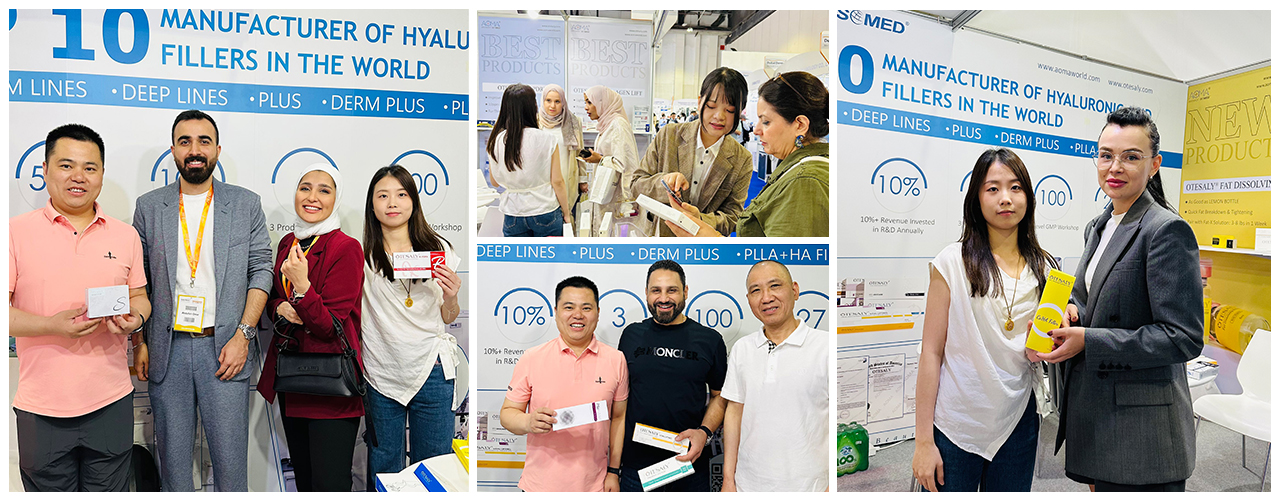
The Bangkok clinic chain referenced earlier connected with the AIMA team during the 2023 Dubai Beauty Exhibition, and switched its entire scalp mesotherapy supply to Hair Growth PDRN shortly after. By mid-2024, the clinic reported a 0.1% adverse event rate across its hair restoration service, a 42% increase in treatment repeat rates, and zero issues during subsequent Thai FDA audits, with full documentation on hand for every product vial in stock.
Even with the highest quality products, clinical teams must follow consistent, documented protocols to keep clients safe during scalp mesotherapy treatments. These steps are standard across top-performing hair restoration clinics globally:
For clinic partners sourcing through Medical Aesthetics Wholesale channels, AIMA provides full after-sales support to reduce operational risk. Every order ships with complete, verifiable compliance documents including CE certification, FDA VCRP registration confirmation, SGS batch test reports, and unique batch traceability codes for every vial. A dedicated clinical support team responds to partner inquiries within 24 hours, providing guidance on adverse event management, treatment protocol adjustments, and staff training as needed. For bulk orders, partners also receive access to client education materials and treatment training resources to help teams launch services smoothly.
No injectable aesthetic treatment carries zero risk, even when produced to the highest standards. Individual hypersensitivity reactions can occur in a small share of clients, regardless of product purity. The value of working with a compliant, experienced manufacturer is that all controllable risks — from contamination to ingredient impurity to documentation gaps — are minimized as much as possible, with clear traceability and support if issues arise.
The global scalp mesotherapy market continues to grow as more clients seek minimally invasive options for hair restoration, with 2024 industry data putting the global medical hair restoration market size above $8.7 billion. As demand rises, so does the volume of unregulated, non-compliant products entering the supply chain, with some estimates suggesting 40% of injectable hair growth solutions sold through unvetted channels lack valid safety certifications. Many clinic owners initially focus on per-unit cost when selecting suppliers, but a single safety incident can result in fines, client settlements, and reputational damage that outstrip years of service revenue. Building a scalp mesotherapy program around verified, safety-tested products and consistent clinical protocols lets clinics meet client demand without taking on unnecessary, preventable risk.

Copyright @ 2026 AIMA International Group Co., Ltd.


