



Welcome to visit AIMA International Group
 Spain
Spain

Your browser version is too low, in order to ensure a better browsing experience,Please click to update to a higher version browser.
Talk about it later.XWelcome to visit AIMA International Group
Spain




.jpg)
Home > News > Industry Trends > PLLA HA Hybrid Filler: Clinical Benefits, Quality Standards, and Trusted Wholesale Supply
Industry TrendsPLLA HA hybrid fillers have emerged as one of the fastest-growing segments in the global medical aesthetics market, as clinics and brands move past the limitations of single-component dermal fillers that force tradeoffs between immediate results and long-term longevity. Data from the 2024 International Society of Dermatologic Aesthetics puts annual growth for hybrid PLLA-HA formulations at 27%, outpacing both pure HA fillers (8% annual growth) and standalone collagen stimulators (19% annual growth). That growth ties directly to real, unaddressed pain points clinical teams and brand owners have dealt with for years.
To understand the value of the hybrid formulation, it helps to break down the limitations of the two standalone ingredients. Poly-L-lactic acid (PLLA) is a biocompatible, biodegradable polymer that works as a collagen stimulator. When injected into the deep dermal or subcutaneous layer, PLLA microspheres trigger a mild, controlled inflammatory response that signals fibroblasts to produce type I collagen, gradually replacing lost volume over 3-6 months. Results from pure PLLA can last 2-3 years, but the material comes with well-documented drawbacks. Most pure PLLA products ship as a lyophilized powder, requiring clinicians to mix saline and lidocaine on-site, with no built-in immediate volume. Patients often leave appointments with no visible change to treated areas, as the saline carrier absorbs within 72 hours and collagen production takes weeks to ramp up. Improper reconstitution or uneven injection can also lead to palpable nodules or granulomas months after treatment.
Cross-linked hyaluronic acid (HA) sits on the other end of the spectrum. As a naturally occurring sugar molecule found in human skin, HA delivers instant volume the moment it is injected, with a smooth, natural texture that can be dissolved with hyaluronidase if needed. The downside? Cross-linked HA metabolizes relatively quickly, with most pure HA fillers breaking down completely within 6-12 months, requiring frequent touch-up appointments to maintain results.
PLLA HA hybrid fillers eliminate these tradeoffs by suspending uniform, medical-grade PLLA microspheres within a pre-mixed cross-linked HA gel carrier. The HA gel delivers immediate, visible volume and contour correction right after injection, so patients see results before they leave the clinic. As the HA gel gradually metabolizes over 3-6 months, the embedded PLLA microspheres stimulate steady, natural collagen production that maintains volume for 24-30 months total. The pre-mixed formula removes the need for on-site reconstitution, cutting down on clinical prep time and reducing human error that leads to adverse events.
The shift to hybrid PLLA HA fillers is not driven by marketing hype. It comes from tangible, costly problems clinical teams and brand owners face with older formulations.
María, operations director at Clínica Belleza Sol in Madrid, Spain, saw these issues play out across 2022 and early 2023. For years, the clinic used a well-known pure PLLA filler for mid-face volume loss treatments, but staff dealt with 3-4 patient complaints per month on average. Many patients left appointments frustrated when they saw no immediate visible change, as pure PLLA relies entirely on gradual collagen production with no instant volume from a carrier gel. Two patients developed small, palpable nodules in the cheek area 4 weeks post-treatment, requiring multiple massage sessions and follow-up visits to resolve. The clinic’s Google review score dropped from 4.7 to 4.2 over 8 months, with multiple negative reviews specifically mentioning the lack of immediate results and post-treatment lumps. After switching to a high-quality PLLA HA hybrid filler formulation in mid-2023, the clinic saw immediate results for patients as the HA carrier delivered instant, natural-looking volume, while the evenly dispersed PLLA microspheres stimulated collagen growth over the following 3 months. Nodule rates dropped to zero across 210 treatments in the first 6 months, patient satisfaction scores jumped 28%, and the clinic’s Google rating climbed back to 4.8. The team even raised treatment prices by 15% due to the improved patient outcomes, without seeing a drop in booking volume.
Brand owners face a separate set of challenges when sourcing PLLA HA hybrid fillers, especially when working with unvetted manufacturers. Lina, founder of a boutique aesthetic brand based in Vancouver, Canada, learned these quality gaps the hard way in 2022. When she first set out to launch her own line of PLLA HA hybrid fillers, she partnered with a small-scale manufacturer that advertised rock-bottom unit prices, but required a 5,000-unit minimum order. She invested nearly 120,000 CAD to place the order, only to find during third-party testing that the PLLA microspheres in the formulation ranged from 10μm to 72μm in diameter, with irregular jagged edges that carried a high granuloma risk, and HA raw material with endotoxin levels 3x higher than CE allowable limits. The batch failed Health Canada compliance checks, leaving her with unusable inventory and a major hit to her startup capital.
Not all PLLA HA hybrid fillers deliver the same results. Low-quality formulations cut corners on raw materials and production controls, leading to the same adverse events and compliance issues seen with older standalone products. Teams sourcing these fillers for clinical use or white-label sale should audit every batch against four core metrics:
For teams searching for a formulation that checks every box on this quality list, AIMA International’s PllaHAfill Lidocaine is engineered to meet clinical-grade standards for global markets.
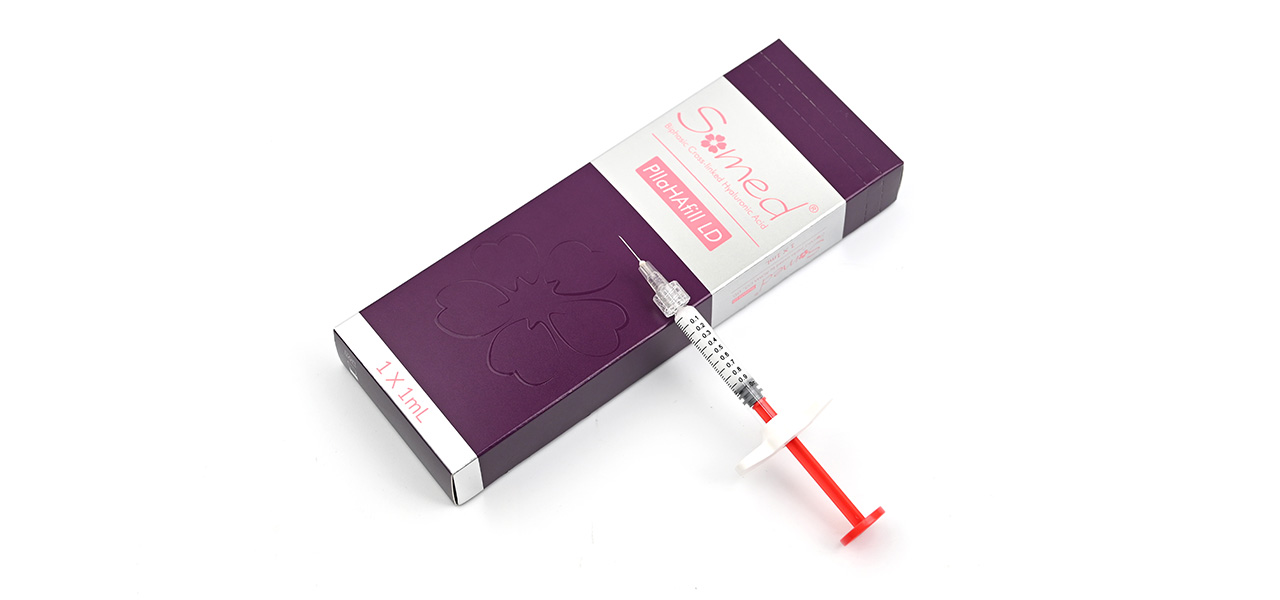
The formulation uses 20mg/ml of non-animal cross-linked HA produced with the company’s proprietary NASHA (Non-Animal Stabilized Hyaluronic Acid) technology, which cuts cross-linking residue levels to below 2ppm for maximum biocompatibility. PLLA microspheres are sized to a tight 25-40μm range with 99% sphericity, suspended evenly through the gel using HICE (Hybrid Integration Controlled Encapsulation) technology to prevent microsphere settling or clumping during storage. The pre-mixed 0.3% lidocaine delivers consistent numbing within 60 seconds of injection, with a rheology profile tuned for versatile use across mid-face volume loss, temple contouring, nasolabial folds, jawline definition, and even hand rejuvenation.
Production standards for PLLA HA hybrid fillers are far more rigorous than standard cosmetic dermal fillers, given the classification as a Class III medical device in most global markets. AIMA International operates a 4,800-square-meter modern production base outfitted with Class 100 GMP clean rooms and three dedicated production lines, with environmental controls that keep airborne particulate counts 1,000x lower than standard cosmetic manufacturing facilities to eliminate cross-contamination risks.
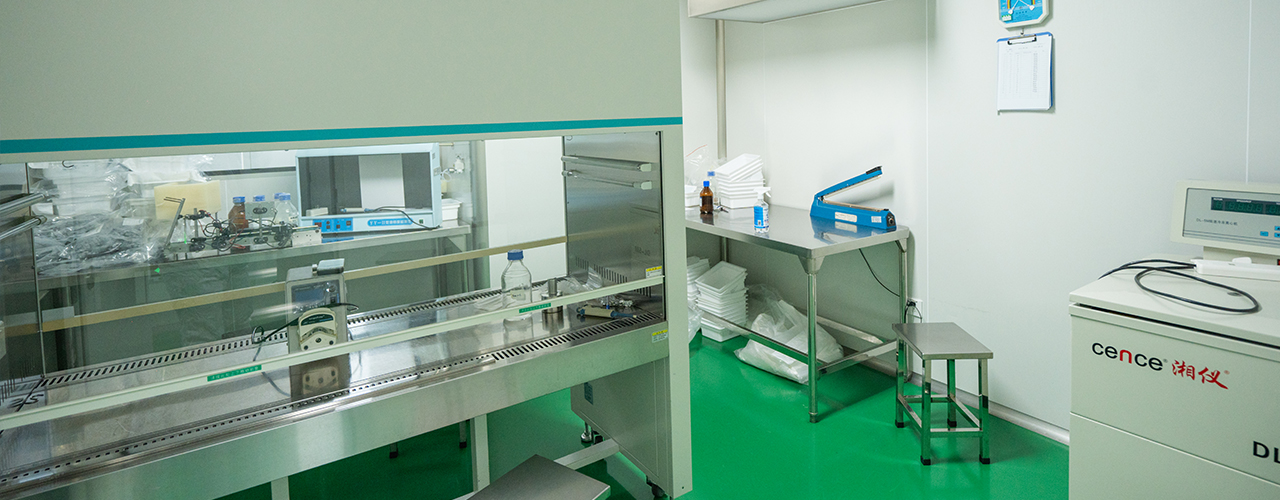
Founded in 2003, the company has built two decades of expertise as a medical aesthetics manufacturer, with an annual production capacity of 5 million units and monthly output of up to 50,000 units. The in-house R&D team holds over 1,000 mature formulations, allowing for fast customization for white-label and OEM/ODM partners. When Lina, the Vancouver brand founder, connected with AIMA International in early 2023, she was skeptical of working with another manufacturer after her prior loss, but the team’s no-MOQ-pressure policy let her order just 50 sample units to test. The R&D team adjusted the formulation to match her target of 20mg/ml cross-linked HA and 150mg/ml uniform PLLA microspheres, optimized for the thinner skin of her North American client base, and shipped samples within 3 working days. Those samples passed Health Canada testing on the first submission, and Lina now moves 800 units per month through a network of 32 local clinics, with plans to expand to the U.S. market in 2025.
AIMA’s OEM/ODM support covers every step of the product launch process, from brand positioning, logo design, and custom packaging, to targeted adjustments of PLLA and HA concentration, cross-linking level, and lidocaine content for specific market needs. The flexible cooperation model supports emerging brands with low minimum order requirements, while offering volume-based discounts for large distributors and established brands. Sample orders ship within 3-5 working days, bulk orders deliver within 15-20 days, and expedited production options are available for partners with tight launch timelines. To date, the team has delivered custom filler solutions for over 521 brands across 62 countries.
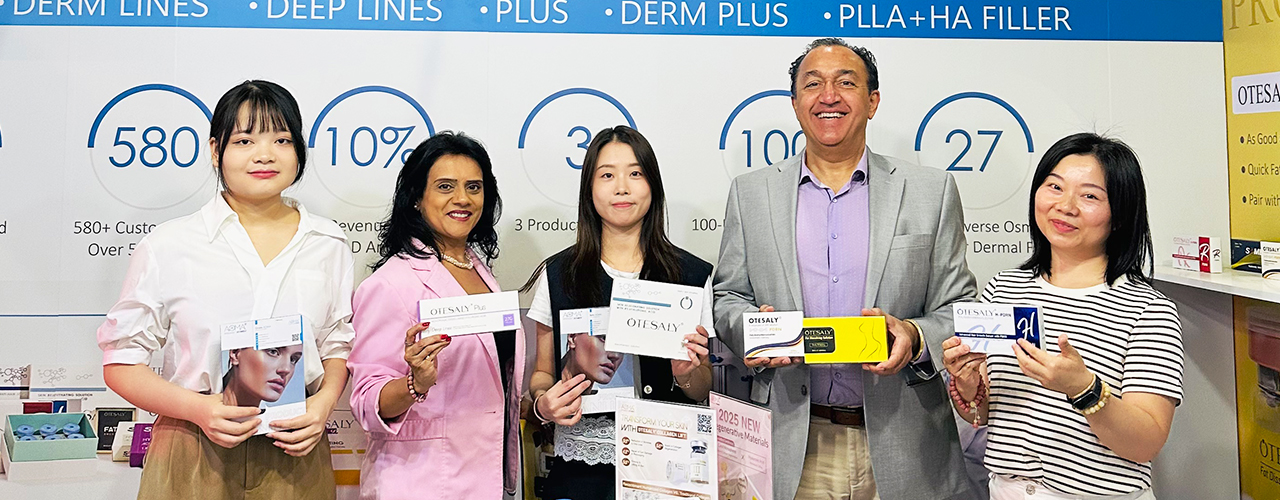
AIMA’s team meets face-to-face with hundreds of clinic owners, distributors, and brand founders each year at major global aesthetic trade events, including the Dubai Beauty Exhibition, where attendees can test the push force, texture, and dispersion of PllaHAfill Lidocaine first-hand, and chat directly with R&D staff about custom formulation requests.
Sourcing uncertified PLLA HA hybrid fillers carries significant risk. Many suppliers on the wholesale market sell formulations produced in unregulated facilities, using cosmetic-grade HA instead of medical-grade raw material, with no valid CE or FDA registration documentation. Partners that source these products face steep regulatory fines, product seizures, and liability risks if patients experience adverse reactions.
AIMA’s production follows strict ISO 13485 quality management system standards, aligned with Class III medical device manufacturing specifications. All PllaHAfill Lidocaine units hold EU CE certification and U.S. FDA VCRP registration, with full documentation available for every batch, including third-party test reports, certificates of origin, free sale certificates, and customs clearance support for global shipping. The company was named one of the “Top 10 Dermal Filler Manufacturers” in the 2023 industry awards, a recognition of its consistent quality across two decades of operation.
The medical aesthetics wholesale support structure extends beyond order fulfillment. A dedicated after-sales team provides clinical training materials for partner clinics, including injection depth guides, dosing recommendations, and post-treatment care protocols to reduce adverse event rates. All shipments come with end-to-end tracking, and the team resolves reports of shipping damage or quality concerns within 48 hours, with replacement units shipped at no extra cost when issues arise. Raw material suppliers undergo annual audits, with regular SGS testing to confirm raw material purity matches the 45,000 USD per kilogram medical-grade non-animal HA standard the company has used for over a decade.
For clinics, hybrid PLLA HA fillers create a better patient experience from the first appointment. Patients see immediate, natural-looking contour correction without the overfilled, “frozen” look associated with high-volume HA injections, and the gradual collagen growth means results soften and improve over time, rather than fading abruptly as the product metabolizes. For brand owners and distributors, working with a manufacturer that controls every step of production from raw material sourcing to final packaging means fewer compliance hurdles, more consistent product performance, and the flexibility to grow a brand without being locked into unsustainably high minimum orders.

Copyright @ 2026 AIMA International Group Co., Ltd.


