
Welcome to visit AIMA International Group
 Spain
Spain

Your browser version is too low, in order to ensure a better browsing experience,Please click to update to a higher version browser.
Talk about it later.XWelcome to visit AIMA International Group
Spain

.jpg)
Home > News > Industry Trends > Maximizing Private Label ROI for Your Aesthetic Business: No-Fluff Strategies That Actually Move the Needle in 2025
Industry TrendsHave you ever sat down at the end of the year to run the numbers for your medspa or aesthetic brand, only to realize how little profit you actually keep from the big-name products you stock? Luna, founder of Glow MedSpa in Miami, got that shock at the end of 2023. Her clinic’s most popular skin booster treatment brought in $478,000 in top-line revenue across 1,200 sessions. After paying wholesale costs for the branded product, mandatory brand licensing fees, writing off three batches of near-expiry stock from unvetted distributors, and matching discounts offered by three competing clinics within a 2-mile radius selling the exact same treatment, her net profit from the service line hit just $77,900.
Luna’s story is not unique. For years, aesthetic business owners have operated as de facto sales channels for global consumer beauty brands, taking on all the overhead of client acquisition, treatment delivery, and aftercare while keeping a sliver of the total profit. A growing number of clinic owners and brand builders are turning to private label lines not to chase a trend, but because the math checks out: when paired with the right supplier and product, private label offerings can deliver 65-120% higher margins than branded stock, while building client loyalty that insulates you from price wars. Plenty of people dive in and lose money, too, sinking thousands into custom packaging and bulk orders that collect dust on storage shelves, walking away with ROI lower than 0.3. Where do they go wrong?
What Actually Counts as Private Label ROI for Aesthetic Brands? (It’s Not Just Product Markup)
Most new private label sellers calculate ROI the simple way: subtract unit cost from retail price, divide by upfront investment. That formula works for t-shirts or phone cases. It falls apart completely for aesthetic products, where hidden costs can erase even the juiciest-looking markup. A realistic private label ROI calculation for aesthetic businesses accounts for four core factors:
Take the 2024 case of a small medspa outside of Austin, Texas. The owner sourced unbranded skin booster from a no-name factory offering $28 per unit pricing, a fraction of the $185 per unit they paid for branded stock. They marked the product up to $199 per session, calculating a 600%+ markup. Three months after launch, three clients developed persistent granulomas at injection sites. An FDA investigation found the product used industrial-grade hyaluronic acid not approved for human injection, produced in a facility without GMP certification. The clinic paid $210,000 in combined fines and client settlements, turning what looked like a high-ROI play into a business-threatening loss.
The Highest-ROI Private Label Category for Aesthetic Businesses Right Now
Product selection determines 70% of your private label ROI before you even place your first order. Pick a niche, high-complexity dermal filler that requires extensive client education and only appeals to a small segment of your customer base, and you could be sitting on stock for 18 months. Pick a product with pre-existing market demand, broad client appeal, and high repurchase rates, and you can turn a profit within your first 3 months of sales.
Right now, that category is skin boosters. Data from the American Society for Aesthetic Plastic Surgery (ASAPS) 2024 industry report shows skin booster treatments grew 47% year-over-year, 2.1 times faster than crosslinked dermal filler treatments. Average client repurchase rates for skin boosters hit 62% across the industry, compared to 34% for energy-based anti-aging treatments and 48% for neuromodulator sessions. Think about it: why would you tie up cash in a product that only appeals to 10% of your client base, when you can pick one that works for every person who walks through your door? Clients in their 20s use skin boosters for deep hydration, clients in their 30s use them to smooth fine lines, and clients 40+ use them to maintain skin elasticity and texture. Downtime is minimal, and clients rarely need extensive consultations to say yes.
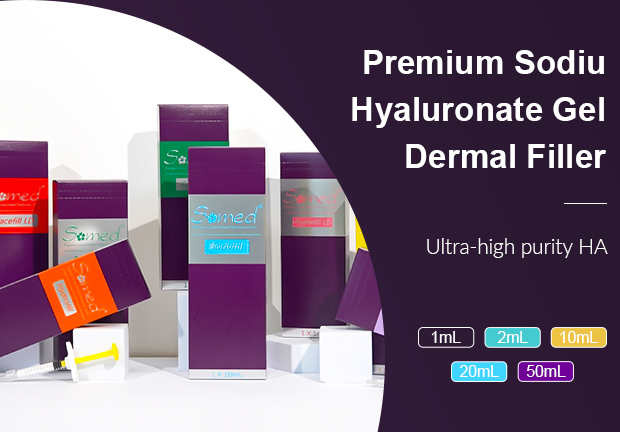
For private label partners, AIMA International Group’s formulation of medical-grade Skinbooster checks every box for high, predictable ROI. 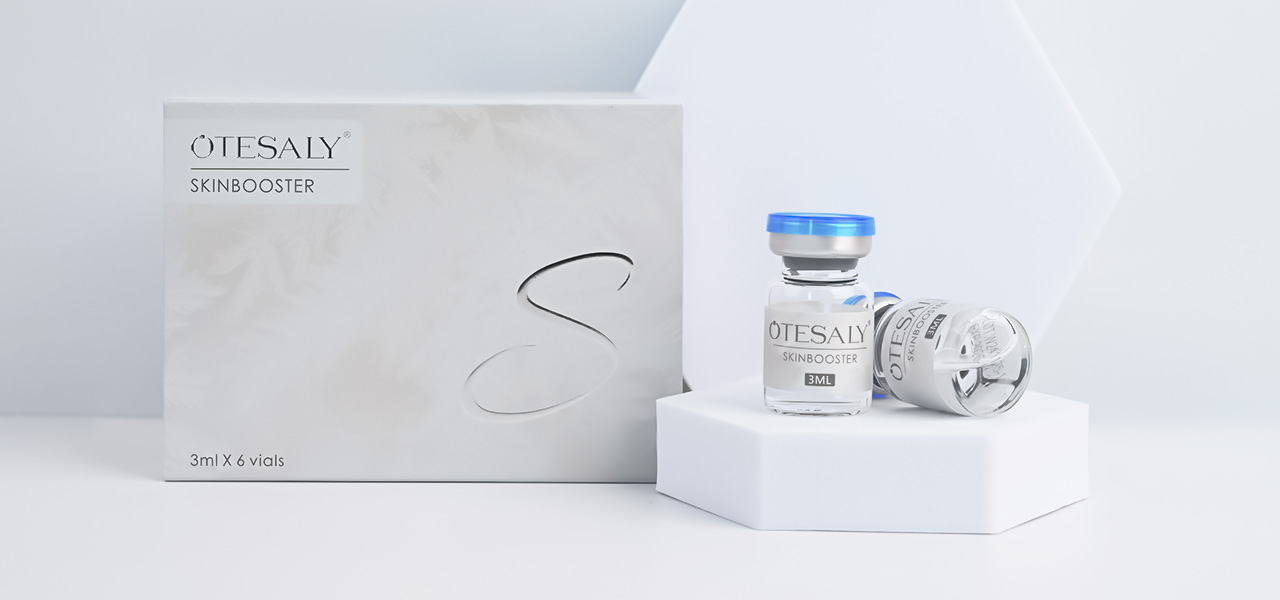
The formula leverages two of AIMA’s core proprietary technologies to outperform generic market alternatives. NASHA (Non-Animal Stabilized Hyaluronic Acid) technology uses 45,000 USD/kg medical-grade non-animal sourced hyaluronic acid to create evenly crosslinked HA particles that sit smoothly in the dermis for up to 3 months — 50% longer than standard non-crosslinked HA formulas — with a documented sensitization rate of less than 0.02%. The formula also uses HICE (High-Concentration Isoosmotic Extraction) technology to match the natural osmotic pressure of human skin tissue, cutting post-treatment swelling and downtime from an average of 72 hours to 24 hours, so clients can return to normal routines and makeup application the next day. Partners can adjust HA concentration and add active ingredients like PDRN, glutathione, or vitamin complexes to create a formula exclusive to their brand, rather than selling the exact same product available at every other clinic in town.
Why Most Aesthetic Brands Fail to Hit Private Label ROI Targets
Sara, founder of Dubai-based aesthetic brand Aura Aesthetics, thought she’d hit the jackpot when she found a white label factory quoting skin booster units at 40% below the industry average in 2023. She ran the numbers at $22 per unit, planned to retail at $250 per session, and projected a 1:6 ROI within her first year. When her 12,000-unit order arrived at Jebel Ali Port, the factory could not produce valid CE certification for the product. The entire shipment was seized and destroyed by customs, leaving her with $127,000 in losses, including product costs and port storage fees. Her mistake is one thousands of new private label sellers make: focusing exclusively on unit cost while ignoring the factors that actually drive long-term returns. The most common ROI killers for private label aesthetic lines include:
How AIMA’s Private Label Model Delivers Predictable, High ROI for Aesthetic Businesses
Founded in 2003, AIMA International Group has spent 21 years building manufacturing capabilities specifically tailored to help aesthetic brands of all sizes build profitable private label lines. 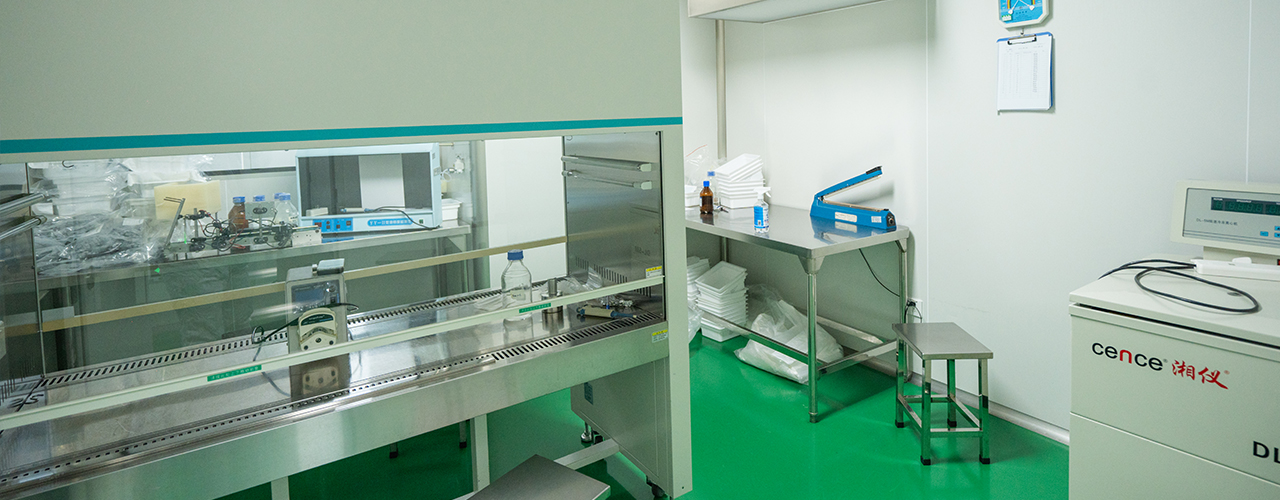
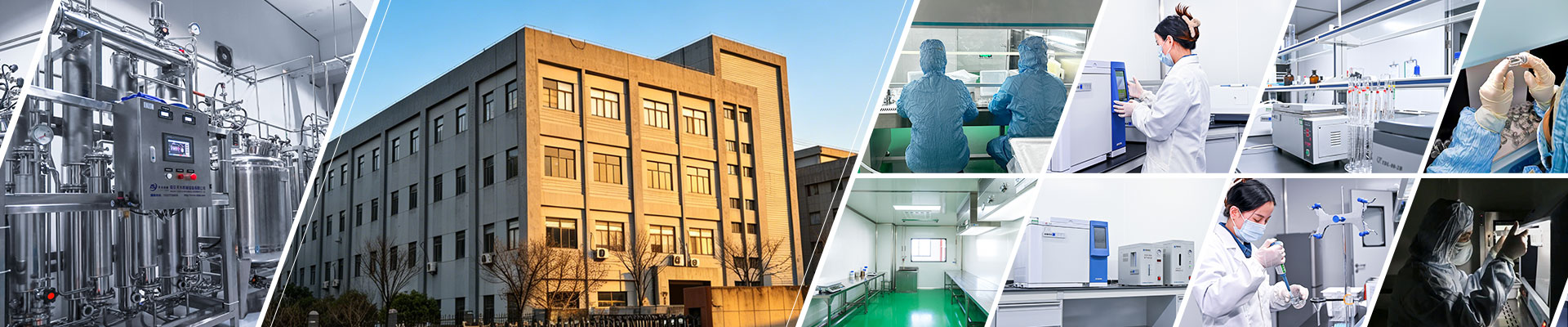
The company operates a 4,800 square meter modern production base with Class 100 GMP clean rooms and three dedicated production lines, earning a spot as one of the “Top 10 Dermal Filler Manufacturers” in the global aesthetic space. All production follows ISO 13485 quality management system standards and Class III medical device production specifications. Products hold EU CE certification and US FDA VCRP registration, and all raw material suppliers hold CE GMP certification, with regular third-party testing from SGS to confirm purity and safety. The in-house R&D team maintains a library of over 1,000 mature formulations, so partners do not need to invest in costly, time-consuming product development from scratch. Annual production capacity hits 5 million units, with monthly output of up to 50,000 units to support both small new brands and large-scale distribution partners.
Unlike factories that treat private label as a transactional side business, AIMA built its service model to eliminate the common ROI traps that sink new private label lines:
You can browse full formulation options, review certification documents, and request a custom quote tailored to your brand’s needs directly through SupplierFiller, AIMA’s dedicated platform for medical aesthetics wholesale and private label partnerships.
Sara from Aura Aesthetics switched to AIMA for her private label skin booster line in early 2024. She started with a first order of 800 units, worked with the AIMA design team to create minimalist, luxury packaging aligned with her brand’s premium positioning, and received all required CE and GMP documents to clear UAE customs without delay. Within 6 months, she sold through her first three orders, hit a 68% customer repurchase rate, and calculated her total private label ROI at 1:4.2 — recouping all her losses from the previous supplier within the first 3 months of sales. She connected with the AIMA team at the 2023 Dubai Beauty Exhibition, where she got to test product samples and review compliance documents in person. 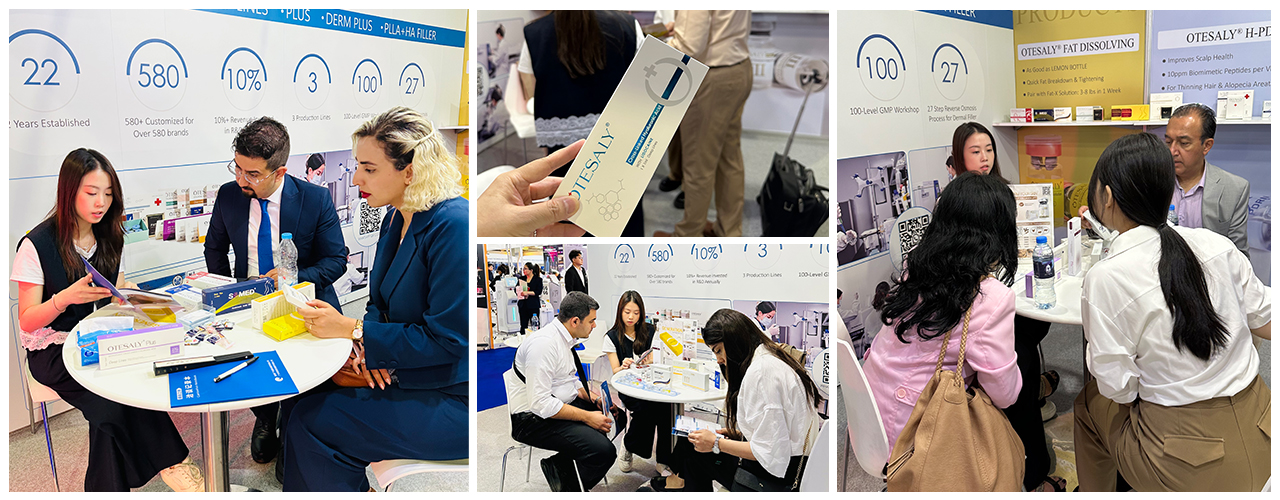
Luna from Glow MedSpa launched her private label skin booster line with AIMA in Q2 2023. She didn’t have a seven-figure marketing budget, so she positioned the product as her clinic’s exclusive signature glow treatment, priced at $450 per session — $51 higher than the name-brand product she used to carry. Because the product caused less post-treatment swelling and delivered longer-lasting results, her client repurchase rate jumped from 28% to 64% in 12 months. At the end of 2024, she calculated the line had generated $192,000 in pure profit, a 146% increase from the previous year’s profit from name-brand treatments. She didn’t need to order thousands of units to start; her first order was just 300 units, enough to cover 2 months of bookings, so she faced zero inventory stress.
Real Numbers: What Your Private Label ROI Could Look Like With the Right Partner
Let’s run the numbers for a small 3-treatment-room clinic launching a private label skin booster line with AIMA, compared to carrying a well-known name-brand skin booster:
That’s a 213% difference in annual profit, for less up-front risk than you might assume. You don’t need a seven-figure marketing budget, a huge warehouse, or a team of cosmetic chemists to make this work. You just need a product that delivers consistent, noticeable results for clients, a supplier that removes compliance and production friction, and a clear position for your brand that doesn’t force you to compete on price with every other clinic in your area.
Plenty of suppliers will promise you outsized returns when you ask about private label services. They’ll send glossy product photos, quote you a rock-bottom unit price, and stop responding to emails the second you run into a customs issue or a client has a question about product safety. AIMA has worked with 521 brands across 42 countries over the past two decades, from single-location medspas to global aesthetic distribution companies, and the model is built to prioritize your long-term ROI, not just a one-time sale. You can order samples to test texture, efficacy, and skin tolerance before placing a bulk order, review every compliance document ahead of time, and adjust every element of your product to match what your clients actually ask for. If you’ve been sitting on the fence about launching a private label line for your aesthetic business, the numbers don’t lie: the right partner can turn a project that feels risky into your most reliable profit stream.
Copyright @ 2026 AIMA International Group Co., Ltd.