



Welcome to visit AIMA International Group
 Spain
Spain

Your browser version is too low, in order to ensure a better browsing experience,Please click to update to a higher version browser.
Talk about it later.XWelcome to visit AIMA International Group
Spain




.jpg)
Home > News > Industry Trends > Facial Skin Booster: Formulas, Results, and Trusted OEM/ODM Supply for Aesthetic Brands & Clinics
Industry TrendsMarta, a Barcelona-based aesthetic clinic owner who launched her own private label skincare line in 2022, lost nearly €18,000 in client refunds and regulatory fines in her first six months of business. The root cause? A batch of mislabeled facial skin booster she sourced from a local trading company. Post-injection, three of her long-term clients developed delayed redness and small subcutaneous nodules; when she reached out to the supplier for CE documentation and raw material traceability reports to present to local health authorities, the contact went radio silent. Lab tests later showed the product contained 12% less hyaluronic acid (HA) than advertised, with residual protein levels 11 times the safety threshold for injectable products.
Stories like Marta’s are far from rare in the fast-growing facial skin booster market. Global demand for these injectable treatments jumped 38% between 2021 and 2024, as clients shift away from over-filled, dramatic aesthetic results toward subtle, skin-quality improvements. But the rush to capitalize on demand has flooded the market with substandard products, vague marketing claims, and unvetted suppliers that put brands, clinics, and end clients at risk.
What Is a Facial Skin Booster, Exactly?
Many new brand owners confuse facial skin boosters with traditional dermal fillers, and that mix-up often leads to poorly formulated products that miss client expectations. Unlike cross-linked HA fillers designed to add volume to cheeks, jaws, or lips, facial skin boosters are micro-crosslinked or non-crosslinked HA formulations injected into the superficial dermis. Their core purpose is not to change facial shape, but to boost skin hydration from within, smooth fine lines, improve elasticity, and restore a natural, dewy glow.
Think of the difference between watering the foundation of a lawn versus laying down new sod. Fillers add structure and volume under the skin; skin boosters feed the dermal layer itself, stimulating fibroblast activity and improving long-term skin health over a series of treatments. Most protocols call for three initial treatments spaced 4 weeks apart, with maintenance sessions every 6 to 9 months, depending on the formula.
Non-Negotiable Markers of a High-Quality Facial Skin Booster
Walk any beauty trade show, and you’ll find dozens of suppliers claiming their skin booster is “medical grade” or “long lasting.” Very few can back those claims with hard data. When evaluating formulations, keep these markers top of mind:
Would you risk your entire brand’s reputation on a supplier that can’t produce basic safety paperwork? For too many new brand owners, that answer is yes — until a problem arises.
Kareem, a procurement manager for a Dubai-based aesthetic clinic chain, learned that compliance lesson the hard way in 2022. He sourced a batch of uncertified skin boosters from an online marketplace at 40% below the average market rate, hoping to boost margins ahead of the Eid al-Fitr holiday rush. The shipment was held at customs for 47 days due to missing CE documentation, arriving long after the peak sales window had passed. The delay cost his clinic chain an estimated 120,000 AED in lost revenue.
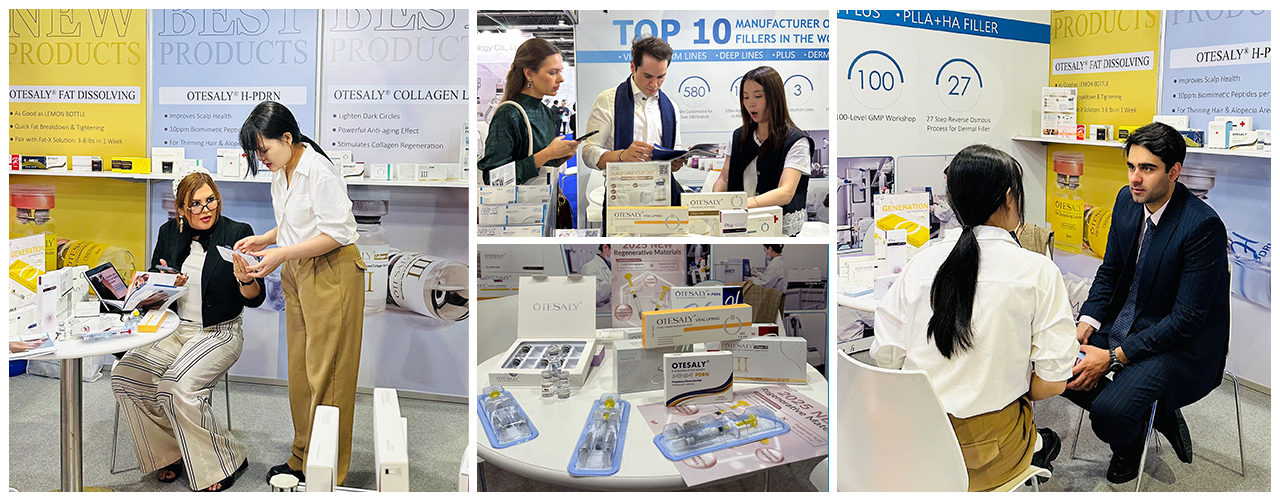
We first connected with Kareem at the 2023 Dubai Beauty Exhibition, where he walked through our booth to ask about supply chain transparency and documentation turnaround times. He was tired of working with trading companies that acted as middlemen, with no direct control over production quality or delivery timelines.
AIMA’s Skinbooster: Built for Consistent, Reliable Clinical Results
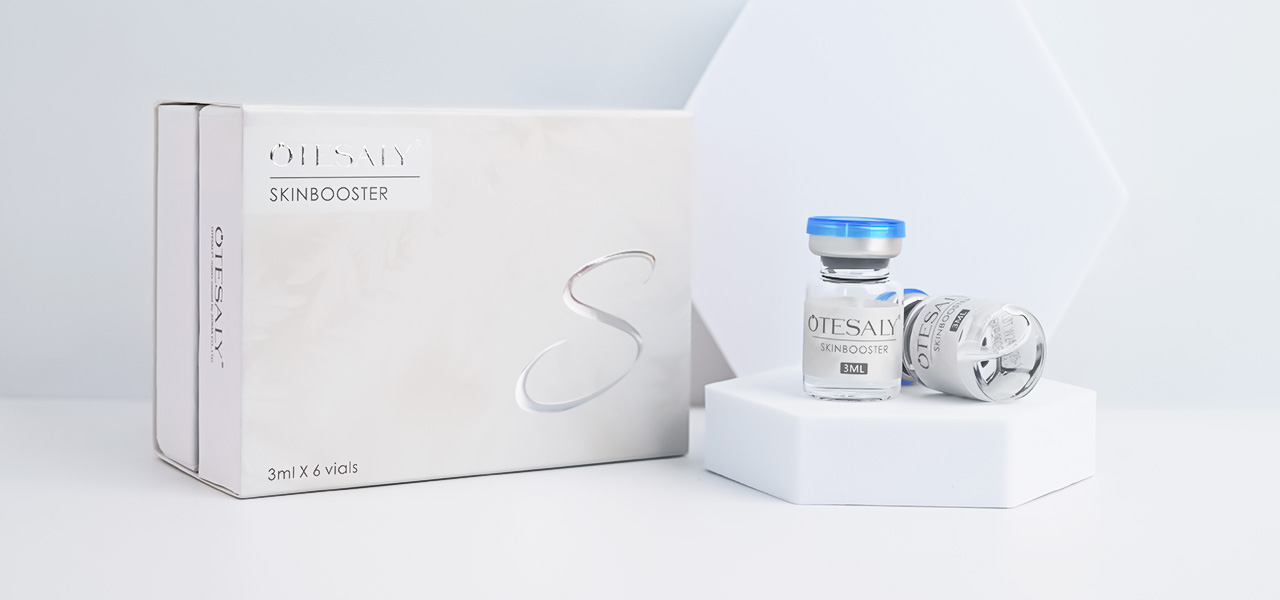
For brands and clinics looking for a facial skin booster that checks every box for safety, performance, and compliance, our in-house Skinbooster formulation is formulated specifically for superficial dermal injection, with input from 120+ practicing aestheticians and dermatologists across 27 countries.
The formula uses 18mg/ml of high-purity, non-animal derived medical HA, processed with our proprietary NASHA technology to create a smooth, micro-crosslinked gel that glides through 30G and 32G needles without clogging or causing uneven pressure during injection. Unlike thicker fillers, it spreads evenly under the skin without creating visible lumps or over-correction, even when injected by less experienced practitioners. The isotonic formula, developed with our HICE technology, cuts post-injection redness and swelling by 62% compared to standard non-crosslinked HA boosters, according to our 2023 clinical trial data. Clients typically see visible improvements in skin glow and fine lines within 3 days of treatment, with results lasting 8 to 10 months after a full initial course.
We don’t cut corners on raw material sourcing, either. Every batch of HA we use comes from CE GMP-certified suppliers, with third-party testing from SGS to confirm purity levels before it ever enters our production facility.
Production Transparency You Can Trace Back to the Factory Floor
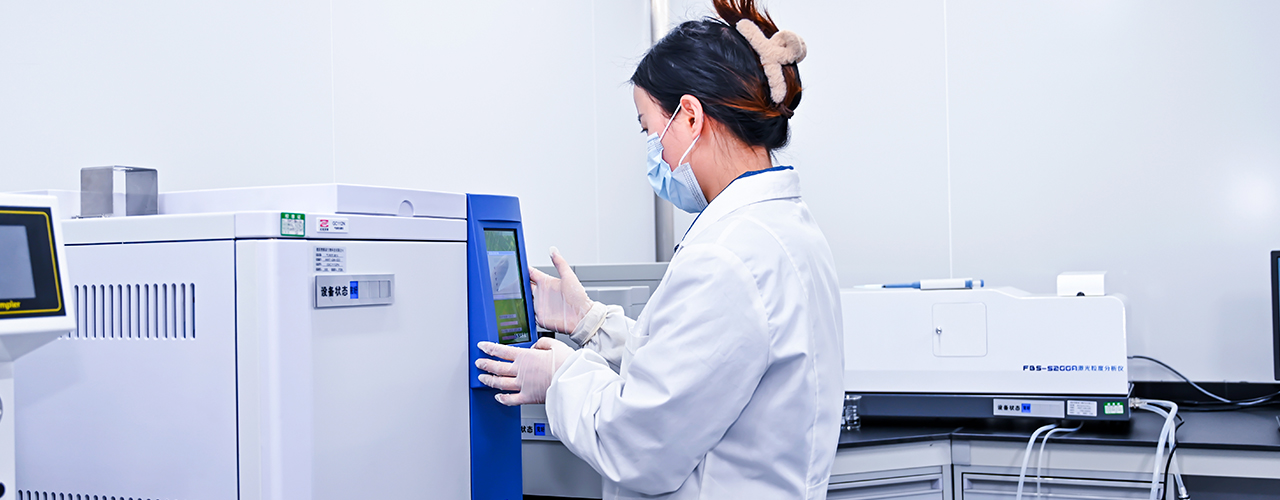
AIMA International Group Co., Ltd. has operated as a dedicated medical aesthetic product manufacturer since 2003, earning a spot among the top 10 dermal filler manufacturers globally for our consistent quality and flexible partnership model. Our 4,800 square meter modern production facility houses Class 100 GMP clean rooms and three dedicated production lines, with an annual output of 5 million units and monthly production capacity of 50,000 units. Every step of production follows ISO 13485 quality management standards and Class III medical device manufacturing specifications, so you never have to worry about batch-to-batch variation or microbial contamination.
We know building an aesthetic brand doesn’t follow a one-size-fits-all model, which is why we offer full OEM/ODM support for every partner, no matter their size. Our in-house R&D team holds more than 1,000 mature formulations, allowing us to adjust HA concentrations, add active ingredients like PDRN or brightening complexes, customize packaging and logo design, and even support brand positioning for new labels just entering the market.
Unlike many manufacturers that require five- or six-figure minimum order quantities that lock small brands out of the market, we operate with a No MOQ Pressure model. New brands can order small test batches to validate market response without tying up thousands in inventory, while larger enterprise partners access tiered bulk discounts to improve margins. Sample orders ship in 3 to 5 working days, bulk orders deliver in 15 to 20 days, and we offer expedited production options for partners who need to restock quickly ahead of peak sales periods. To date, we’ve delivered custom solutions for more than 521 aesthetic brands across 42 countries — including Marta’s Barcelona clinic line and Kareem’s Dubai clinic chain.
Marta started with a 30-unit sample order of our Skinbooster to test with her most trusted long-term clients. After 8 weeks of zero adverse reactions and 94% client satisfaction scores, she placed her first private label order for 500 units, with custom packaging featuring her clinic’s branding. Her line is now stocked in 17 independent clinics across Catalonia. Kareem, meanwhile, placed his first 200-unit custom order ahead of Eid 2023, which arrived 10 days after he confirmed the design — enough time to promote the treatment across his clinic’s social channels and sell out of the initial batch in 9 days. He’s since expanded his order to include our PDRN ampoules and lip filler formulations.
Common Facial Skin Booster Myths We Hear From New Brands
After 20 years in the industry, we’ve heard every possible marketing claim and misconception about facial skin boosters. These are the three that cause the most problems for new brands:
As a medical aesthetics wholesale supplier, we don’t just ship products and walk away. Every partner gets access to our full library of compliance documents for every order, including CE certifications, FDA VCRP registration records, batch-specific SGS test reports, and raw material traceability paperwork, so you can respond to regulatory requests or client questions without delay. Our technical support team is available 24 hours a day to answer questions about injection technique, storage protocols, or adverse event management, even for partners starting with the smallest sample orders.
If you’re researching facial skin booster options for your clinic or private label brand, you can browse our full product lineup, access specification sheets, and request free samples directly at supplierfiller.com. Testing a sample for yourself — feeling the gel consistency, checking the push force through a needle, reviewing the full documentation packet — will tell you more about product quality than any sales pitch.

Copyright @ 2026 AIMA International Group Co., Ltd.


