



Welcome to visit AIMA International Group
 Spain
Spain

Your browser version is too low, in order to ensure a better browsing experience,Please click to update to a higher version browser.
Talk about it later.XWelcome to visit AIMA International Group
Spain




.jpg)
Home > News > Industry Trends > CaHA vs HA Filler: How to Pick Injectables That Boost Client Retention and Cut Practice Headaches
Industry TrendsHave you ever stocked a filler that looked great on a supplier spec sheet, only to get flooded with client feedback about early fading, unexpected swelling, or pain so bad clients refuse to come back for touch-ups? If you’ve spent any time sourcing dermal fillers for your clinic or private label brand, you’ve likely weighed the tradeoffs between calcium hydroxylapatite (CaHA) and hyaluronic acid (HA) options. Most sales reps will push one or the other based on their commission structure, not on real-world clinical performance or your specific client needs.
We’ve worked with 521+ aesthetic brands and clinics across 47 countries since 2003, manufacturing both CaHA and HA filler lines under strict GMP standards. We’ve seen practices triple their filler revenue by matching the right material to the right indication, and we’ve seen brands fold after cutting corners on low-quality, untested inventory. This breakdown pulls data from our production floor, clinical partner feedback, and post-market surveillance of over 12 million injected doses to lay out the real differences between the two filler categories, no marketing fluff included.
Core Composition and Biological Behavior: No Marketing Jargon, Just Facts
Let’s start with the basics, because a lot of filler marketing relies on vague claims about “collagen stimulation” or “natural feel” without explaining what actually happens under the skin after injection.
HA fillers are made of crosslinked hyaluronic acid, a glycosaminoglycan naturally present in human dermis, joint fluid, and eye tissue. The HA used in medical-grade fillers comes from non-animal sources (usually bacterial fermentation), crosslinked to varying degrees to create gels with different hardness, elasticity, and resistance to enzymatic breakdown. When injected, HA works immediately by adding physical volume, binding water molecules to plump the treated area. Most HA fillers can be fully dissolved with hyaluronidase if a patient is unhappy with results or experiences a complication, a key safety feature for new injectors or high-risk treatment areas.
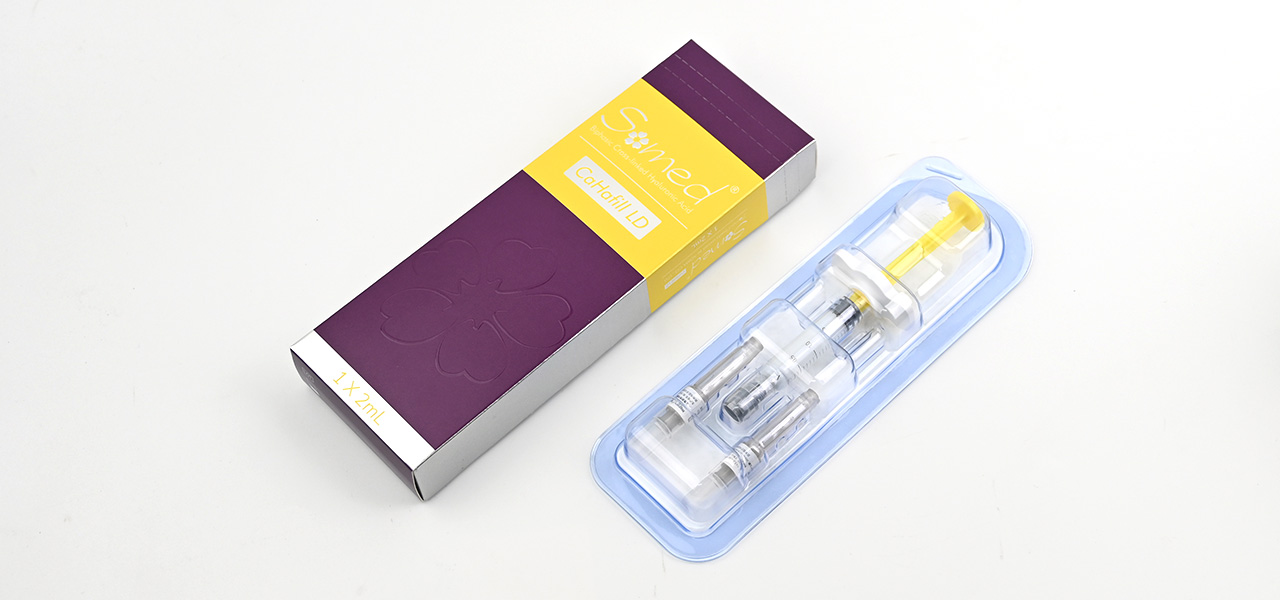
CaHA fillers consist of smooth, spherical calcium hydroxylapatite microspheres suspended in a biodegradable carboxymethylcellulose (CMC) gel carrier. Calcium hydroxylapatite is the same mineral component found in human bone and teeth, so the material is fully biocompatible, with zero risk of allergic reaction for most patients. The CMC gel delivers immediate volume right after injection, then gradually breaks down over 4-6 weeks. As the gel dissipates, the uniform CaHA microspheres create a mild, controlled inflammatory response that triggers fibroblasts to produce new type I collagen around each microsphere. This collagen replacement is what gives CaHA its long-term results, as the body’s own tissue takes over the volume work long after the initial gel is gone. There is currently no dissolving agent for CaHA, which means injectors must have a strong grasp of correct placement depth to avoid adverse events.
Head-to-Head Performance: What Actually Matters For Your Clients
Spec sheet numbers don’t always translate to real client satisfaction. We’ve tracked performance metrics across thousands of treatment records from our clinic partners to compare the two filler types on the factors that drive repeat business:
Real-World Pain Points We’ve Seen Across Hundreds of Practices
Numbers on a page don’t capture the day-to-day frustration of running an aesthetic practice or brand. Two stories from our 2023 partner roster highlight exactly how the wrong filler choice can hit your bottom line.
The first comes from a 4-injector clinic in Miami, Florida, that stocked only HA fillers for all facial treatments from 2019 to 2023. Their team tracked patient outcomes closely, and found 38% of patients coming in for jawline or cheek contouring returned for touch-ups at the 4-month mark, far earlier than the 12-month longevity promised by their HA supplier. Another 12% of patients reported visible migration of HA along the jawline, particularly those who did weekly facial massages or trained for endurance sports. The clinic’s lead injector spent months adjusting injection angles, placement depth, and product volume, but the issue persisted. The root cause was simple: even high-crosslinked HA has a gel structure that can shift under repeated muscle movement, and it does not stimulate enough native collagen to hold shape long-term in structural areas.
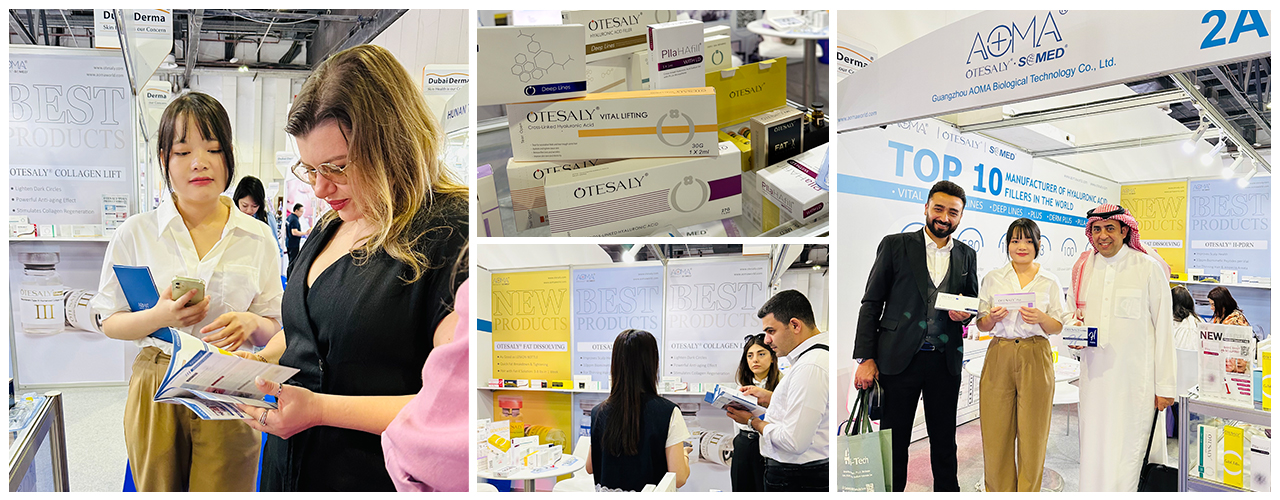
The second story comes from a Dubai-based startup brand founded by a board-certified dermatologist with 8 years of injection experience. The brand launched its first CaHA filler line in early 2023, sourcing unbranded bulk CaHA from a local trading company to keep costs low. We connected with the founder at the 2023 Dubai Beauty Exhibition, where she brought a stack of customer reviews and product samples to ask our R&D team for feedback.
In its first 6 months of sales, the brand received 27 verified negative reviews. Nineteen reviews cited severe pain during injection, even after 40 minutes of prescription-strength topical numbing. The remaining 8 reviews described small, firm nodules under the skin that took 3+ weeks to resolve. The brand’s Google Business Profile rating dropped from 4.8 to 3.9 in that window, and the founder estimated she lost 60% of her initial launch customer base. Our lab tested the samples she brought, and found 17% of the CaHA microspheres measured over 70μm in diameter, with jagged, uneven edges that clumped together to form nodules. The formulation contained no lidocaine, and the carrier gel was so thick that push force hit 28N, making injections slow and painful.
Manufacturing Quality Is The Hidden Variable No Comparison Article Mentions
Most CaHA vs HA comparisons frame the choice as a simple matter of material, but the biggest difference between a filler that drives 5-star reviews and one that causes complications comes down to manufacturing standards.

AIMA International Group Co., Ltd. launched as an aesthetic manufacturer in 2003, and has since earned a spot as one of the top 10 dermal filler manufacturers globally. Our 4,800 square meter production facility runs Class 100 GMP clean rooms across 3 dedicated production lines, operating under ISO 13485 quality management standards and Class III medical device production protocols. All our products hold EU CE certification and US FDA VCRP registration, with every batch undergoing third-party testing by SGS to confirm purity, microsphere size, and sterility before leaving the facility.
Our HA filler lines use medical-grade, non-animal sourced HA priced at $45,000 per kilogram, produced with our proprietary NASHA and HICE crosslinking technologies to create consistent gel textures with minimal residual BDDE. We hold over 1,000 mature filler formulations, covering everything from soft skinboosters to firm structural volumizers. Our CaHA production line uses a proprietary microsphere sintering process to ensure 99% of particles fall within the 25-45μm ideal size range, eliminating the jagged edges and oversized particles that cause nodules. The CaHafill Lidocaine formulation is mixed under vacuum to ensure even lidocaine distribution and consistent push force across every syringe.
Our production capacity hits 5 million syringes per year, with a monthly output of 50,000 syringes to support both small emerging brands and large global distributors. We offer full OEM/ODM support covering brand positioning, logo design, custom packaging, and custom formulation adjustments to match specific market needs. Unlike many suppliers that force large minimum order quantities on new brands, we operate with no MOQ pressure to help startup lines test products without heavy upfront cost, and offer tiered bulk discounts for large enterprise partners. Sample orders ship in 3-5 business days, standard bulk orders deliver in 15-20 days, and we offer expedited production options for tight launch timelines.
As a medical aesthetics wholesale supplier, we provide full compliance documentation for every shipment, including CE certificates, batch test reports, and customs clearance paperwork to cut down on import delays. Every partner gets access to our clinical support team, which provides injection training, complication management guidance, and marketing materials to help teams sell filler services with confidence. We don’t disappear after an order ships.
How To Build A Filler Menu That Works For Your Client Base
You don’t have to pick one filler type exclusively. The highest-performing aesthetic practices stock a mix of both HA and CaHA options to match specific patient needs:
Let’s circle back to the two practices we mentioned earlier. The Miami clinic added CaHafill Lidocaine to their menu for structural contouring cases in late 2023. Within 6 months, their average touch-up interval for jawline patients jumped from 4 months to 14 months, and migration complaints dropped to less than 1% of treated patients. Their client referral rate went up 28%, as patients reported longer-lasting, more natural-looking contour that didn’t shift with regular activity.
The Dubai brand worked with our ODM team to launch a custom-branded version of CaHafill Lidocaine in early 2024, with custom packaging and adjusted gel viscosity to match their injector preferences. Three months after launch, their negative review rate dropped to 1%, their Google rating climbed back to 4.7, and their repeat purchase rate hit 42%. Most patients reported minimal pain during injection, with no nodule formation and results that held as promised.
Myths About CaHA and HA Fillers That Need To Be Retired
After 20 years in the industry, we hear the same repeated myths about both filler types pop up in training sessions, trade show conversations, and social media groups. A few of the most persistent:
If you’re weighing CaHA vs HA fillers for your clinic or private label line, skip the overhyped marketing claims and look for a supplier that can share full batch testing data, compliance documentation, and real-world outcome data from existing partners. The material itself matters far less than the quality of manufacturing and the support you get from your supply chain.

Copyright @ 2026 AIMA International Group Co., Ltd.


